Where we take you for your first dives on Koh Tao and why — the shallow-sand training sites by season, the reefs you move on to, and the marine life each one is known for.
6 November 2026 · by Bryan Roseman
Key takeaways
- We don’t use a pool. Your skills are done on shallow sand from our boat, at Japanese Gardens or Mango Bay from October to mid-June, and at Aow Leuk from June to September.
- The second dive moves to a reef: Twins or White Rock in the Oct–Jun season, Tanote Bay or Hin Wong Bay in Jun–Sep.
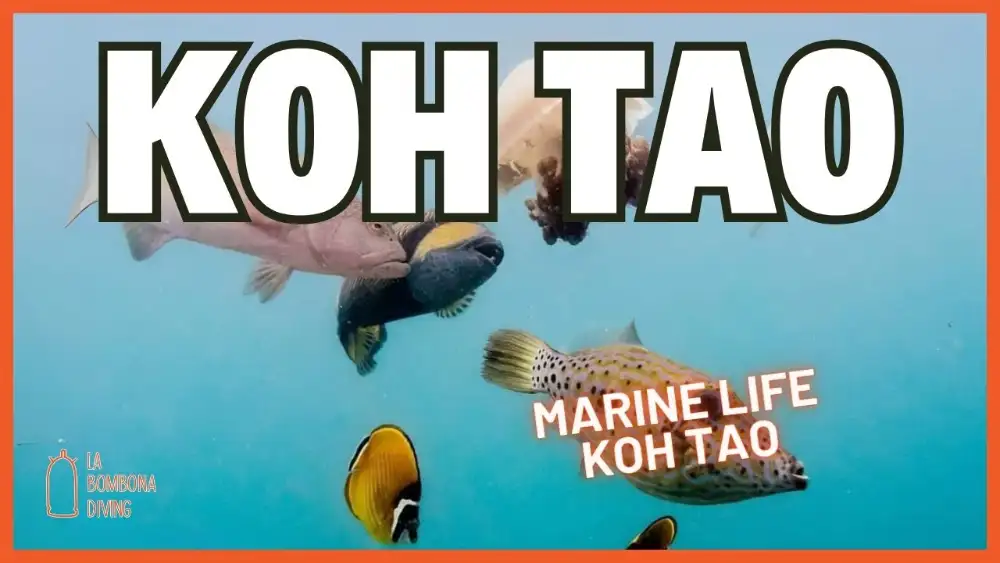
- These are the sites where you meet pufferfish, boxfish, triggerfish, cuttlefish, blue-spotted rays and turtles.
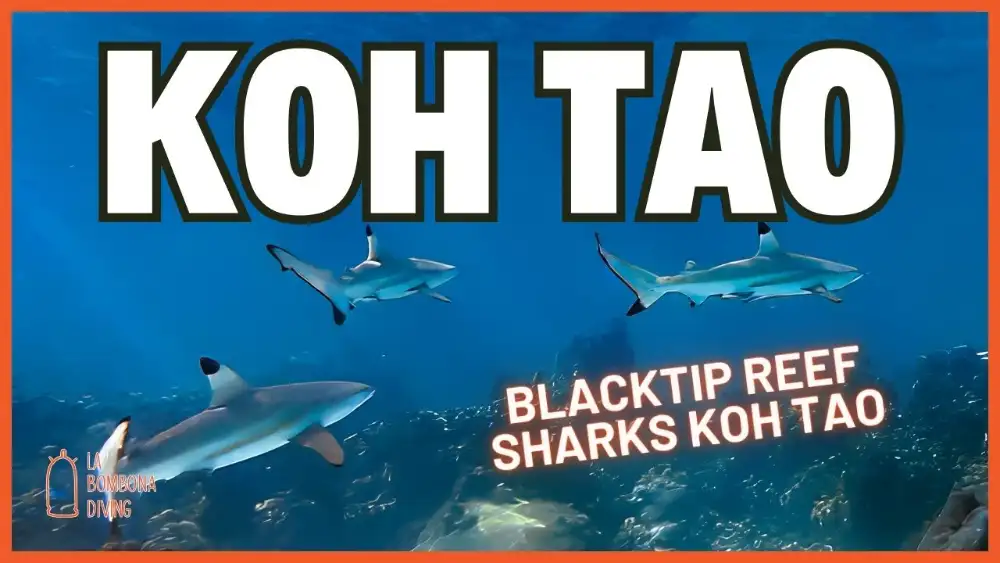
- We do not dive Shark Bay — it is too shallow. If you want blacktip reef sharks, snorkel there instead.
- Everything here is within 18 m, so it is all open to Open Water divers and try divers.
The pinnacles get the big-fish stories; the bays are where you actually learn to dive on Koh Tao, and where most of the animals on our species pages live. This guide is the rotation we run, site by site: which bay we use for your first dive and why, where the second dive goes, and what to look for when you are not busy clearing a mask. If you are reading this the night before a try dive or day two of your Open Water course, it is the right page.
Koh Tao’s weather comes from different directions in different seasons, so the sheltered side of the island moves. We follow it:
| Season | First dive (skills on shallow sand) | Second dive (reef) |
|---|---|---|
| October to mid-June | Japanese Gardens or Mango Bay | Twins or White Rock |
| June to September | Aow Leuk | Tanote Bay or Hin Wong Bay |
The first-dive sites all share one thing: a flat, shallow sand patch next to a reef. That is where you kneel or hover for skills, with the reef a fin-kick away for the tour afterwards. The second-dive sites are a step up in depth and life.
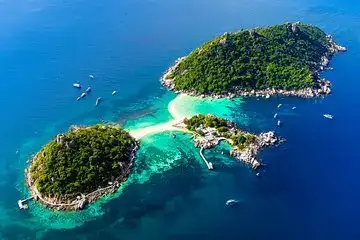
On the sheltered side of Koh Nang Yuan, 3–12 m, with a wide sand bottom and a hard-coral garden rising from it. Calm, bright and easy — the classic Koh Tao first dive.
Look for: pufferfish and yellow boxfish among the coral heads, cuttlefish hovering over the sand edge, titan triggerfish on the rubble (nesting roughly March–June — give them room) and the occasional banded sea krait heading up for a breath.
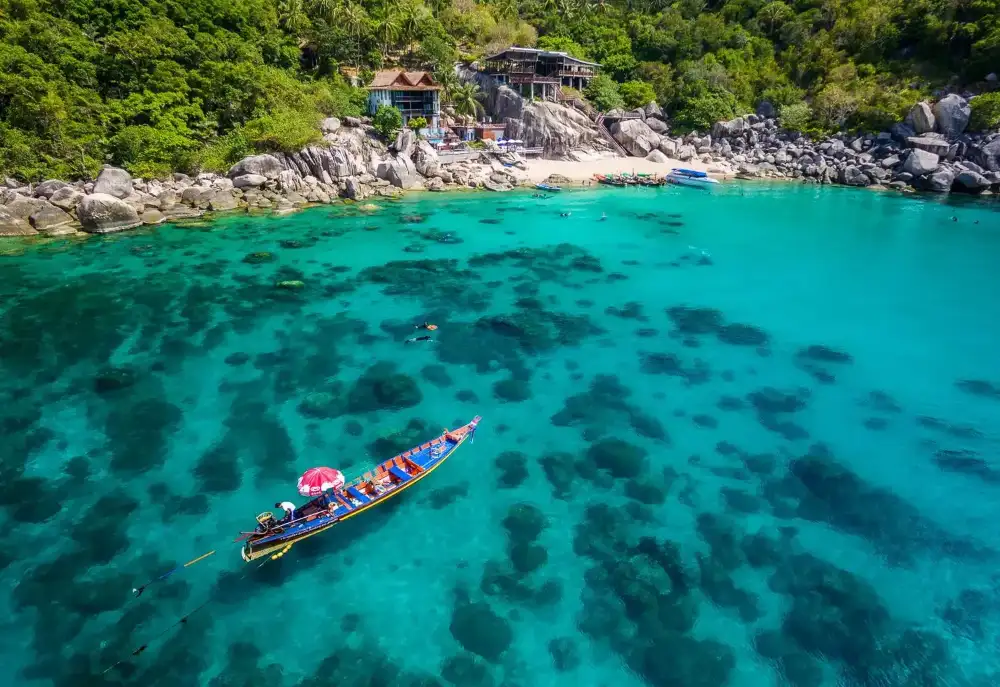
The wide bay at the island’s northern tip. Shallow sand close to shore for skills, then a gentle slope of coral along the bay’s sides, mostly 3–12 m.
Look for: blue-spotted stingrays half-buried in the sand you are kneeling on, pufferfish and boxfish in the coral, and schools of juvenile fish in the shallows.
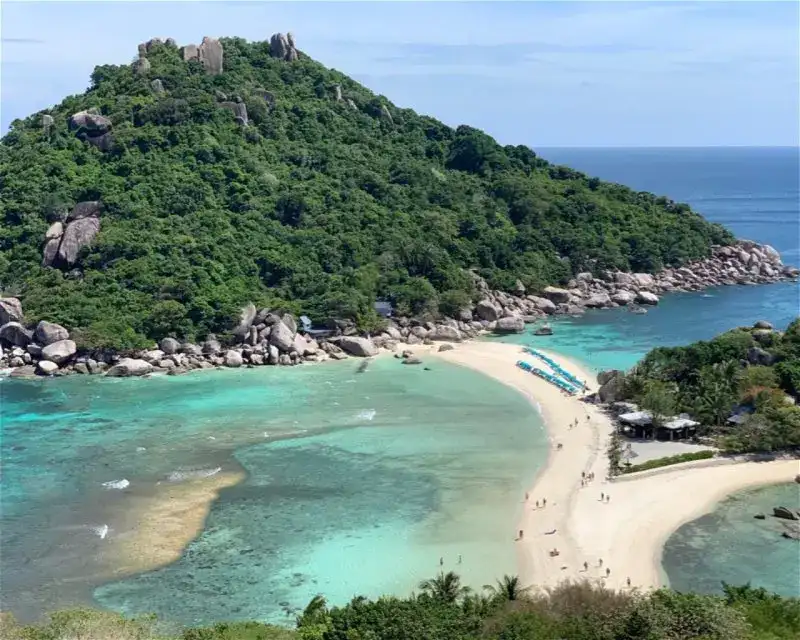
Two (really three) rock formations on sand just south of Koh Nang Yuan, 5–18 m. The usual second dive in this season and the one most of our divers remember as their first “real” reef.
Look for: the resident clownfish on the anemone between the rocks, cuttlefish on the sand — our most reliable site for them — moray eels in the cracks, triggerfish, lionfish under the ledges, stingrays on the sand and banded sea kraits.
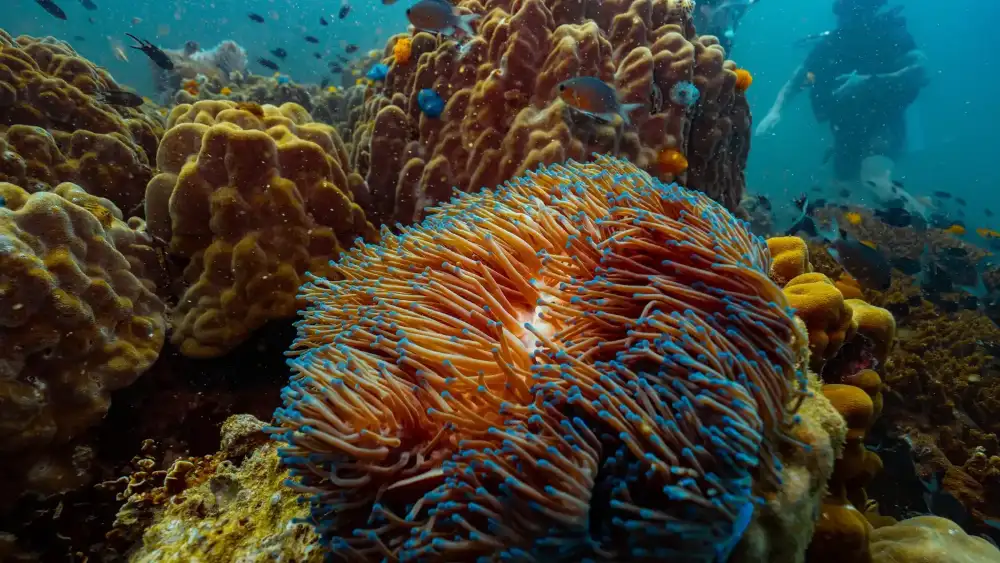
The all-rounder between Sairee and Koh Nang Yuan: coral gardens, rock formations and sand from 5 m down to about 20 m. Good by day, our site of choice for night dives.
Look for: turtles — our best bet on a normal day — blue-spotted rays, moray eels, lionfish and bearded scorpionfish on the rock (look before you touch anything), and after dark, squid in the torch light.
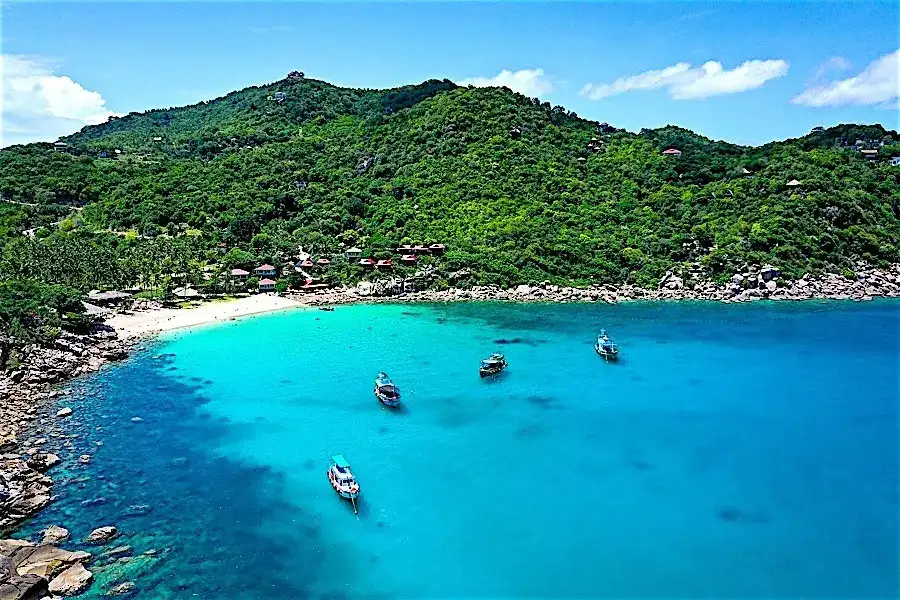
The east-coast bay we move to when the wind swings round. Shallow sand for skills, coral on both headlands, rarely deeper than 12 m.
Look for: turtles grazing on the reef, and now and then a blacktip reef shark passing through the shallows.
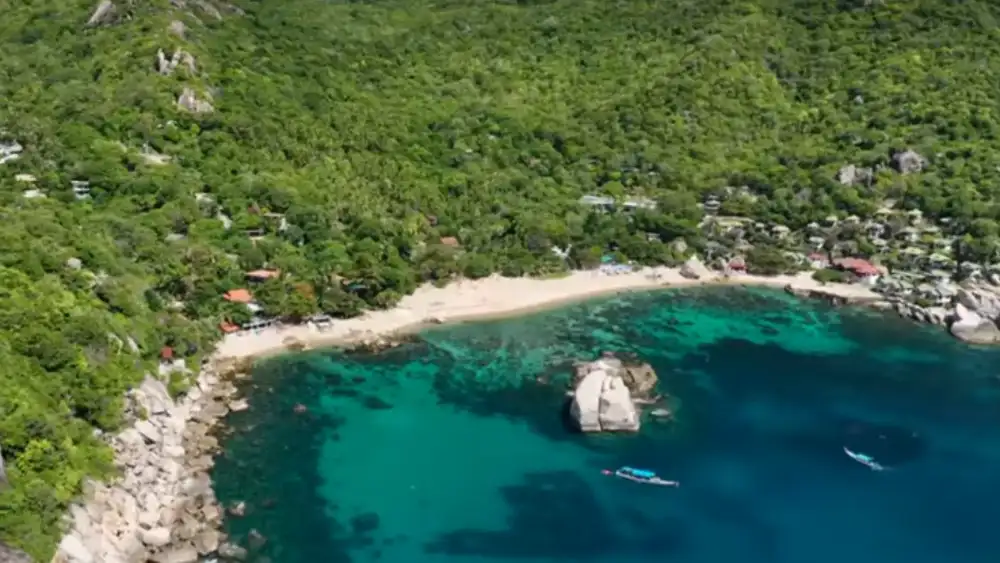
A sandy bay with coral gardens on both sides and a big boulder in the middle that people jump off. The second dive in the Jun–Sep rotation, mostly 5–15 m.
Look for: healthy hard coral, reef fish in numbers, and the occasional blacktip in the shallows early in the day.
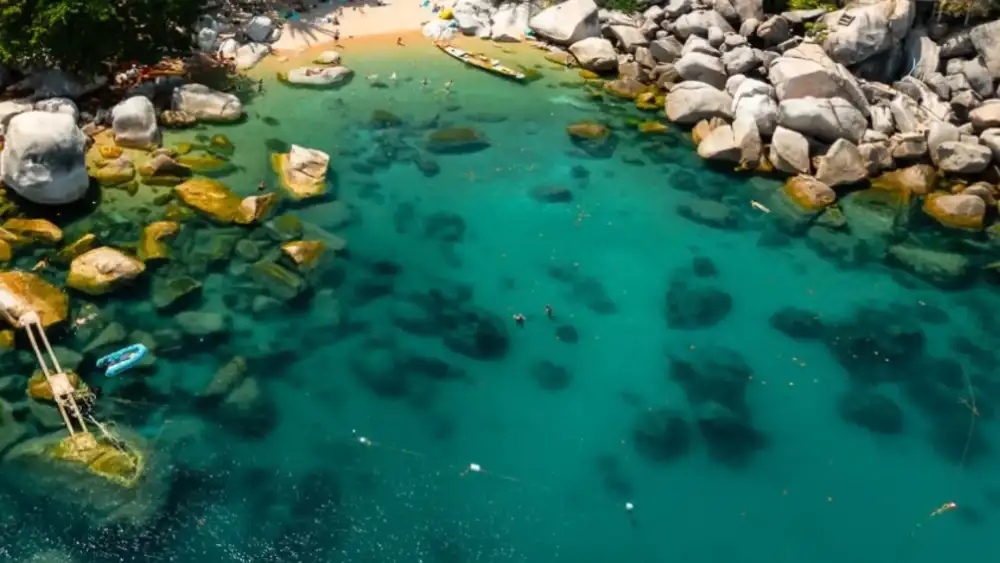
A quieter bay on the north-east coast with big granite boulders and some of the clearest water on the island in this season. The alternative second dive to Tanote, 5–18 m.
Look for: reef fish around the boulders, and blacktips along the edges of the bay.
We don’t dive it. Shark Bay is too shallow for scuba to be worth the boat trip, and the blacktip reef sharks it is named for are shy of the noise a regulator makes. If sharks are what you want, put on a mask and snorkel there in the early morning — you will see more than any diver does.
No. Skills are done on a shallow sand patch from our boat — Japanese Gardens or Mango Bay from October to mid-June, Aow Leuk from June to September. You are in the sea from your first breath underwater, with the reef a few metres away.
It depends on the season and the weather on the day, but typically a first-dive bay (Japanese Gardens, Mango Bay or Aow Leuk) for the early dives and a reef site (Twins, White Rock, Tanote or Hin Wong) for the later ones.
Blacktip reef sharks sometimes pass through Aow Leuk, Tanote and Hin Wong, but they are shy of divers. The reliable way to see them is snorkelling in Shark Bay, which we don't dive because it's too shallow. Whale sharks are a pinnacle story, not a bay one.
Mostly 3–15 m, with Twins and White Rock reaching around 18–20 m. Everything in this guide is within Open Water limits.
More in Marine Life
 Marine Life
A dive-site-first guide to Koh Tao's three offshore pinnacles — depths, who can dive them, where the whale sharks, barracuda and trevally sit, and how to position yourself to see them.
 Marine Life
From barracuda and trevally to lionfish, cuttlefish, pufferfish, boxfish, moray eels, batfish and sea kraits — a species-by-species guide to the marine life you can meet on Koh Tao's reefs.
 Marine Life
Everything about Koh Tao's blacktip reef sharks — how to identify them, how they behave and hunt, the bays where you can reliably see them, the best time of day, and how to watch them responsibly.
Diving with us on Koh Tao
Message us on WhatsApp — courses, fun dives and honest advice about Koh Tao.
Chat on WhatsApp