How to identify the white-eyed moray, how it hunts and breathes, where to find it on Koh Tao's dive sites, and why this misunderstood predator matters for reef health.
15 May 2025 · updated 27 February 2026 · by Bryan Roseman
Key takeaways
- White-eyed moray eels (Gymnothorax thyrsoideus) are distinctive residents of Koh Tao’s coral reefs, recognised by their striking white eyes and light-coloured body with dark speckling.
- These elusive predators play a crucial ecological role in maintaining reef health by controlling populations of crustaceans and small fish.
- Koh Tao offers reliable opportunities to observe these fascinating creatures at several dive sites under specific conditions.
- Understanding moray eel behaviour and practising responsible interaction enhances both diver safety and eel conservation.
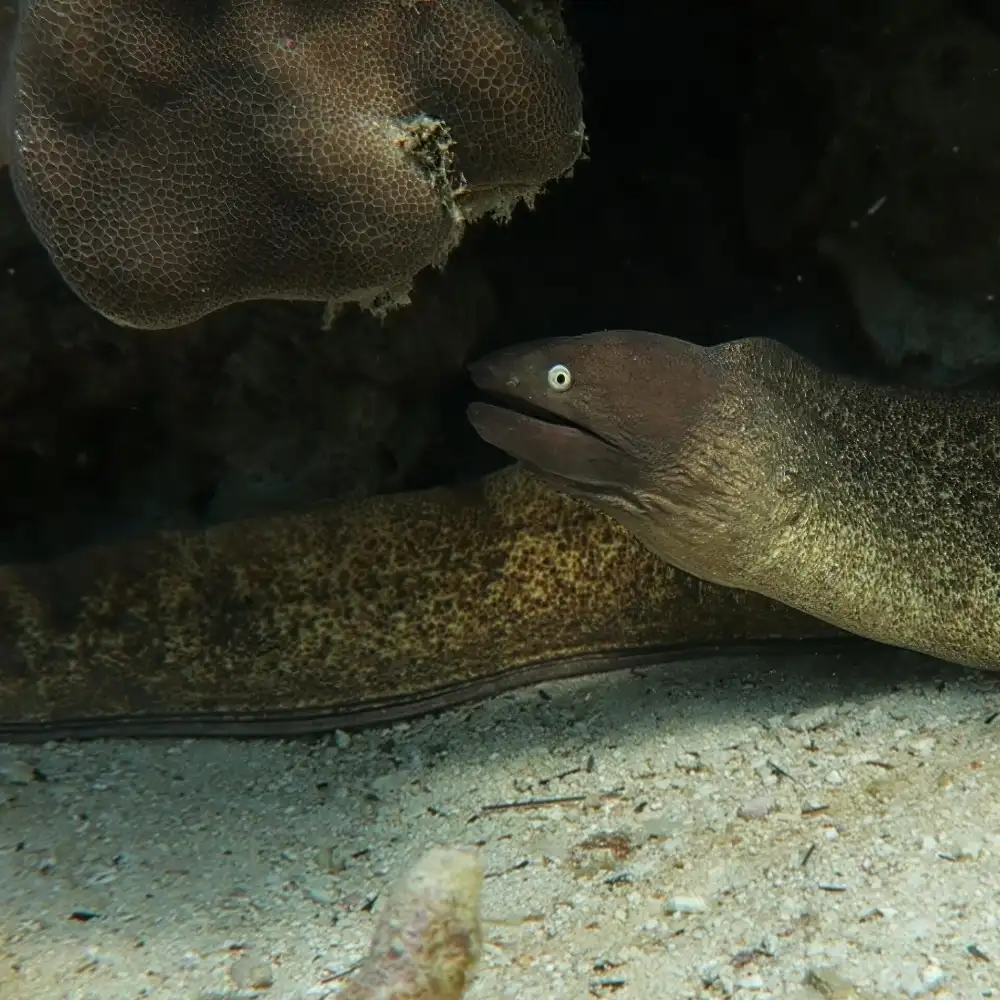
Slipping through the cracks and crevices of Koh Tao’s vibrant coral reefs, the white-eyed moray eel (Gymnothorax thyrsoideus) represents one of the underwater world’s most misunderstood characters. With their serpentine bodies, continuously gaping mouths and hauntingly pale eyes, these creatures often elicit a mixture of fascination and trepidation from divers encountering them for the first time.
Yet beyond their somewhat intimidating appearance lies a remarkable animal perfectly adapted to its ecological niche: a skilled hunter, an important contributor to reef health, and a creature possessing far more complexity than is apparent at first glance. As one of approximately 200 species of moray eels worldwide, the white-eyed moray has found a particularly comfortable home amid the nooks and canyons of Koh Tao’s diverse underwater landscapes.
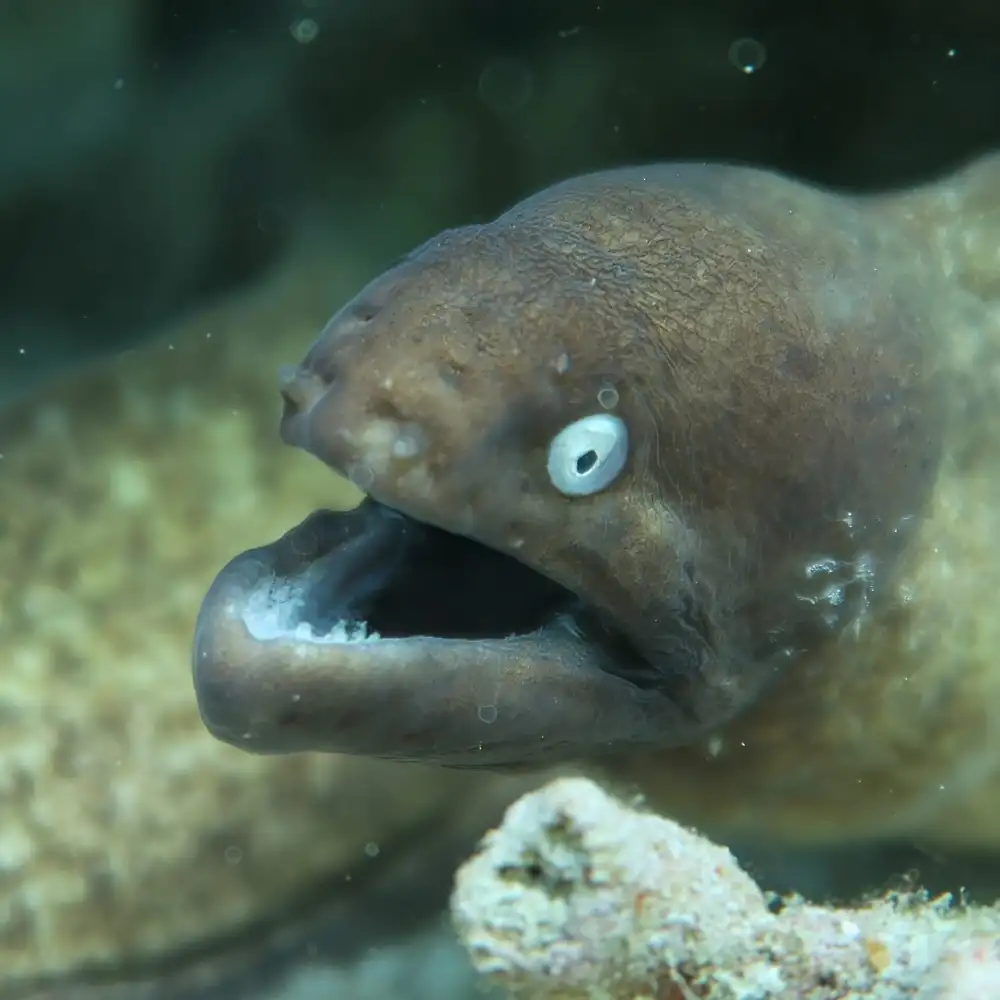
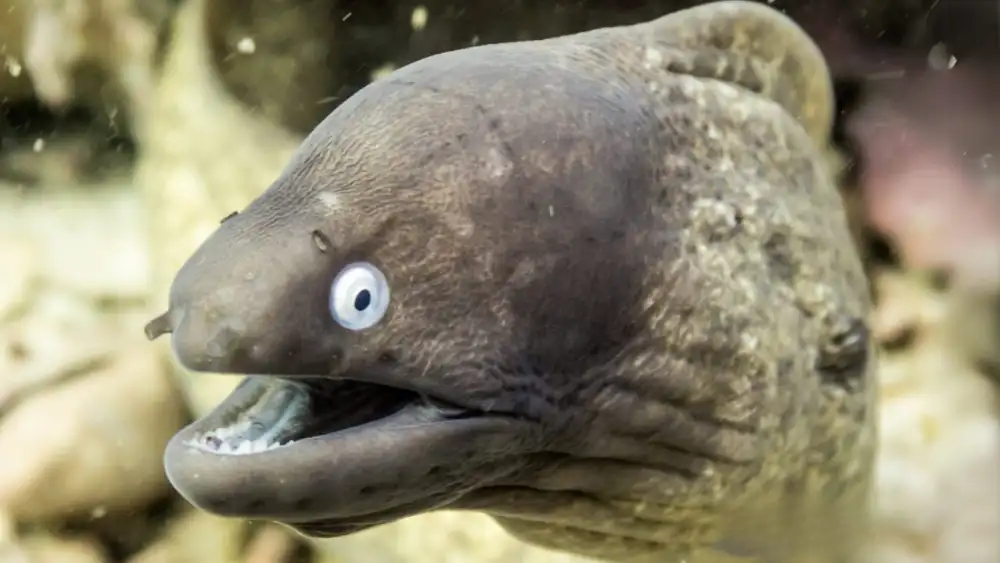
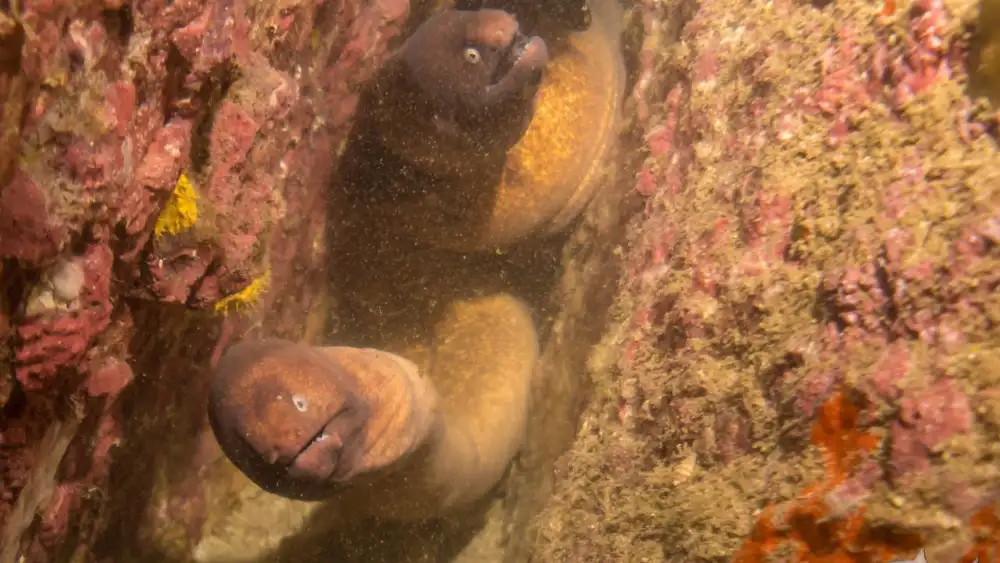
The white-eyed moray (Gymnothorax thyrsoideus) is immediately distinguishable by its most striking feature: pale, almost luminous white eyes that contrast dramatically with its body coloration. This distinctive characteristic makes it one of the easier moray species to identify, even for novice divers.
Their bodies typically reach 60–80 cm in length around Koh Tao, though they can grow larger in other parts of their range. The base coloration ranges from creamy white to pale yellow or light tan, covered with irregular dark brown to black spots or speckles that create a distinctive mottled pattern. This combination of light body with dark speckling serves as effective camouflage against the dappled light patterns on reef structures.
Unlike many fish, morays lack pectoral and pelvic fins, retaining only a long dorsal fin that runs the length of their body and connects with the anal and caudal fins to form a continuous, ribbon-like swimming surface. This streamlined design allows them to navigate tight spaces within the reef structure that would be inaccessible to more traditionally shaped fish.
Their skull structure houses another distinctive feature: a second set of jaws, called pharyngeal jaws, that rest in the throat. When a moray captures prey with its outer jaws, these secondary jaws shoot forward to grasp the food and pull it back toward the digestive tract, solving the problem of how to swallow without the suction capability that most fish use.
White-eyed morays exemplify the classic moray lifestyle: primarily nocturnal predators that spend daylight hours resting in reef crevices with only their heads protruding. This characteristic posture, with the mouth constantly opening and closing, is not aggression but their method of breathing. Without the protective gill covers (opercula) of other fish, morays must actively pump water across their gills to extract oxygen.
Around Koh Tao, white-eyed morays show a distinct preference for certain reef zones. They’re most commonly found at depths between 5 and 30 metres, favouring the complex reef structures of fringing reefs rather than isolated pinnacles or artificial structures. Their hiding spots typically feature multiple entry and exit points, allowing retreat options if threatened.
While generally solitary, it’s not uncommon to find multiple white-eyed morays inhabiting different crevices within the same reef section, particularly in prey-rich environments. They tend to establish semi-permanent dens that they return to regularly, creating territories that divers may revisit on multiple occasions to observe the same individual.
Unlike some more aggressive moray species, white-eyed morays typically display relatively calm behaviour toward divers who maintain an appropriate distance. Their poor eyesight means they rely more heavily on their acute sense of smell to detect both prey and potential threats, making sudden movements more disturbing to them than slow, deliberate approaches.
As twilight descends over Koh Tao’s reefs, white-eyed morays transform from seemingly docile reef inhabitants into efficient nocturnal hunters. They emerge from their daytime resting places to patrol the reef in search of their preferred prey: primarily crustaceans like crabs and small lobsters, along with small reef fish, octopuses and cuttlefish.
Their hunting strategy relies heavily on stealth and their extraordinary sense of smell. Unlike many predatory fish that use speed and pursuit, morays employ an ambush approach, using their flexible bodies to investigate crevices and coral holes where prey might hide. When they detect potential food, they can extend surprisingly far from their reef cover to quickly seize it before retreating.
One of the most fascinating aspects of white-eyed moray behaviour observed around Koh Tao is their occasional participation in cooperative hunting partnerships with other predatory species, particularly groupers. This remarkable example of interspecies cooperation involves the eel flushing prey from reef crevices while the grouper waits to catch any animals that escape into open water — a strategy that benefits both hunters and demonstrates their cognitive flexibility.
For more information on Koh Tao marine life, click here.
While white-eyed morays can be found at most reef sites around Koh Tao, certain locations offer particularly reliable encounters:
White Rock: This large and diverse site hosts numerous white-eyed morays, particularly along the deeper eastern side, where complex coral formations provide ideal hiding spots. The site’s varied topography creates numerous microhabitats that support the crustaceans these eels feed upon.
Chumphon Pinnacle: This site offers excellent opportunities to observe white-eyed morays among the boulder formations on the main pinnacle and Barracuda Rock. The strong currents that occasionally wash over this site bring nutrient-rich water that supports a robust food chain, including the prey species morays depend on.
Twins: The coral formations at this popular site provide perfect habitat for white-eyed morays. Patient divers often spot them residing in the same locations dive after dive, allowing repeated observations of individual eels.
Japanese Gardens: This shallow, beginner-friendly site features several resident white-eyed morays that have become accustomed to divers, making it an accessible location for new divers to observe these creatures in a controlled environment.
Hin Wong Pinnacle: The deeper sections of this site, particularly around the 18–25 metre range, host several large white-eyed morays that have established permanent territories amongst the complex rock formations.
For more information on the top dive sites of Koh Tao, click here.
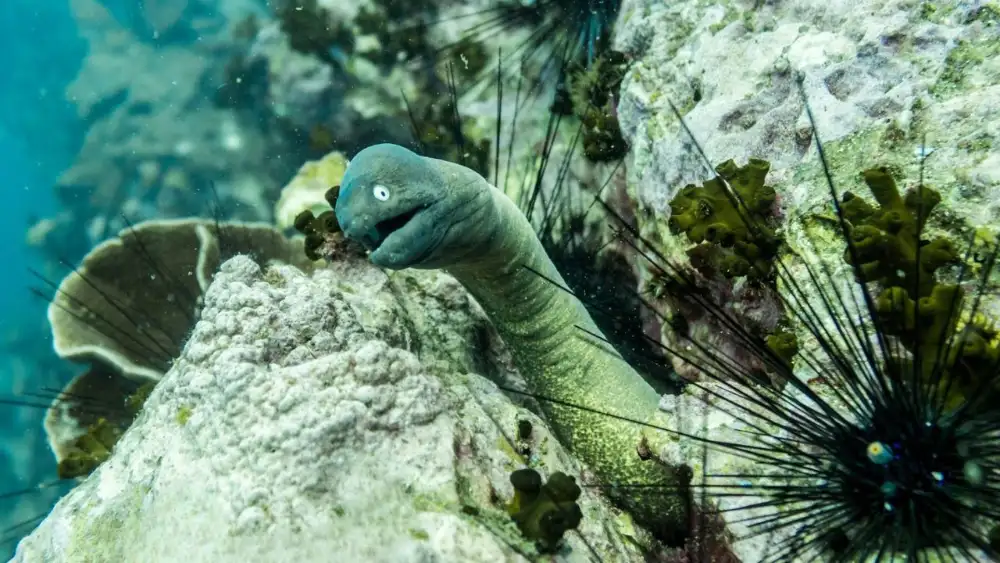
White-eyed morays fulfil several important ecological functions within Koh Tao’s reef ecosystems:
Population control: As predators of crustaceans and small fish, they help prevent any single prey species from becoming dominant, contributing to overall biodiversity.
Cleaning services: Juvenile white-eyed morays sometimes visit cleaning stations where small cleaner wrasse remove parasites, demonstrating their integration into the reef’s maintenance systems.
Indicator species: The presence of healthy moray populations can indicate good reef condition, as they require complex habitat structures and sufficient prey availability to thrive.
Trophic transfer: By converting the energy from their invertebrate prey into protein, morays make this energy available to larger apex predators, for whom morays themselves occasionally become prey.
Their relatively long lifespan compared to many reef fish (potentially 10–15 years for white-eyed morays) means they provide these ecological services consistently over extended periods, creating stability in the reef ecosystem.
While not currently listed as threatened, white-eyed morays face several challenges around Koh Tao and throughout their range:
Habitat degradation: The complex reef structures they depend on for shelter are vulnerable to physical damage from storms, anchors and coral bleaching events.
Fishing pressure: Though not specifically targeted by commercial fisheries around Koh Tao, morays can be caught as bycatch or targeted for the specialist aquarium trade elsewhere in their range.
Marine debris: Their habit of investigating reef crevices puts them at risk of encountering discarded fishing line, hooks and other marine debris that can cause injury or entanglement.
Parasitic loads: Environmental stressors can compromise their immune systems, potentially increasing susceptibility to parasitic infections, visible as small black dots on some individuals.
Fortunately, the protected status of many dive sites around Koh Tao offers some degree of refuge, and the economic value of healthy reefs to the local tourism industry provides an incentive for conservation efforts. Several local organisations conduct regular reef health monitoring that indirectly benefits moray populations by protecting their habitat.
For more information on marine conservation in Koh Tao, click here.
In Thai maritime culture, white-eyed morays hold an ambiguous position: sometimes feared for their snake-like appearance, yet respected for their tenacity and hunting prowess. Local fishermen traditionally considered moray sightings a possible indicator of good fishing grounds, recognising their presence as a sign of healthy reef systems.
White-eyed moray eels pose minimal risk to divers who practise proper underwater etiquette. Despite their somewhat intimidating appearance, with constantly open mouths showing sharp teeth, these creatures are naturally shy and non-aggressive toward humans. The vast majority of moray bites occur only when they are harassed, cornered or accidentally contacted — particularly when divers place hands into crevices without looking. Their open-mouthed appearance is simply their breathing mechanism, not a threatening display. While they possess powerful jaws and sharp teeth adapted for catching prey, white-eyed morays typically retreat when approached too closely rather than attack. That said, all wild animals deserve respect; maintaining an appropriate distance (2–3 metres) and avoiding sudden movements ensures safe interactions for both divers and eels.
The most effective strategy for spotting white-eyed morays at Koh Tao involves methodically examining suitable habitat — particularly small caves, crevices and spaces between coral heads or under ledges. During daylight dives, look for their distinctive white eyes and head protruding from hiding spots, as they typically remain partially concealed while resting. Moving slowly along the reef at moderate depth (5–20 metres) and carefully scanning horizontal crevices, rather than just swimming over the top of reef structures, significantly increases sighting opportunities. Night dives offer chances to see them actively hunting in the open. Local dive guides often know specific locations where resident morays regularly reside, so asking for their expertise can greatly enhance your chances. Sites like White Rock, Twins and Shark Island have particularly reliable white-eyed moray populations, making them excellent choices for eel enthusiasts.
Yes, moray eels do possess a remarkable feature called pharyngeal jaws that function similarly to the fictional creature in the "Alien" movies. This specialised second set of jaws sits in the throat (pharynx) of the moray and is one of the most fascinating adaptations in the animal kingdom.
When a moray captures prey with its outer jaws, these secondary pharyngeal jaws actually move forward into the oral cavity to grasp the food and pull it back into the throat. This unique adaptation solves a critical problem for morays: unlike most fish, which use suction feeding to draw food into their mouths, morays have elongated, narrow heads that make creating sufficient suction impossible.
Dawn, dusk and night dives provide the optimal opportunities to observe active white-eyed moray behaviour around Koh Tao. As primarily nocturnal hunters, these eels spend daylight hours relatively inactive in their reef hideouts, typically with just their heads visible as they breathe. The transitional periods of dawn (5:30–7:00 AM) and dusk (5:00–6:30 PM) often catch them either returning from night hunting or beginning to emerge, making these excellent times to witness movement and potential hunting behaviour. Full night dives (typically starting around 6:30–7:00 PM) offer the greatest chance to observe white-eyed morays actively patrolling the reef in search of prey, using their acute sense of smell to locate crustaceans and small fish. During standard daylight dives, patient observation of known hiding spots may occasionally reveal defensive behaviours or interactions with cleaner wrasse, but extensive movement is less common.
White-eyed morays do not form permanent pair bonds, and their breeding behaviour is rarely observed around Koh Tao. Like most moray species, they are solitary animals that come together primarily for reproduction. Their mating process involves females releasing eggs into the water column, where they're externally fertilised by males, without the parental care or pair bonding seen in some fish species. While breeding likely occurs in Koh Tao's waters, the specific timing and locations remain poorly documented. The reproductive biology of white-eyed morays includes a fascinating larval stage called a leptocephalus — transparent, leaf-shaped larvae that drift with ocean currents for months before metamorphosing into juvenile eels and settling on reefs. Local marine conservation organisations occasionally document suspected breeding aggregations during certain moon phases, but these events are uncommon and unpredictable. Most white-eyed morays encountered by divers are established adults that have already completed their complex life-cycle transformations.
More in Marine Life
 Marine Life
From barracuda and trevally to lionfish, cuttlefish, pufferfish, boxfish, moray eels, batfish and sea kraits — a species-by-species guide to the marine life you can meet on Koh Tao's reefs.
 Marine Life
The enigmatic scribbled filefish of Koh Tao — how to identify these living artworks, how they behave, where to find them on the island's dive sites, and the conservation challenges they face.
 Marine Life
Everything about Koh Tao's blacktip reef sharks — how to identify them, how they behave and hunt, the bays where you can reliably see them, the best time of day, and how to watch them responsibly.
Message us on WhatsApp — courses, fun dives and honest advice about Koh Tao.
Chat on WhatsApp