A dive-site-first guide to Koh Tao's three offshore pinnacles — depths, who can dive them, where the whale sharks, barracuda and trevally sit, and how to position yourself to see them.
6 November 2026 · by Bryan Roseman
Key takeaways
- Koh Tao has three offshore pinnacles: Chumphon Pinnacle, Southwest Pinnacle and Sail Rock. They are where the big fish are.
- Southwest and Sail Rock are great for Open Water divers — the top of Southwest is only 5 m down and Sail Rock breaks the surface. Chumphon’s top sits at 14 m, so it is a step up.
- Whale sharks peak March–May and September–October, but in 2026 we’ve been seeing them at other times of year too.
- Barracuda and trevally are there all year; the trick is to look out into the blue, not at the rock.
- We dive Chumphon and Southwest on the morning boat and run Sail Rock as a day trip every Friday.
Most people learn to dive on Koh Tao in the bays. The pinnacles are where you go once you have — three granite peaks standing alone in open water, each wrapped in anemones and surrounded by fish that have nowhere else to gather. This is the guide to read the night before you dive them: what each one is like, how deep it goes, what you will see and where to put yourself to see it. For each species there is a longer page; this one is about the sites.
| Chumphon Pinnacle | Southwest Pinnacle | Sail Rock | |
|---|---|---|---|
| Where | North-west of Koh Tao, open water | South-west of Koh Tao, open water | Between Koh Tao and Koh Phangan |
| Top of the rock | 14 m | 5 m | Breaks the surface |
| Bottom | 30+ m | 30 m | 30+ m |
| Who can dive it | Open Water, but more challenging — you start at 14 m | Open Water | Open Water |
| Signature | Anemone fields, whale sharks, big schools | A cluster of peaks, groupers and snappers in the blue | The vertical chimney swim-through |
| How we get there | Morning boat from Sairee Beach, ~6:45 | Morning boat from Sairee Beach, ~6:45 | Friday day trip |
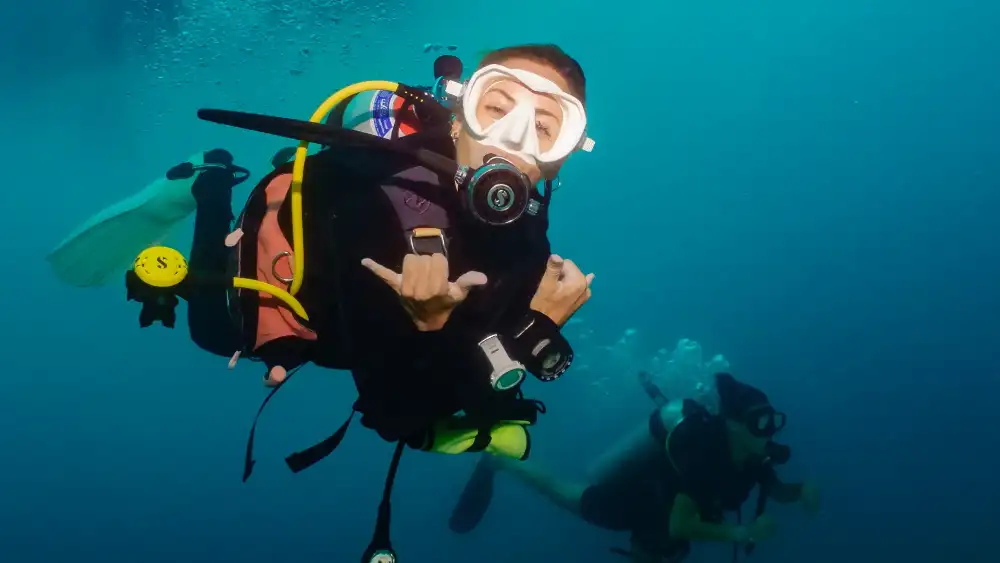
Koh Tao’s signature deep site. The main pinnacle rises from the sand to a plateau at 14 metres, with smaller peaks around it and a carpet of magnificent anemones on top. Because the top is already at 14 m, the whole dive happens in the 14–30 m band, which is why we call it the more challenging of the three for a new Open Water diver: there is no shallow part to retreat to, and the current can run.
What you’ll see. Barracuda in slow chevron schools a few metres off the rock; giant and bluefin trevally hunting through the fusiliers over the plateau; batfish around the pinnacle’s edges; groupers in the anemone fields; and, in season, whale sharks.
Where to position yourself. Drop down the mooring line, settle on the up-current side of the plateau and face out. The schools sit side-on to the current, and the trevally come to you. Spend the second half of the dive shallower, around the top of the pinnacle, which is also where a whale shark will pass if one is about.
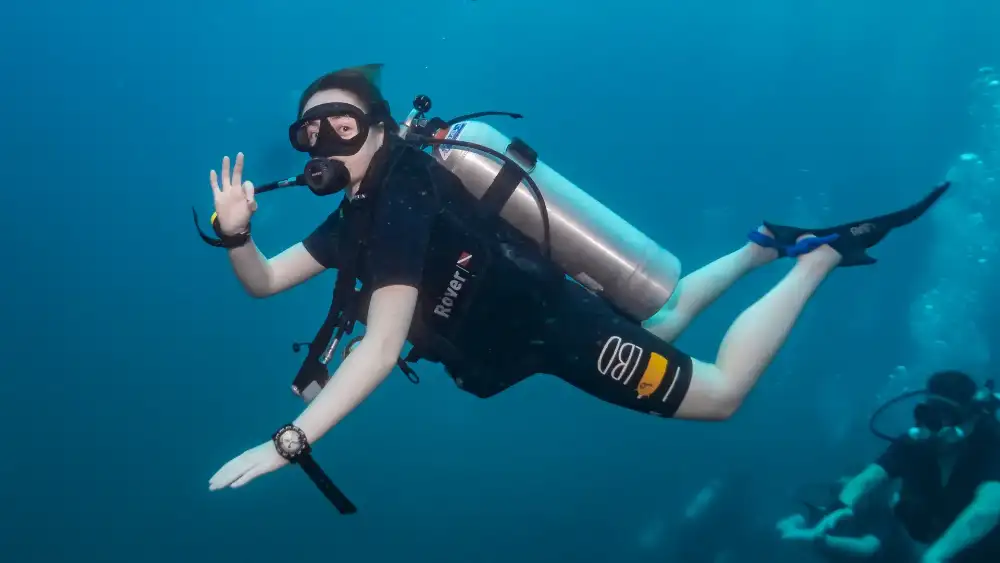
A cluster of submerged peaks rather than one rock, with the tallest reaching up to just 5 metres below the surface. That makes it a great site for Open Water divers: you can do the whole dive between 5 and 18 metres and still be in the middle of everything, while Advanced divers drop to the sand at 30 m around the base.
What you’ll see. Big schools circling the peaks in the blue — snappers, fusiliers, barracuda; groupers and moray eels in the cracks between the peaks; anemones and their clownfish on every top; and whale sharks on their day.
Where to position yourself. Swim the gaps between the peaks rather than around the outside — that is where the eels and groupers are — then finish the dive hanging off the shallowest peak at 5–10 m with the school turning around you. Keep your eyes on the blue during the safety stop.
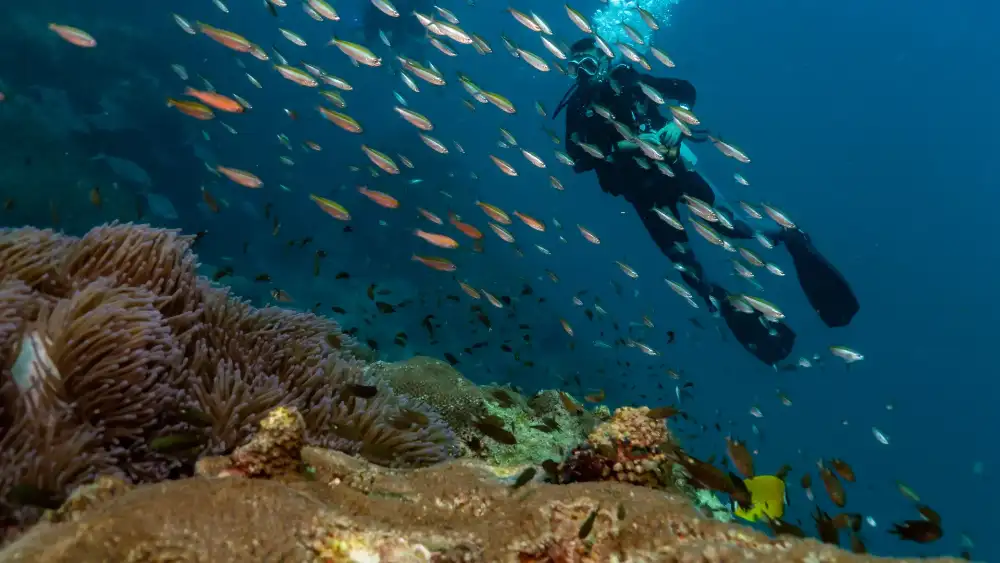
The Gulf of Thailand’s most famous dive. Sail Rock stands out of the water between Koh Tao and Koh Phangan and drops to over 30 metres, and because it breaks the surface there is something to see at every depth — which is why it works for Open Water divers as well as the deep crowd. The vertical chimney swim-through — you enter it deep and come out shallow — is the thing everyone comes for.
What you’ll see. Clouds of fusiliers and trevally hunting through them; chevron barracuda and the odd great barracuda hanging alone; batfish; and the best whale shark odds anywhere near Koh Tao.
Where to position yourself. Do the chimney once, early, while the group is fresh. Then spend the rest of the dive on the side of the rock that faces the current, 10–18 m, and look out. Whale sharks at Sail Rock are usually spotted by the diver who was watching the blue, not the wall.
Our Sail Rock trip runs every Friday: two dives, an early start, and a longer boat ride than our local sites.
| Months | What the pinnacles are like |
|---|---|
| March–May | The classic whale shark window; warm, calm seas, often the best visibility of the year. |
| June–August | Good conditions, fewer boats; big schools all season. |
| September–October | Second whale shark peak; occasional swell towards the end. |
| November–January | Monsoon months — wind and rain can keep boats from the pinnacles on bad days. We still dive when the sea allows. |
| February | Settling down; a good early-season month. |
One caveat from our own logbooks: in 2026 we have been seeing whale sharks more often outside the traditional peaks. The months above are the historical pattern, not a promise either way.
Yes. Southwest Pinnacle tops out at 5 m and Sail Rock breaks the surface, so both have plenty to see within 18 m. Chumphon Pinnacle's top is at 14 m, which makes it a more demanding dive for a brand-new diver — we'd suggest a few dives first, or doing it on your Advanced course.
Historically Sail Rock and Chumphon, in March–May and September–October. In 2026 we have had sightings at other times of year too, so the honest answer is: dive the pinnacles whenever you are here and watch the blue.
Often, yes — that is why the fish are there. Your guide will drop you on the sheltered side and plan the dive around it. Good buoyancy and a relaxed kick matter more than fitness.
On our Friday day trip — it is too far for the normal morning boat. Two dives, lunch on board, back in the afternoon.
More in Marine Life
 Marine Life
Where we take you for your first dives on Koh Tao and why — the shallow-sand training sites by season, the reefs you move on to, and the marine life each one is known for.
 Marine Life
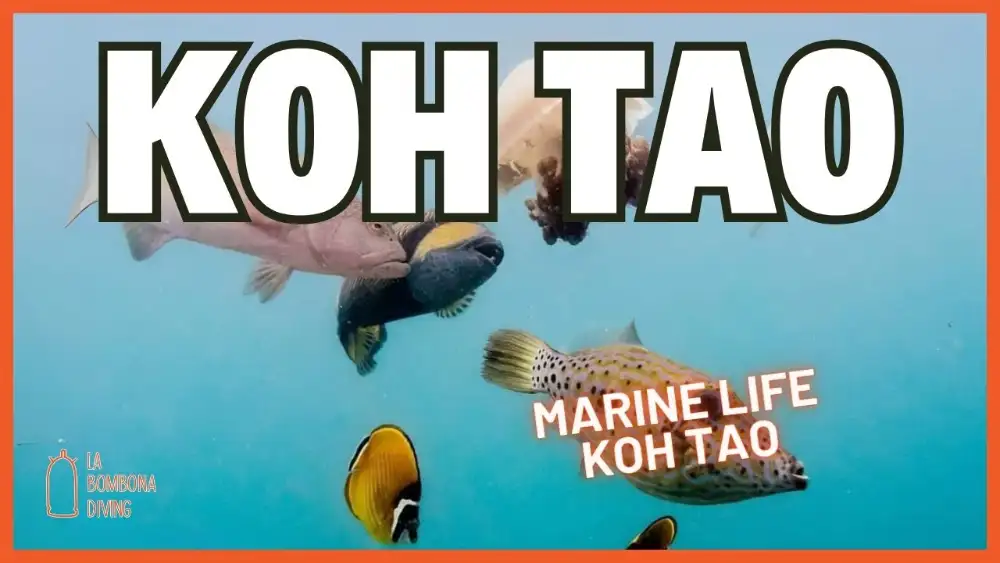
From barracuda and trevally to lionfish, cuttlefish, pufferfish, boxfish, moray eels, batfish and sea kraits — a species-by-species guide to the marine life you can meet on Koh Tao's reefs.
 Marine Life
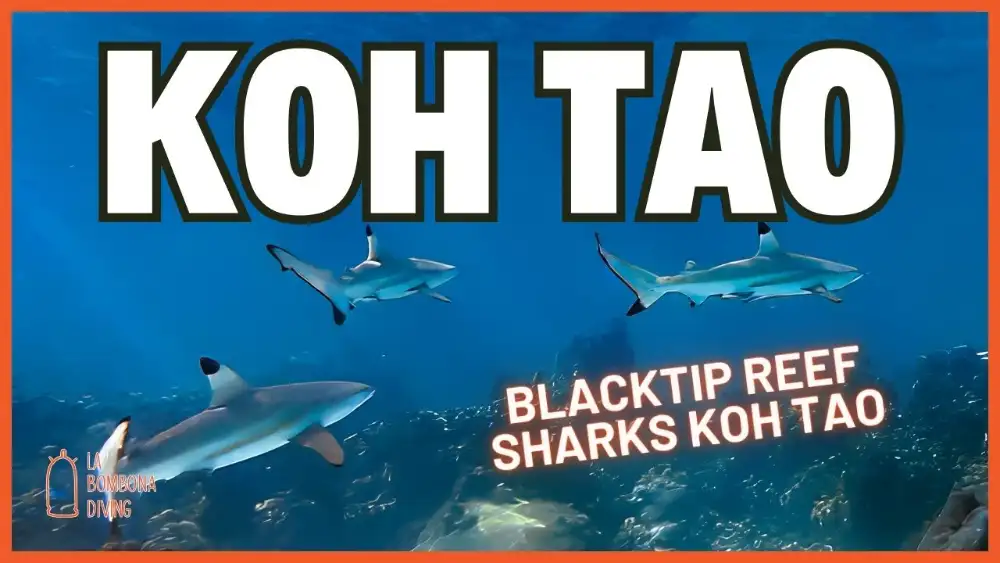
Everything about Koh Tao's blacktip reef sharks — how to identify them, how they behave and hunt, the bays where you can reliably see them, the best time of day, and how to watch them responsibly.
Diving with us on Koh Tao
Message us on WhatsApp — courses, fun dives and honest advice about Koh Tao.
Chat on WhatsApp