How to identify, spot and safely observe the venomous, perfectly camouflaged Bearded Scorpionfish — plus the Koh Tao dive sites where you are most likely to find one.
11 May 2025 · updated 27 February 2026 · by Bryan Roseman
In short. The Bearded Scorpionfish (Scorpaenopsis barbata) ranks among the most challenging marine creatures to spot in Koh Tao due to its exceptional camouflage abilities. These venomous masters of disguise blend perfectly with rocks and coral, making successful sightings a rewarding achievement for divers. Found at multiple dive sites around Koh Tao, they require specific spotting techniques and safety knowledge for safe observation.
Among the remarkable marine life inhabiting Koh Tao’s waters, few creatures demonstrate such extraordinary camouflage abilities as the Bearded Scorpionfish. These masters of disguise are so expertly adapted to their environment that even experienced divers consider spotting one a significant achievement. Their exceptional ability to blend seamlessly with their surroundings makes them one of the most challenging and rewarding marine species to encounter for underwater photographers and marine life enthusiasts.
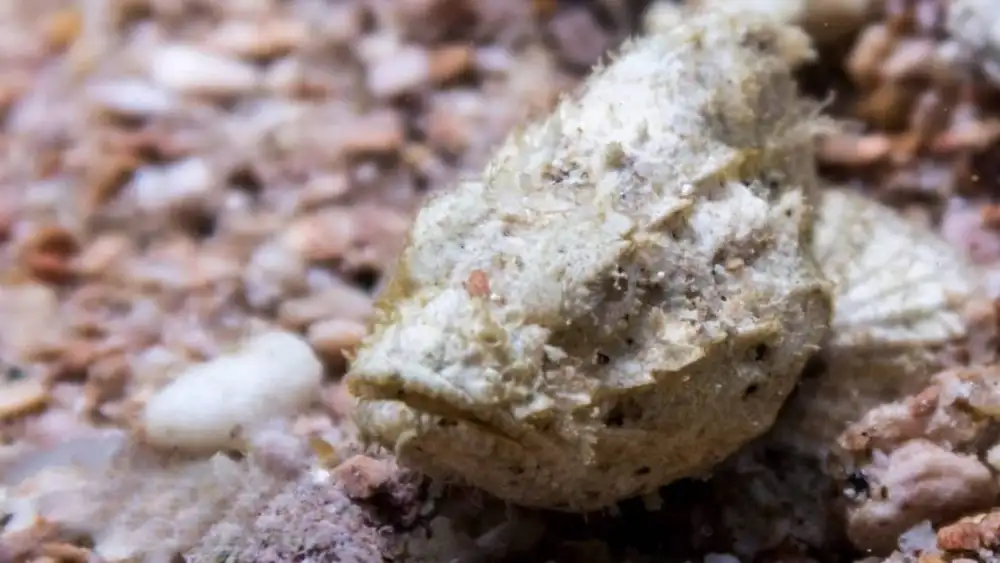
The Bearded Scorpionfish (Scorpaenopsis barbata) is the primary scorpionfish species regularly encountered around the island. This fascinating creature belongs to the Scorpaenidae family, which includes over 400 species of venomous fish including lionfish and the deadly stonefish. What distinguishes the Bearded Scorpionfish are the distinctive fleshy outgrowths under its chin that resemble a spiky beard, giving this remarkable fish its common name.
| Feature | Description |
|---|---|
| Scientific name | Scorpaenopsis barbata (also known as Tasselled Scorpionfish) |
| Size | Up to 36 cm in length, though typically smaller around Koh Tao |
| Coloration | Deep red to brown with black and white blotches that match local coral |
| Distinctive features | Fleshy outgrowths under the chin (“beard”), wart-like protrusions, flattened elongated body |
| Venomous parts | Spines along the dorsal, pelvic and anal fins contain potent venom |
| Best identification method | Look for reflective eyes and slightly spread pectoral fins stabilising on rocks |
The Bearded Scorpionfish features a flattened, elongated body that typically reaches 30–36 cm in length around Koh Tao’s dive sites. Their coloration ranges from deep red to brown with black and white blotches scattered across their body, creating a variable pattern that allows them to blend perfectly with rocks, coral formations and the ocean floor. Adding to their remarkable camouflage are numerous wart-like protrusions and feather-like fins that break up their outline and make them nearly indistinguishable from the substrate they rest upon.
Perhaps the most distinctive feature of these remarkable fish is their large eyes, which often serve as the primary giveaway for divers attempting to spot them. These eyes, positioned high on their head, allow the scorpionfish to maintain constant vigilance while the rest of their body remains perfectly concealed. Their mouth is disproportionately large compared to their body size, enabling them to swallow prey whole in a split second using powerful suction.
How well do you know the techniques for spotting Bearded Scorpionfish in Koh Tao? Test yourself with these three questions.
1. What’s the most reliable way to spot a camouflaged scorpionfish?
2. Where are scorpionfish most commonly found?
3. What should you do if you spot a scorpionfish?
Bearded Scorpionfish are ambush predators that rely on patience and exceptional camouflage rather than speed or agility. They typically position themselves motionless on rocks or coral formations, often in areas that perfectly match their natural coloration, and wait for unsuspecting prey to swim within striking distance. When a potential meal approaches, they employ their mouth as a powerful vacuum, creating intense suction that draws in prey within milliseconds.
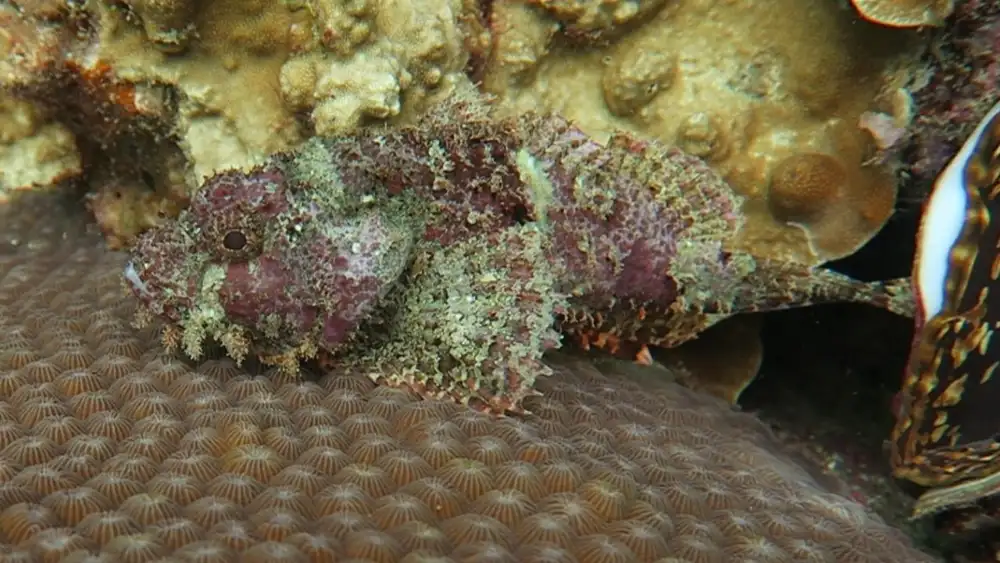
These patient hunters feed primarily on smaller fish, crustaceans and cephalopods that venture too close to their hiding spots. Their hunting strategy is remarkably energy-efficient, with very little energy expended until the precise moment of attack. This sedentary lifestyle contributes to their ability to remain in one specific location for extended periods, further enhancing their chances of successful camouflage and hunting success.
Despite their fearsome hunting abilities underwater, Bearded Scorpionfish are not aggressive toward divers and actually prefer to remain completely motionless even when closely approached. However, their venomous spines demand respect and caution from all who encounter them during Koh Tao marine life adventures.
Important safety information. Like all members of the Scorpaenidae family, Bearded Scorpionfish possess venomous spines along their dorsal, pelvic and anal fins. While less potent than stonefish venom, scorpionfish stings can cause intense pain, swelling and systemic symptoms. Always maintain visual contact with your surroundings and never touch marine life.
The venom of the Bearded Scorpionfish, while considerably less potent than that of the deadly stonefish, can still cause intense pain, significant swelling and, in severe cases, systemic symptoms throughout the body. The primary danger arises when divers accidentally touch or handle these perfectly camouflaged fish, mistaking them for rocks or coral formations during their underwater exploration.
If a sting occurs during your dive, the recommended first aid treatment involves immediately exiting the water safely and immersing the affected area in water as hot as can be tolerated without causing burns (around 45°C/113°F) for at least 30–90 minutes. The heat helps to break down the protein-based venom, reducing pain intensity and limiting tissue damage. However, medical attention should always be sought following any scorpionfish sting, particularly if symptoms worsen or spread beyond the initial sting site.
For those eager to spot these elusive masters of disguise, several dive sites around Koh Tao offer enhanced chances of encounters with Bearded Scorpionfish:
This magnificent twin pinnacle near Koh Nang Yuan provides excellent rocky terrain where scorpionfish blend perfectly with the natural formations. The varied depths and excellent visibility make it ideal for careful observation.
The artificial reef created by this sunken naval vessel provides numerous nooks and crannies where scorpionfish can blend seamlessly with the growing marine growth and metal structures.
This shallow, beginner-friendly site hosts several resident scorpionfish that have been observed in the same general locations for extended periods, making it excellent for new divers.
The varied terrain and diverse rock formations at this popular dive site create ideal habitats for scorpionfish, with multiple depth ranges to explore.
This site occasionally rewards observant divers with scorpionfish sightings among the rocky structures, particularly around the deeper sections.
Advanced divers can explore the deeper sections where larger scorpionfish are occasionally spotted among the dramatic rock formations.
The most effective approach to spot a Bearded Scorpionfish is to scan slowly and methodically, specifically looking for their distinctive reflective eyes or the slightly spread pectoral fins they use to stabilise themselves on rocks. Using a dive torch, even during bright daytime dives, can help reveal their position as the light reflects off their eyes. Diving with experienced local guides significantly increases your chances of encountering these masters of camouflage, as they often know specific rocks or areas where scorpionfish have been repeatedly sighted over time.
Finding a well-camouflaged scorpionfish requires patience, keen observation skills and a methodical underwater approach. Expert divers recommend these proven techniques for successful spotting:
For underwater photographers, scorpionfish present unique challenges and exceptional opportunities. Their stationary nature makes them excellent subjects once successfully located, but their effective camouflage can make achieving proper focus and composition quite difficult. Professional photographers recommend these specialised techniques:
Ready to search for these elusive masters of camouflage? Join La Bombona Diving for the best chance to spot Bearded Scorpionfish during your Koh Tao adventure. Our experienced guides know exactly where to look, brief you on the marine life before every dive and will teach you the techniques to spot these incredible creatures safely, in small groups. Fun diving: 2,000 ฿ for 2 dives — morning or afternoon trips, all equipment included.
While specific population data for Bearded Scorpionfish around Koh Tao remains limited, they face the same environmental challenges affecting all marine life in the region. As ambush predators occupying a crucial mid-level position in the reef’s food chain, scorpionfish play an important role in maintaining the delicate balance of reef fish populations.
These remarkable creatures face several environmental challenges that affect their long-term survival around Koh Tao:
Their presence in healthy numbers indicates a balanced reef ecosystem with sufficient prey species and suitable habitat conditions. By choosing environmentally responsible dive operators and practising excellent buoyancy control along with other sustainable diving techniques, visitors to Koh Tao can help ensure that future generations of divers will have the opportunity to search for and marvel at these incredible masters of disguise. Learn more about marine conservation efforts in Koh Tao and how divers can contribute to protecting these remarkable creatures.
For divers and marine life enthusiasts exploring Koh Tao’s underwater realm, few discoveries are as genuinely rewarding as successfully spotting a perfectly camouflaged Bearded Scorpionfish. These remarkable masters of disguise offer a glimpse into the incredible adaptations that have evolved in the marine environment and remind us of the wonders that await those patient and observant enough to look beyond the obvious.
By understanding their behaviour, habitat preferences and the techniques for safely observing them, visitors to Koh Tao can add the elusive Bearded Scorpionfish to their list of memorable underwater encounters in Thailand’s tropical waters. Whether you’re a beginning diver taking your first Open Water course or an experienced underwater photographer, these fascinating creatures represent one of the ocean’s most remarkable examples of evolutionary adaptation and survival strategy.
Planning your scorpionfish spotting adventure? Learn about getting to Koh Tao from anywhere in Thailand and discover more about the incredible marine life diversity that awaits your underwater exploration around this world-renowned diving destination.
Bearded Scorpionfish pose minimal danger to divers who maintain good awareness and avoid touching marine life. Their venomous spines are purely defensive weapons used only when the fish feels directly threatened or is handled. By practising excellent buoyancy control and keeping a respectful distance, divers can safely observe these fascinating creatures without risk.
The most reliable method to distinguish a Bearded Scorpionfish from its surroundings is to look for their distinctive eyes, which often have a characteristic gleam or reflection. A dive torch can help highlight this feature effectively. Also, watch for subtle movements of the gills as the fish breathes, or the slight spread of pectoral fins they use to stabilise themselves on rocks.
If stung, exit the water safely and immediately immerse the affected area in water as hot as can be tolerated without burning (around 45°C/113°F) for at least 30–90 minutes. The heat helps break down the protein-based venom. Remove any visible spines with tweezers, clean the wound thoroughly, and seek medical attention, particularly if symptoms worsen or spread beyond the sting site.
Bearded Scorpionfish can be observed year-round in Koh Tao, as they are permanent residents rather than seasonal visitors. However, dive conditions around Koh Tao are generally optimal from March through September, with peak visibility typically occurring in June and July, making these months ideal for spotting well-camouflaged creatures like scorpionfish.
Bearded Scorpionfish tend to remain in the same general area for extended periods, sometimes occupying the same rock or coral formation for weeks or even months. They typically move only to hunt during night-time hours or if their habitat becomes significantly disturbed. This sedentary behaviour makes them reliable subjects for underwater photographers once their location is discovered and noted.
Bearded Scorpionfish can be safely observed by divers of all certification levels, from Open Water to advanced certifications. They're found at various depths across Koh Tao's dive sites, including shallow areas suitable for beginners. The key is proper guidance from experienced dive professionals who know where to look and how to approach these creatures safely.
More in Marine Life
 Marine Life
From barracuda and trevally to lionfish, cuttlefish, pufferfish, boxfish, moray eels, batfish and sea kraits — a species-by-species guide to the marine life you can meet on Koh Tao's reefs.
 Marine Life
The enigmatic scribbled filefish of Koh Tao — how to identify these living artworks, how they behave, where to find them on the island's dive sites, and the conservation challenges they face.
 Marine Life
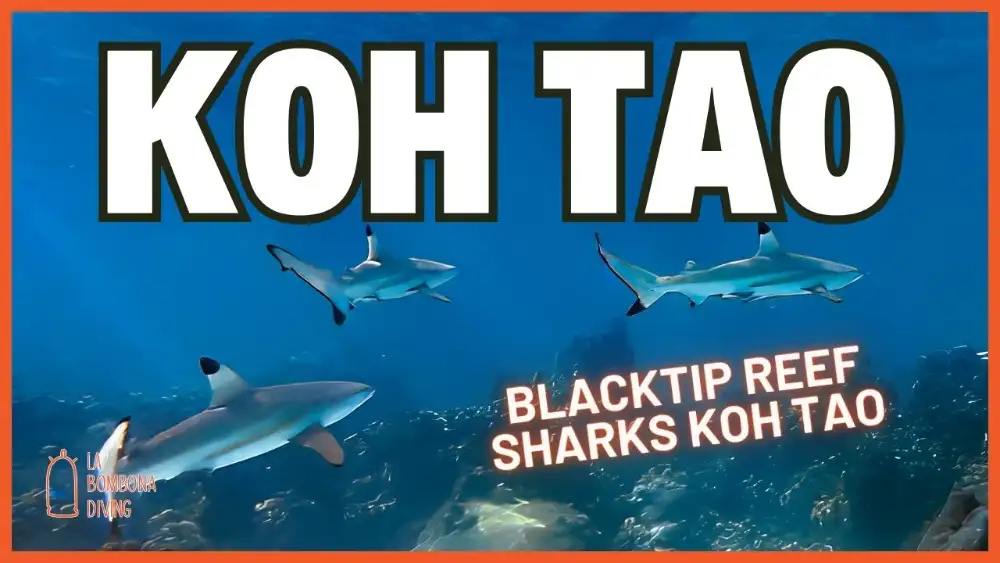
Everything about Koh Tao's blacktip reef sharks — how to identify them, how they behave and hunt, the bays where you can reliably see them, the best time of day, and how to watch them responsibly.
Message us on WhatsApp — courses, fun dives and honest advice about Koh Tao.
Chat on WhatsApp