How to identify the Red Lionfish, where it shelters around Koh Tao, when it hunts, how to stay safe around its venomous spines and how to photograph it respectfully.
12 May 2025 · updated 27 February 2026 · by Bryan Roseman
In short. Lionfish in Koh Tao are relatively rare but absolutely spectacular encounters for divers. The Red Lionfish (Pterois volitans) is the primary species found in Thailand’s Gulf waters, featuring stunning venomous spines, distinctive hunting behaviours and a striking appearance that makes them one of the most sought-after marine life sightings around the island.
Among the diverse marine life inhabiting Koh Tao’s underwater realm, few creatures command the same level of respect and fascination as the lionfish. While not commonly encountered compared to other reef species, these magnificent predators with their distinctive fan-like fins create unforgettable moments for fortunate divers. Their relative scarcity makes each sighting precious – a true underwater treasure that highlights the exceptional biodiversity of Thailand’s premier diving destination.
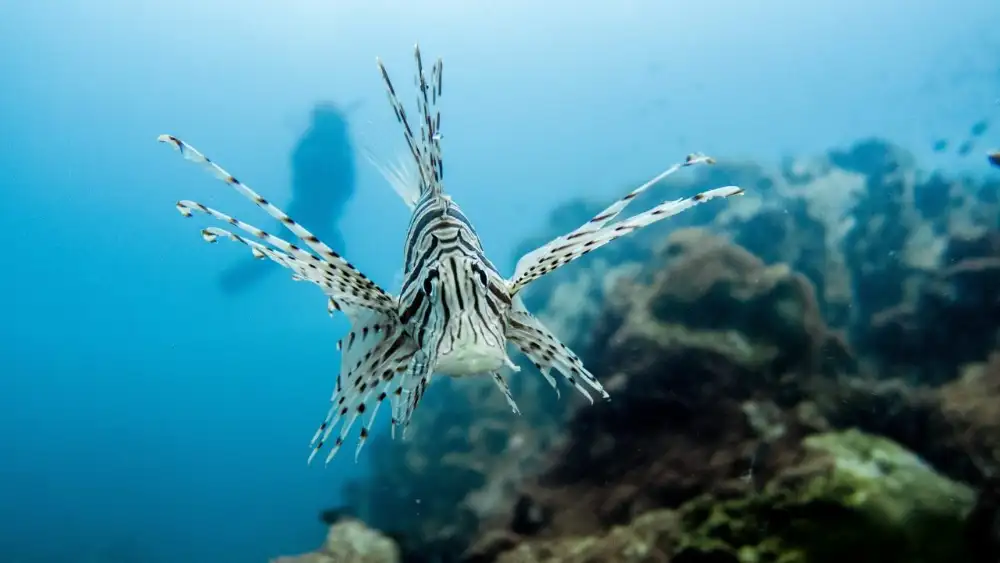
The primary species encountered in Koh Tao’s waters is the Red Lionfish (Pterois volitans), instantly recognisable by its striking appearance and elaborate fin structures. These remarkable fish represent one of nature’s most beautiful yet dangerous marine predators, combining stunning visual appeal with potent defensive capabilities.
| Feature | Description |
|---|---|
| Scientific name | Pterois volitans (Red Lionfish) |
| Size | Up to 30 cm (12 inches) in length |
| Coloration | Maroon to reddish-brown body with white/cream bands |
| Distinctive features | Up to 18 fan-shaped pectoral fins with venomous dorsal spines |
| Movement | Graceful, resembling a ballet dancer’s poise |
| Best observation times | Dawn/dusk or during night dives, when they are more active |
Red Lionfish typically reach about 30 centimetres in length when fully mature, creating an imposing presence despite their modest size. Their most distinctive feature – the elaborate array of fins – serves multiple purposes beyond aesthetics. The dorsal, anal and pelvic fins contain venomous spines that provide an effective defence against potential predators.
Their bold coloration serves as an aposematic warning to other marine creatures, signalling potential danger through nature’s universal language of bright colours and patterns. Beyond defensive adaptations, lionfish possess large mouths capable of rapid expansion to engulf prey whole, combined with excellent eyesight for precision hunting.
Lionfish exhibit fascinating behavioural patterns that reflect their predatory nature. During daylight hours they seek shelter in crevices, caves and under rock formations, becoming active during twilight and at night, when they emerge to hunt. Their movement is often described as ballet-like – graceful and deliberate, with elaborate fins creating hypnotic flowing effects.
As ambush predators, lionfish employ unique hunting strategies. They slowly stalk prey, using their large pectoral fins to corner smaller fish against reef structures. Once positioned, they strike with remarkable speed, creating powerful suction with their mouth that draws in prey up to half their own size.
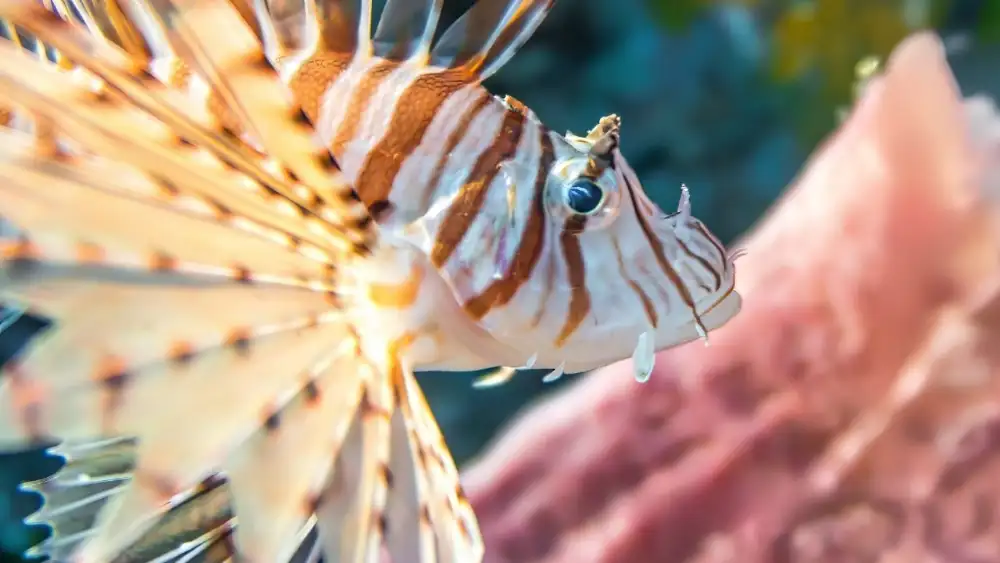
While generally not aggressive toward divers, lionfish adopt defensive postures when threatened. They turn to face perceived threats, spread their fins to appear larger and point their venomous spines outward. If cornered without an escape route, they can charge with surprising speed – not to attack, but to create an opportunity to flee.
This artificial reef created by a sunken naval vessel provides numerous hiding spots where lionfish often lurk under ledges and within the ship’s structures. The wreck’s complex architecture offers ideal shelter during daylight hours.
While famous for its barracuda schools, this deeper site occasionally rewards divers with lionfish sightings in crevices around the base of the pinnacle. Historical lionfish blooms have been recorded here.
With swim-throughs, caves and crevices, this site creates ideal habitat conditions where lionfish shelter during daylight hours. The complex reef structure provides excellent hunting grounds.
Though less common, lionfish are spotted at this site, particularly in the deeper sections where rocky formations provide suitable shelter. Night dives increase the chances of an encounter.
Night dives at these locations significantly increase your chances of spotting active lionfish, as this is when they emerge from their daytime hiding spots to hunt. Experienced local guides who know the specific crevices and overhangs where lionfish regularly shelter can dramatically improve encounter opportunities. Understanding the best diving conditions and seasons can also enhance your chances of marine life encounters.
Warning. Venomous spines. The lionfish’s beauty comes with serious danger – its dorsal, anal and pelvic spines contain potent venom that serves as its primary defence mechanism. While not typically aggressive toward divers, accidental contact can result in extremely painful stings causing swelling, nausea and severe symptoms.
Despite their venomous nature, lionfish pose minimal threat to divers who observe proper diving etiquette and maintain environmental awareness. Their venom is defensive – it is not used for hunting or aggression towards humans.
While lionfish have become a notorious invasive species in Caribbean and Western Atlantic waters, they exist in natural balance within their native Indo-Pacific range around Koh Tao. Here they serve as mid-level predators, helping to control populations of smaller reef fish and crustaceans.
Their presence in healthy numbers indicates a balanced ecosystem, as they have natural predators keeping their populations in check, including larger groupers, moray eels and sharks. Their relative scarcity around Koh Tao compared to other marine species may be attributed to natural predation, specific habitat preferences and regional population distributions. Learn more about marine conservation efforts in Koh Tao and how divers can contribute to protecting these ecosystems.
Note. Conservation. Unlike Caribbean waters, where lionfish hunting is encouraged to control invasive populations, in their native Thai waters lionfish should be appreciated as natural and valuable components of the ecosystem. Observe respectfully without disturbing these magnificent creatures. Discover more about responsible marine life observation practices.
Ready to search for lionfish in Koh Tao’s waters? Our experienced guides at La Bombona Diving know the exact locations and best times for lionfish sightings around the island, including the HTMS Sattakut wreck and night dive options when they are most active. Join us on a fun dive package – 2,000 ฿ for 2 dives, all equipment included, with expert marine life spotting in small groups.
Lionfish pose minimal danger to divers who maintain a respectful distance. They are not aggressive toward humans and only use their venomous spines defensively when threatened. Practising good buoyancy control and avoiding contact with marine life allows safe observation of these beautiful creatures without risk.
While both belong to the Scorpaenidae family and have venomous spines, lionfish feature elaborate flowing pectoral fins that extend well beyond their bodies. Scorpionfish lack these dramatic extensions and rely heavily on camouflage, appearing more rock-like. Lionfish hover in the water column more, while scorpionfish rest directly on the substrate.
Exit the water safely, remove any visible spines with tweezers and immerse the affected area in hot water (45°C/113°F) for at least 30 minutes. Heat helps break down the protein-based venom. Seek medical attention promptly, as additional pain management or treatment may be necessary depending on the severity of the reaction.
Lionfish are most active at dawn, dusk and night, when they emerge from their daytime hiding spots to hunt. Night dives offer excellent opportunities to observe hunting behaviour, while during daylight hours they shelter under ledges, in caves or among coral formations.
Yes, they are the same species (Pterois volitans), but with critical differences: in Koh Tao and throughout the Indo-Pacific, lionfish are a native species that evolved alongside natural predators and prey. In Caribbean and Western Atlantic waters they are a destructive invasive species without natural population controls. In their native Thai waters they should be respected and protected as natural components of the ecosystem.
Lionfish rarity around Koh Tao results from natural predation by larger reef predators, specific habitat preferences for certain reef structures and general population distributions in the Gulf of Thailand. Their scarcity makes encounters all the more special and memorable for fortunate divers.
For divers exploring Koh Tao’s underwater realm, encountering a lionfish is one of those special moments that highlight the extraordinary diversity and beauty of the island’s marine life. Despite their relative scarcity compared to other species, their unmistakable appearance and graceful movement create memorable underwater experiences. By understanding their behaviour and habitat preferences, and by diving responsibly around these magnificent creatures, visitors can appreciate one of the ocean’s most distinctive and fascinating residents.
More in Marine Life
 Marine Life
From barracuda and trevally to lionfish, cuttlefish, pufferfish, boxfish, moray eels, batfish and sea kraits — a species-by-species guide to the marine life you can meet on Koh Tao's reefs.
 Marine Life
The enigmatic scribbled filefish of Koh Tao — how to identify these living artworks, how they behave, where to find them on the island's dive sites, and the conservation challenges they face.
 Marine Life
Everything about Koh Tao's blacktip reef sharks — how to identify them, how they behave and hunt, the bays where you can reliably see them, the best time of day, and how to watch them responsibly.
Message us on WhatsApp — courses, fun dives and honest advice about Koh Tao.
Chat on WhatsApp