Depth, breathing, training, safety, equipment and cost compared side by side, so you can decide whether a snorkel afternoon, a Try Dive or a full Open Water course is the right fit for your Koh Tao trip.
21 August 2026 · updated 24 August 2026 · by Bryan Roseman
Key takeaways
- Snorkelling lets you explore the ocean from the surface, while scuba diving lets you explore underwater.
- Snorkelling is easier to learn and doesn’t require certification.
- Scuba diving requires training or a supervised Try Dive for beginners.
- Snorkelling is more affordable, while scuba diving offers a deeper and longer underwater experience.
- Snorkelling is ideal for beginners and casual explorers, while scuba diving is best for those who want to explore beyond the surface.
- Many people start with snorkelling before trying scuba diving.
If you are standing on a pier in Koh Tao trying to decide between a mask and snorkel afternoon and a full scuba course, you are asking the right question.
Scuba diving and snorkelling both let you explore the ocean, but they offer very different experiences and require different equipment.
We’ll compare everything that matters, from breathing and depth to equipment, certification, safety, cost, and which activity is right for your trip.
By the end of this guide, you’ll know:
| Snorkelling | Scuba diving | |
|---|---|---|
| Where you are in the water | Floating at the surface | Fully submerged |
| How you breathe | Snorkel tube, from the air above | Regulator connected to a tank |
| Typical depth | 1–4 metres (a strong snorkeller might hit 7 m) | 12–30 m as a recreational diver, deeper with advanced certs |
| Training needed | None, a quick briefing is enough | Certification course required |
| Time underwater | As long as you want, no air limit | 30–60 minutes per tank |
| Equipment | Mask, snorkel, fins | Mask, fins, tank, regulator, BCD, weights, often a wetsuit |
| Cost | Low. Gear rental is usually all you pay for | Higher. Course fees, gear and boat trips |
| Best for | Beginners, families, tight schedules, shallow reefs | Certified divers, deeper sites, longer time underwater |
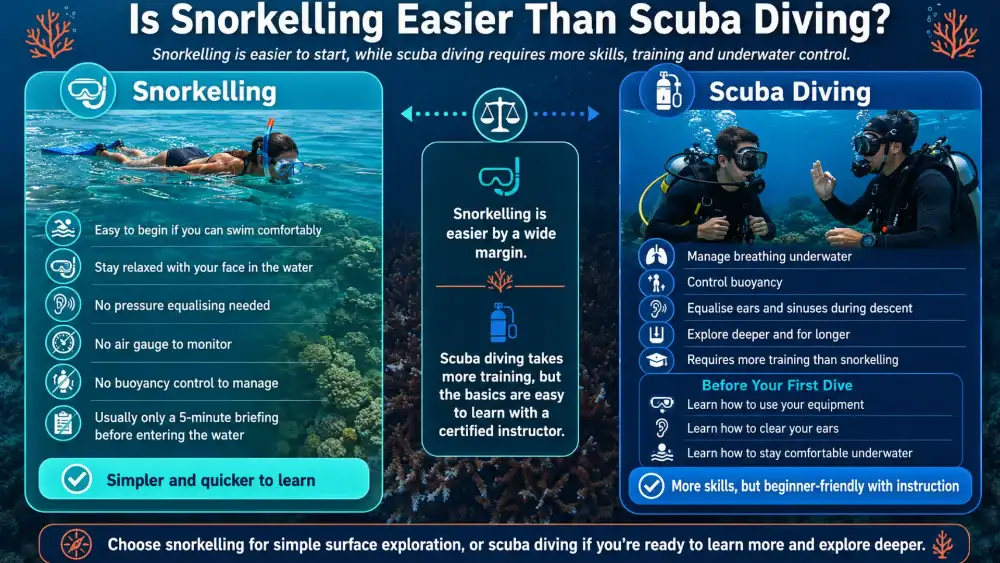
Yes, by a wide margin. You can snorkel if you can swim comfortably and stay relaxed with your face in the water. You don’t need to equalise pressure, monitor an air gauge or manage your buoyancy. Your guide gives a five-minute safety briefing before you enter the water.
This makes snorkelling ideal for people who want a relaxed way to explore the ocean without learning new technical skills. Most beginners feel comfortable after a short safety briefing.
Scuba diving, on the other hand, is a different kind of skill. You have to manage your breathing, your buoyancy, and pressure changes on your ears and sinuses as you descend. It takes a little more training because you’ll be exploring underwater for longer and at greater depths.
Before your first dive, you will learn a few basic skills, such as:
A certified instructor can teach these skills quickly and safely. It is also helpful to read a few common questions before your first dive to help you feel more prepared.
Do you need to be fit? Neither activity requires exceptional fitness. If you’re comfortable swimming and in generally good health, most beginners can enjoy snorkelling or complete a Try Dive after a medical questionnaire and a short instructor briefing.
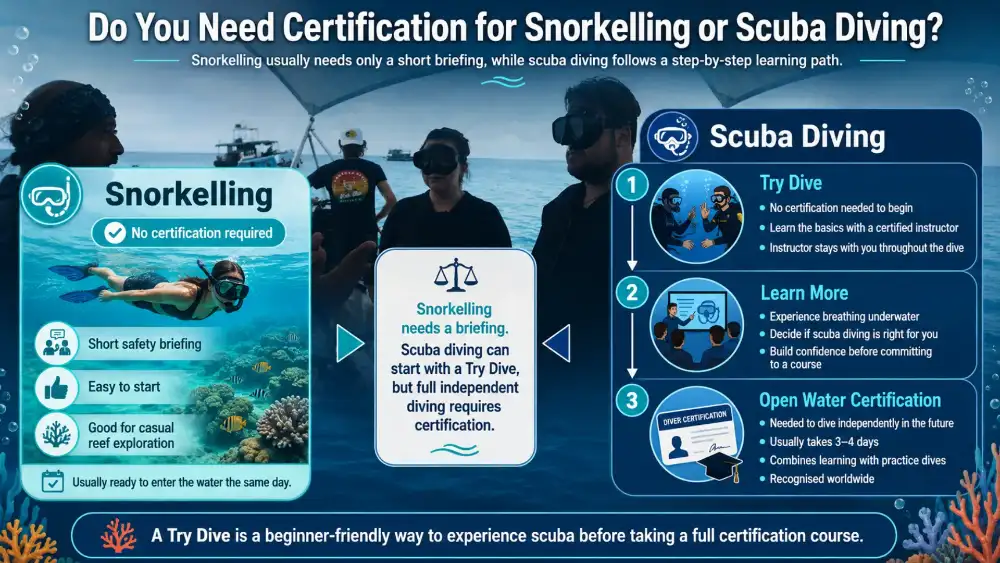
You don’t need a certification for snorkelling. A short safety briefing is all you need before getting in the water.
If you are curious about scuba diving, you don’t need to sign up for a certification course right away. Most dive schools offer a Try Dive, where a certified instructor teaches you the basics and stays with you throughout the dive.
It’s an easy way to experience breathing underwater and see if scuba diving is right for you.
If you decide to dive independently in the future, you will need an Open Water Diver certification. Most courses take three to four days and combine classroom learning with practice dives. Once you earn your certification, it’s recognised worldwide.
Note. Not every diving certification agency teaches the course the same way. Before you choose a dive school, it is worth comparing SSI vs RAID and PADI vs RAID. The main differences are in the teaching style, course structure and learning materials. All major certifications are recognised at dive centres around the world.
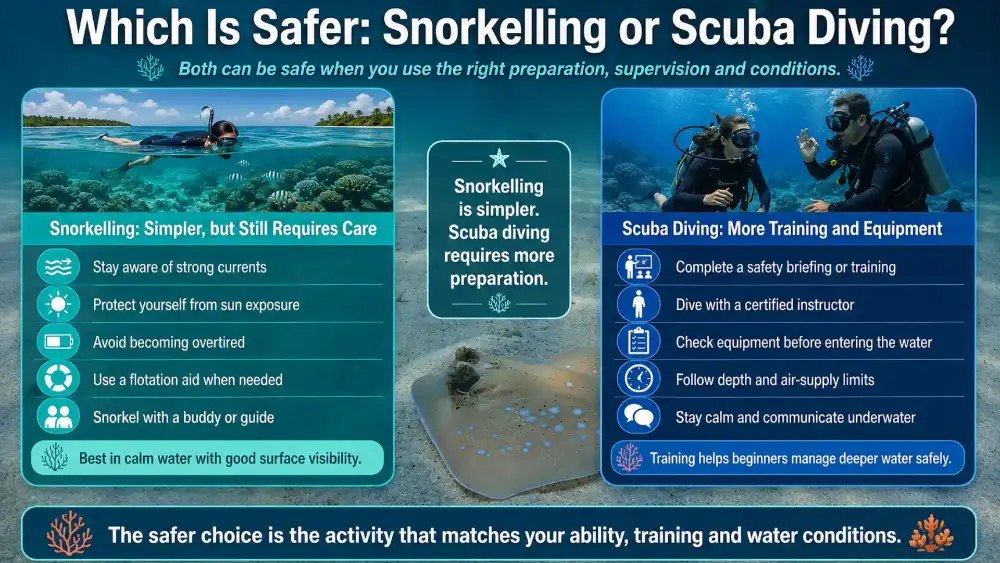
Both snorkelling and scuba diving are generally safe when done responsibly. Snorkelling is simpler because you stay at the surface and use very little equipment.
The main things to watch for are:
Scuba diving involves more equipment and deeper water, so you will receive proper training or dive with a certified instructor before going underwater. By following the safety guidelines, beginners can safely enjoy scuba diving too.
Many first-time divers worry about running out of air underwater. In reality, instructors regularly monitor your air supply throughout the dive and teach you how to check it yourself, making this situation extremely unlikely during a supervised beginner dive.
Note. Your safety also depends on the dive school you choose. Before you book, check the instructor-to-student ratio, equipment quality and class size. These factors are more important than choosing the cheapest course. A good gut-check is to run through 10 questions to ask before booking a dive school in Koh Tao and choose one that puts safety first.
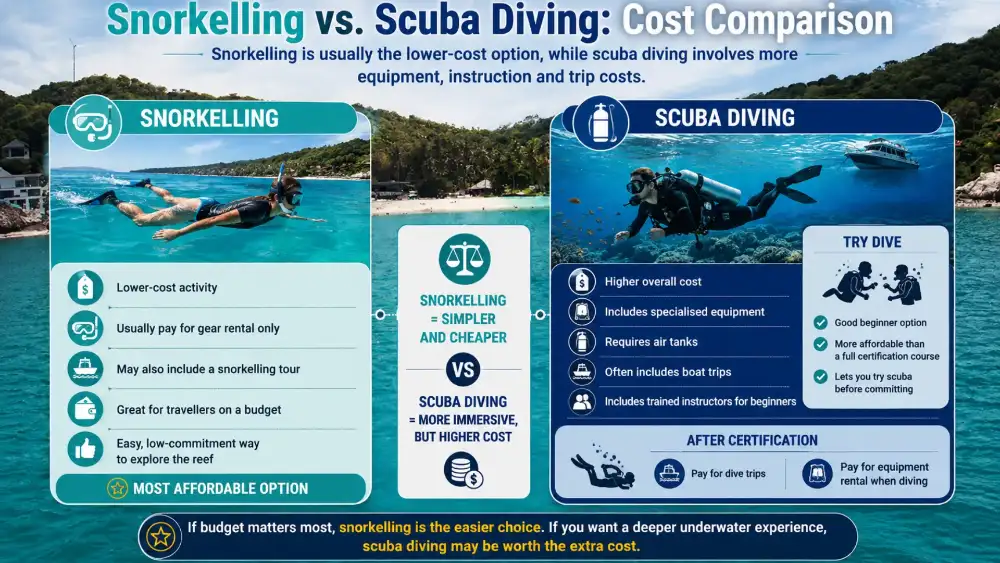
Snorkelling is the more affordable option. You will usually only pay for gear rental or a snorkelling tour, making it a great choice if you are on a budget.
Scuba diving costs more because your course fee covers:
While the upfront cost is higher, it provides skills you can use on dive trips around the world.
Once you are certified, you only need to pay for dive trips and equipment rental when you go diving. If you are planning your budget, check how much scuba diving costs in Koh Tao. Course fees, gear rental and boat trip prices can vary between dive schools.
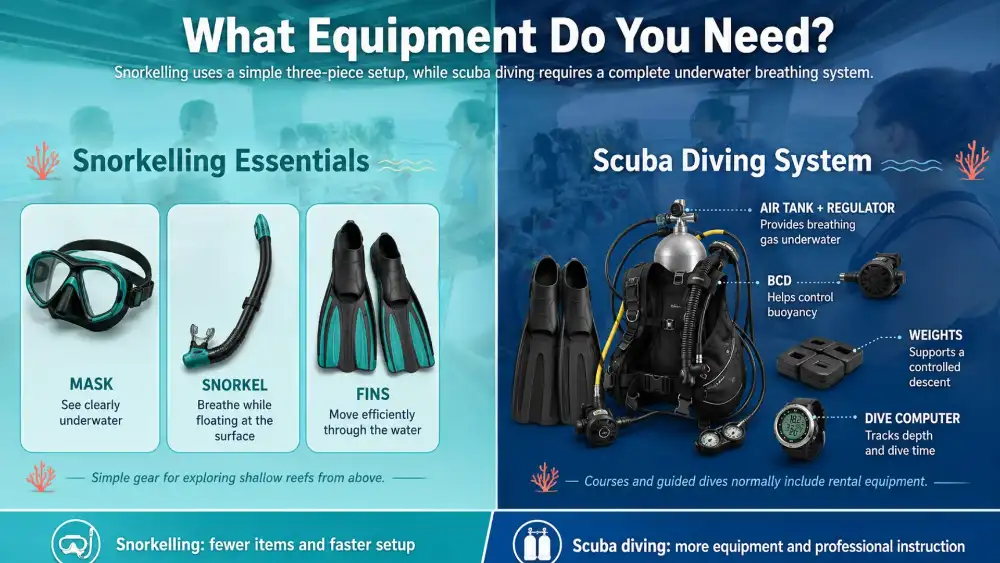
Snorkelling
In warm destinations like Koh Tao, that’s usually all you need.
Scuba diving
If you are taking a course or joining a guided dive, the dive school provides all the equipment, so there’s no need to buy your own gear.
Note. If you plan to bring a camera, read a beginner’s guide to underwater photography first. You will learn about buoyancy control, lighting, and how to get close to marine life without disturbing it. These skills are useful whether you are snorkelling at the surface or scuba diving underwater.
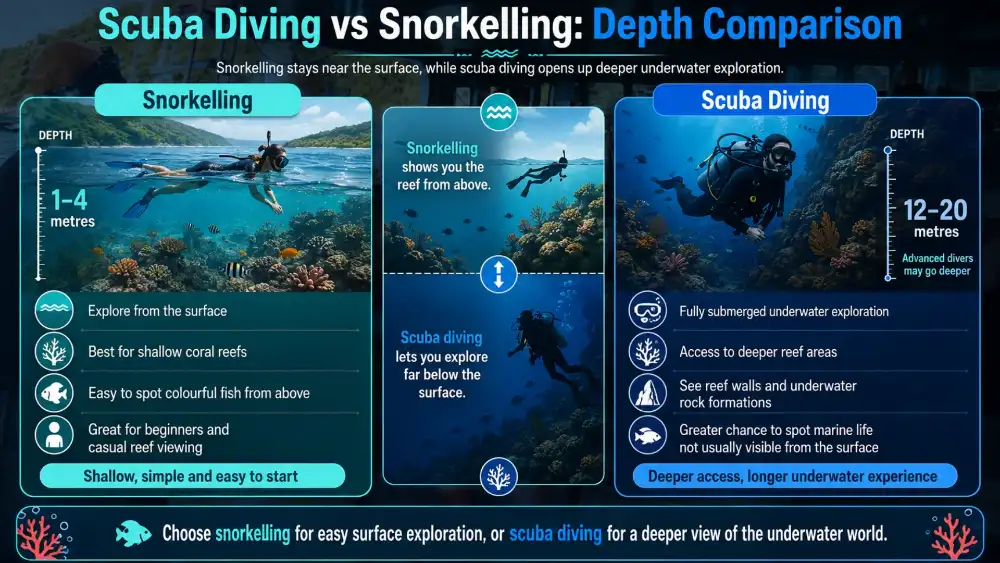
Snorkellers stay at the surface and usually explore water that is 1 to 4 metres deep. This makes it ideal for viewing shallow coral reefs and colourful fish from above.
Scuba divers can explore much deeper. Certified recreational divers usually dive between 12 and 20 metres, with advanced divers able to go even deeper. Greater depth also means seeing marine life that rarely comes close to the surface, such as larger reef fish, turtles resting beneath coral overhangs, and underwater rock formations that snorkellers can’t easily reach.
Diving conditions change throughout the year. Before you book your trip, check the best time to dive in Koh Tao. Visibility, water temperature and the marine life you can see all vary by season.
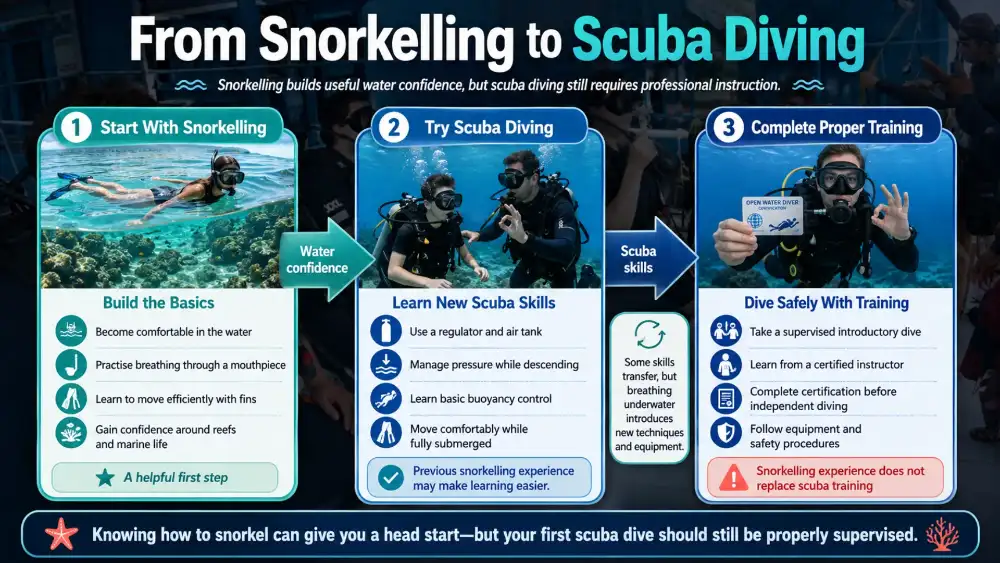
Yes. In fact, snorkelling is a great way to prepare for scuba diving. It helps you become comfortable in the water and get used to breathing through a mouthpiece.
Scuba diving builds on those basics by teaching you how to use scuba equipment and move comfortably underwater.
If you have snorkelled before, you may find it easier to learn scuba diving. That’s because you’ll already be familiar with wearing a mask, breathing through a mouthpiece and staying relaxed in the water. Scuba training then builds on those skills by teaching buoyancy control, underwater communication and safe diving practices.
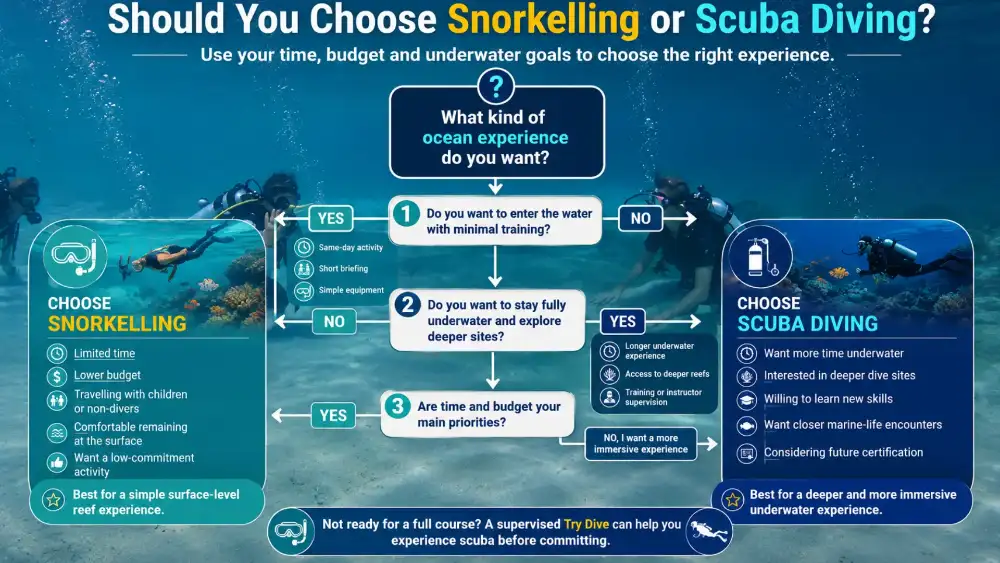
Snorkelling makes the most sense when:
Scuba diving is a better choice if you want to stay underwater longer and explore deeper dive sites. You will need to spend a few days learning the basic skills. Koh Tao is one of the best places to learn scuba diving because the water is calm, warm and clear throughout the year. The island also has one of the highest concentrations of dive schools in the world.
| If you are… | Best choice | Why |
|---|---|---|
| Short on time | Snorkelling | Quick to start |
| Travelling with children | Snorkelling | Easier for beginners |
| Curious about scuba | Try Dive | Experience diving without certification |
| Want to dive worldwide | Open Water course | International certification |
| Love marine life | Scuba diving | Access to deeper reefs |
Both snorkelling and scuba diving offer unforgettable ways to experience the ocean, but they’re designed for different types of adventures. Snorkelling is perfect if you want an easy, affordable way to enjoy coral reefs from the surface. If you’re ready to spend more time underwater and explore a whole new world, scuba diving is well worth learning. If you’re still unsure, a Try Dive is an excellent way to experience scuba diving before committing to a full certification course.
Neither is objectively better because they serve different purposes. Snorkelling wins on ease, cost and flexibility. Scuba diving offers greater depth, more time underwater, and access to marine life you simply can't see from the surface. Most divers started out as snorkellers first.
It's not recommended without extra support. Snorkelling still means floating face-down in open water, so basic swimming ability and comfort in the water matter. Non-swimmers can sometimes snorkel with a flotation vest and close guide supervision in calm, shallow conditions. It's worth being upfront with your tour operator beforehand so they can set you up safely.
Yes. Snorkelling is easier because it requires no certification and only basic water skills. Scuba diving involves additional training for skills like buoyancy control and equalising.
You can briefly duck-dive a few metres below the surface while snorkelling, but you're holding your breath the whole time. The snorkel tube only works when the top is above water. It's not the same as sustained underwater breathing, which is made possible by a scuba tank and regulator.
Avoid all-white or very pale, shiny gear in open water. From below, it can resemble the underside of a fish or bait, which may draw unwanted attention from larger predators in some locations. Bright or high-visibility colours are generally better for safety because they make you easier for boats to see and reduce the chance of being mistaken for prey.
Snorkelling involves steady, controlled breathing and light aerobic activity, which many people find pleasant and relaxing. However, it's not a substitute for medical advice. Anyone with a respiratory or heart condition should check with a doctor before snorkelling, because breathing through a tube against water resistance requires a bit of extra effort.
People with serious heart or lung conditions, uncontrolled seizures, or a strong fear of open water should speak with a doctor or reconsider before snorkelling. Anyone who isn't a confident swimmer should only snorkel with flotation support and close supervision.
At the surface, you can stay as long as you like because a snorkel provides continuous air from above, so there's no time limit. If you duck-dive below the surface, you're limited to a single breath-hold. For most people, that's somewhere between 30 seconds and a couple of minutes.
Don't touch or stand on coral. Don't chase or grab marine life. Don't snorkel alone in open water, and don't ignore currents or boat traffic. It's also best to avoid snorkelling right after a large meal or after drinking alcohol. Whenever possible, snorkel with a buddy or guide instead of going alone.
More in Diving Tips
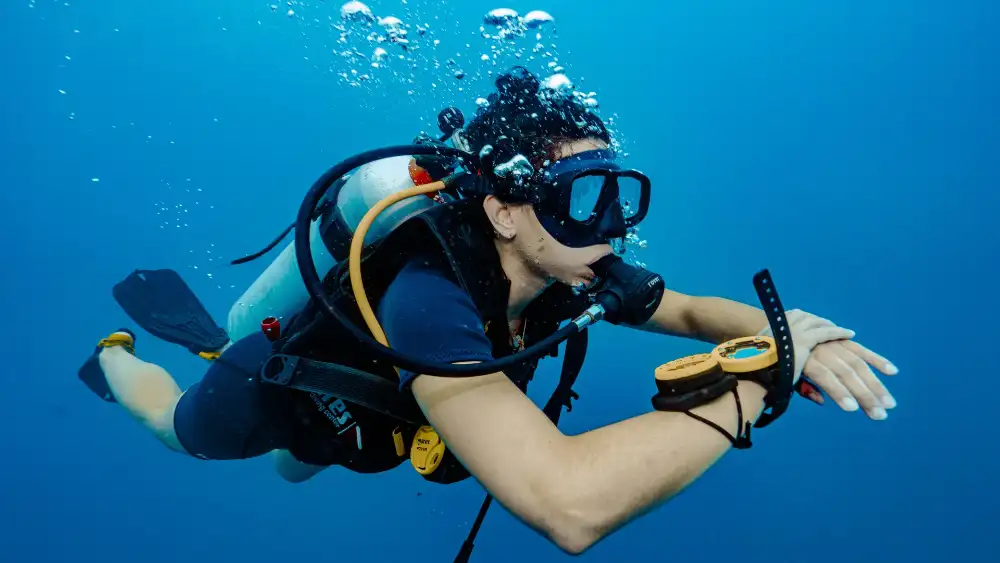 Diving Tips
An Open Water course in Koh Tao usually takes three to four days — but the advertised number of days tells only part of the story. Here is what actually fills those days, why schedules differ between dive schools, and how to plan your stay around the course.
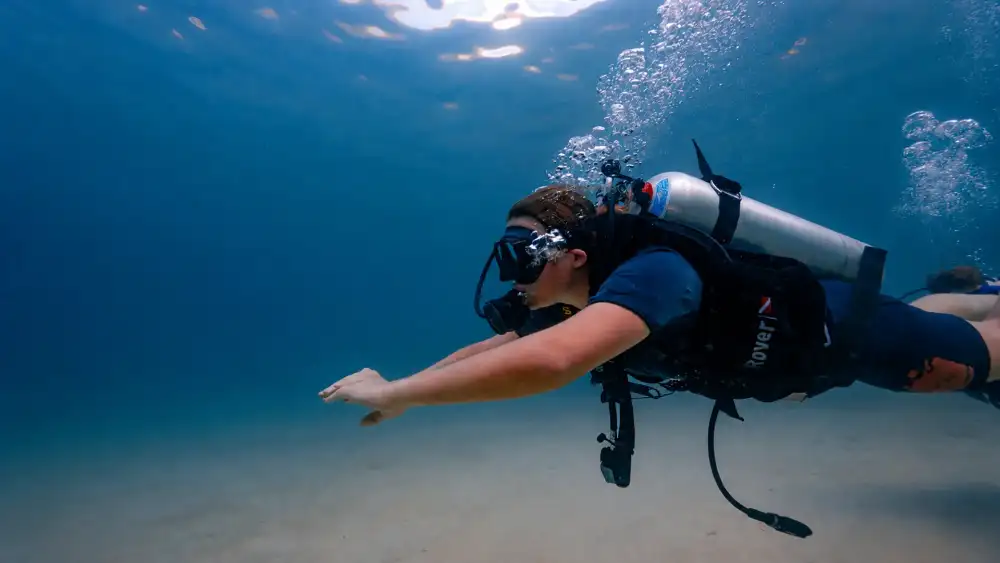 Diving Tips
PADI, RAID and SSI compared across the whole training pathway — Open Water, advanced, rescue, specialities, Divemaster, instructor and technical — plus what actually decides the quality of your course in Koh Tao.
 Diving Tips
Scuba certifications never expire, but your dive history matters. When a refresher dive makes sense in Koh Tao, what to expect after a long break, and how La Bombona Diving's Reboot Course works.
Message us on WhatsApp — courses, fun dives and honest advice about Koh Tao.
Chat on WhatsApp