How to take clear, colourful underwater photos on your Koh Tao dives — the gear that actually matters, buoyancy first, light and colour at depth, starter camera settings, composition, what you will photograph and simple post-processing.
4 June 2026 · by Bryan Roseman
In short. This beginner’s guide to underwater photography explains how to capture clear, vibrant images while diving in Koh Tao. It covers essential gear, buoyancy control, lighting, camera settings, composition, marine life photography, common mistakes, post-processing tips and expert insights to help new divers photograph the underwater world confidently, responsibly and effectively.
Underwater photography is the art of capturing marine life, coral reefs and underwater environments while diving or snorkelling, using waterproof cameras or protective housings. For beginners, getting started does not require expensive professional equipment. Success underwater begins with understanding the basics of diving, buoyancy and camera handling beneath the surface.
Since water affects natural light and quickly removes colours like red and orange, learning how light behaves underwater is essential for creating clear, vibrant images. Composition also plays a major role, helping photographers frame marine subjects naturally and attractively.
With the right knowledge, steady dive skills and simple beginner-friendly gear, anyone can start exploring and capturing the beauty of the underwater world with confidence and creativity.
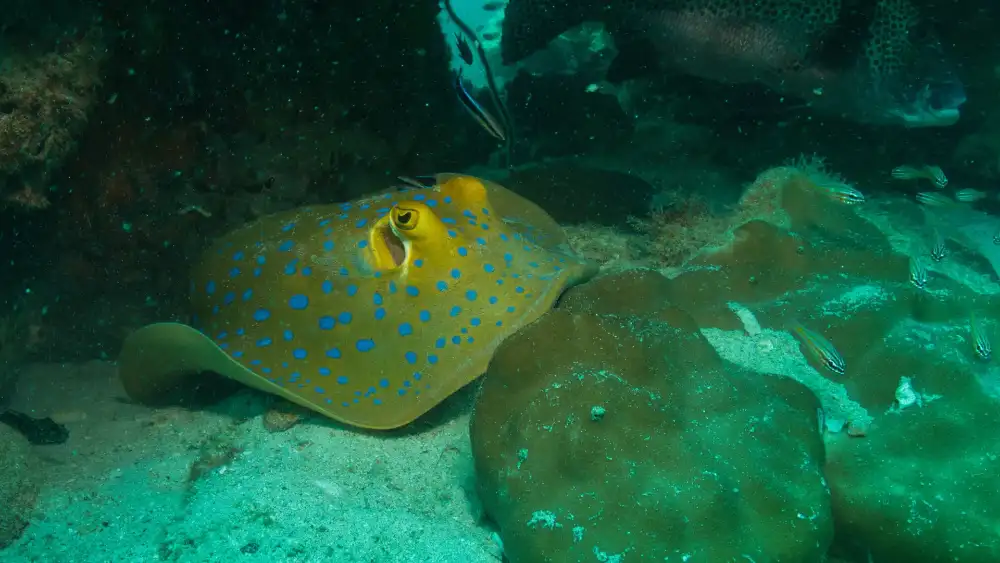
Underwater photography is challenging because water absorbs light and colour rapidly, reduces contrast and makes camera stability far more difficult than on land.
Most beginners expect to point and shoot the same way they would above water. The results are almost always disappointing. Here is why:
According to NOAA Fisheries, underwater optics technology plays a major role in marine research because collecting clear visual data underwater is often difficult due to limited light, depth and environmental conditions.
Add to this the constant movement of water, fast-moving marine life and the challenge of controlling your breathing and buoyancy while handling a camera, and it becomes clear why underwater photography requires patience and regular practice.
Beginner insight. The ocean does not reward impatience. Slow down, breathe steadily, and let the scene come to you rather than chasing it.
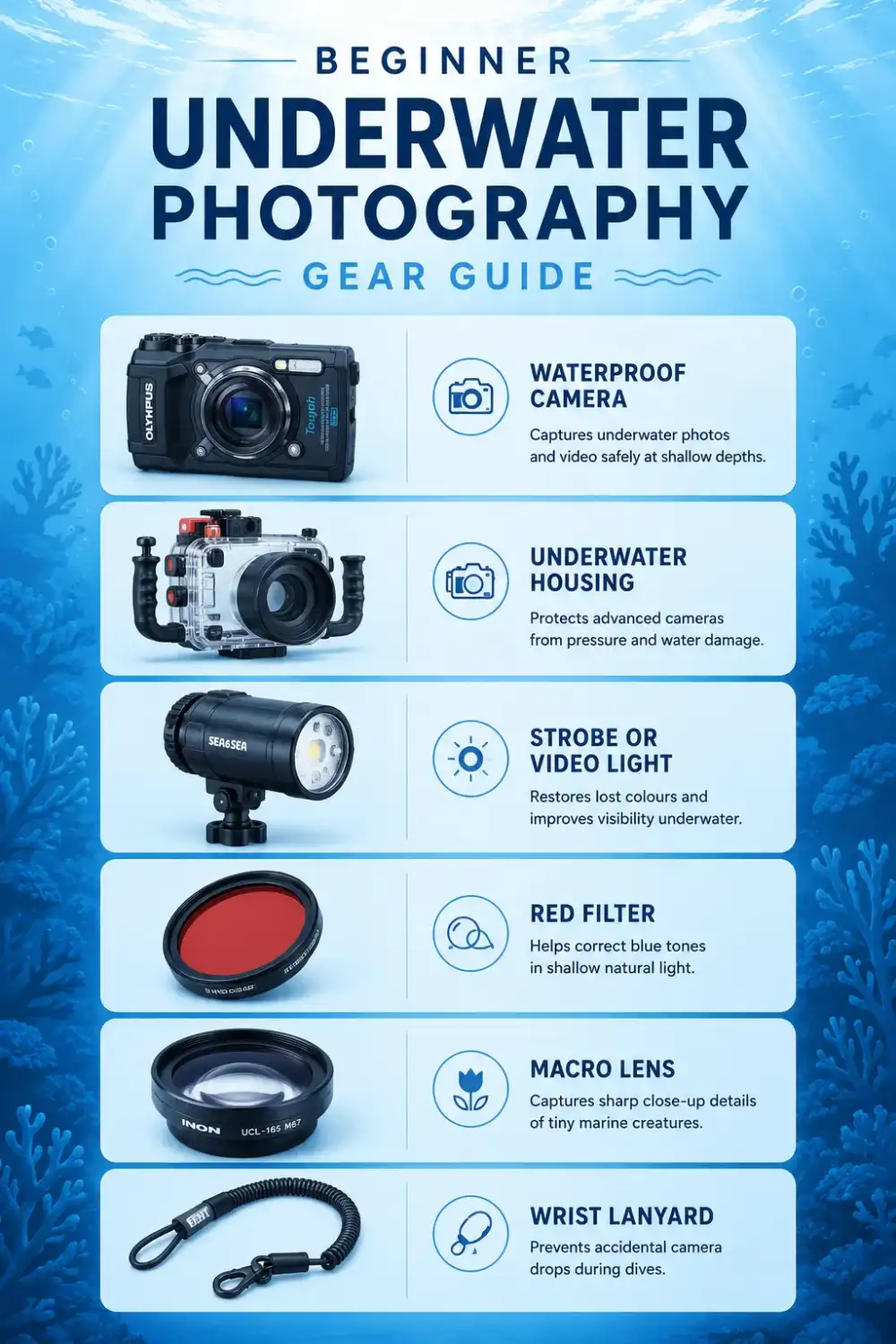
Beginner underwater photographers need a waterproof camera or a housed camera system, a strobe or video light, and a basic understanding of how each piece of equipment behaves underwater.
You do not need to spend thousands. Start simple, build confidence, and upgrade as your skills grow.
| Camera Type | Depth Rating | Best For | Budget Level |
|---|---|---|---|
| Waterproof compact (Olympus TG series, GoPro) | 15 to 20 m | Wide shots, reef overviews | Low |
| Mirrorless camera in housing | 40 m and beyond | Sharp detail, manual control | Mid to high |
| DSLR in housing | 40 m and beyond | Professional output | High |
Beginner tip. A GoPro alone will not capture nudibranch detail or reef texture with any sharpness. If small subjects interest you, add a clip-on macro lens from day one.
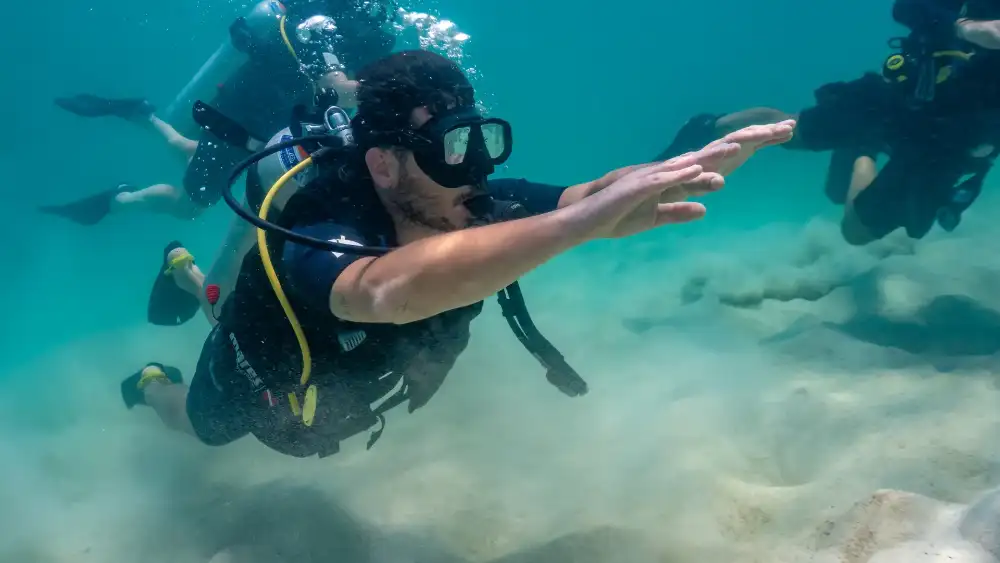
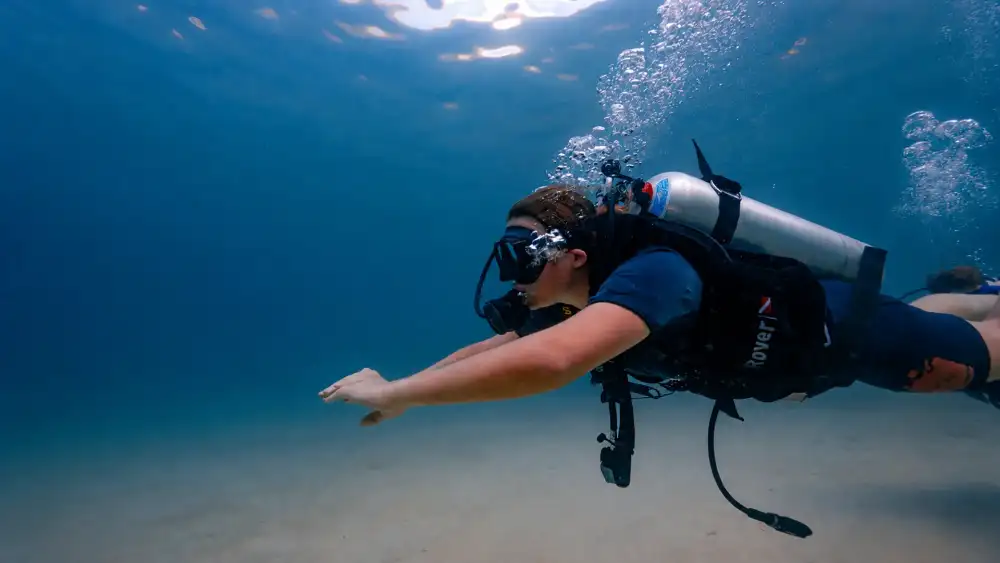
You should achieve confident, controlled buoyancy before introducing a camera underwater. Poor buoyancy is the single biggest cause of blurry images, reef damage and missed shots.
NOAA and PADI both emphasise buoyancy as the foundation of responsible and effective underwater photography. A camera adds distraction, changes your weight distribution, and is an extra thing to manage. If your buoyancy is not solid, the camera makes everything worse.
Building these skills starts with your Open Water certification and is refined through your Advanced course (Explorer 30), which includes a buoyancy dive specifically designed to sharpen this skill.
Note. Most blurry underwater photos are not a camera problem. They are a buoyancy problem. Fix your buoyancy first, and your photos will improve immediately.
Underwater light behaves differently from light on land because water absorbs different wavelengths at different depths, removing warm colours and leaving a dominant blue or green cast in natural-light images.
Understanding this is what separates average underwater shots from extraordinary ones.
Tip. NOAA guidance on responsible wildlife photography recommends avoiding flash near sensitive marine species. Always check with your divemaster before using a strobe near any creature they identify as sensitive.
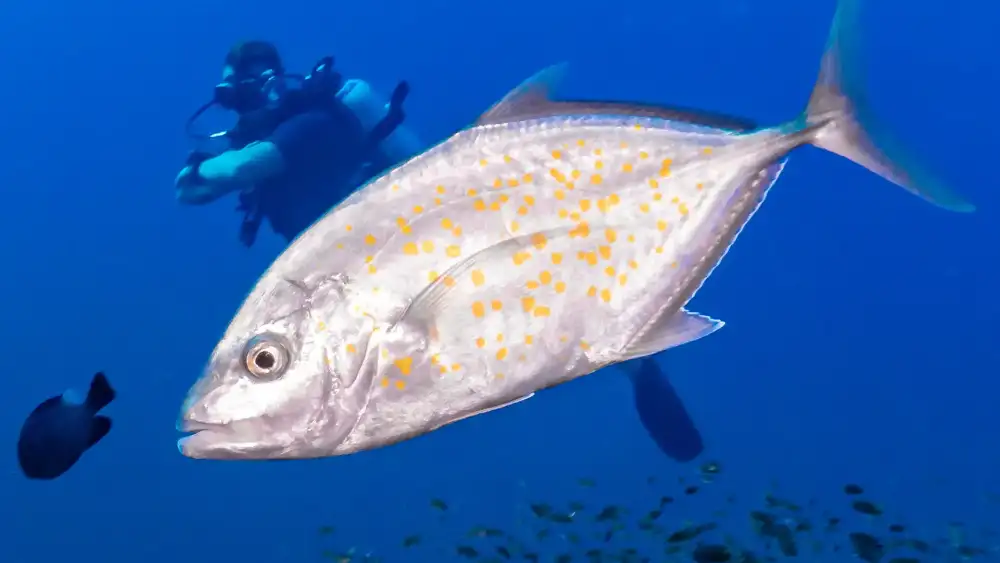
Start with Aperture Priority mode combined with Auto ISO. This gives you control over depth of field while the camera manages exposure automatically, which is ideal when you are still learning to manage buoyancy and composition at the same time.
| Scenario | Aperture | Shutter Speed | ISO |
|---|---|---|---|
| Macro (nudibranch, coral polyp) | f/8 to f/11 | 1/100 to 1/200 | 100 to 200 |
| Wide-angle reef overview | f/5.6 to f/8 | 1/125 | 200 to 400 |
| Natural-light silhouette | f/8 | 1/250 | 100 |
| Low-visibility conditions | f/4 to f/5.6 | 1/100 | 400 to 800 |
Good underwater composition means getting close to your subject, shooting at eye level or upwards, and using the rule of thirds to avoid centred, flat images.
Water reduces colour, contrast and sharpness with every additional centimetre between you and your subject. Distance is your biggest enemy.
Beginner insight. Shooting downwards at a subject produces flat, uninspiring images. Get low, position yourself beneath or level with the subject, and shoot upwards to include the open water or reef as a natural background.
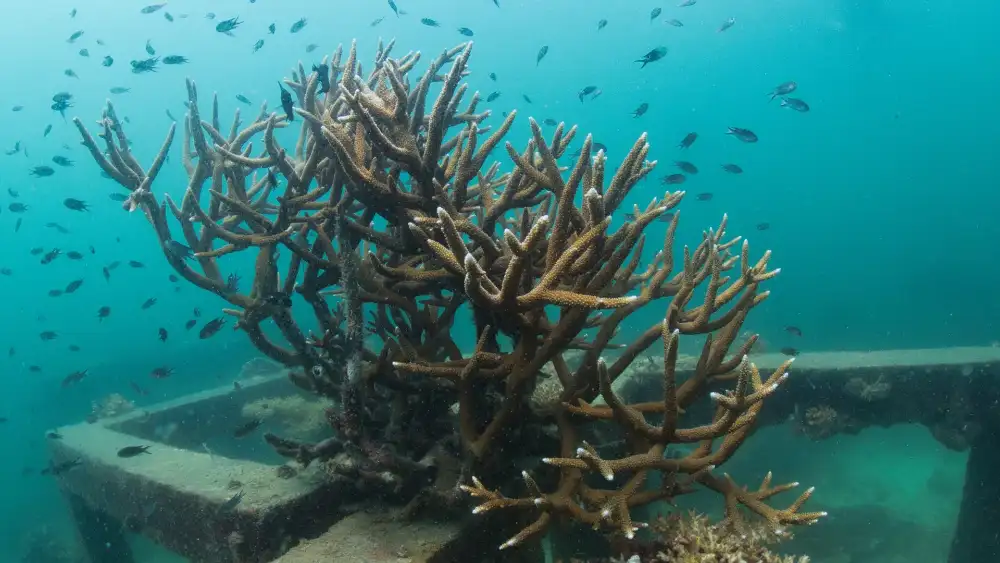
Koh Tao’s waters are home to over 223 species of reef fish, two species of endangered sea turtle, broadclub cuttlefish, whale sharks, blue-spotted rays, nudibranchs and seasonal bioluminescence on night dives.
This is the section every beginner photographer needs before their first dive. Knowing what you will encounter means you can plan your camera settings, lens choice and shot approach before you even enter the water.
| Marine Species | Shot Type | Best Site | When to Find Them | Difficulty |
|---|---|---|---|---|
| Nudibranch | Macro | Japanese Gardens | Year-round, species rotate seasonally | Beginner |
| Hawksbill sea turtle | Wide angle | Shark Island | Year-round | Beginner |
| Broadclub cuttlefish | Macro and behavioural | Twins | Mating season: March to May | Beginner |
| Blue-spotted ribbontail ray | Wide angle | White Rock | Year-round | Beginner |
| Blacktip reef shark | Wide angle | Chumphon Pinnacle | Year-round | Intermediate |
| Whale shark | Wide angle | Chumphon Pinnacle and Sail Rock | Sporadic, most common March to May | Intermediate |
| Banded sea snake | Environmental wide | Multiple reef sites | Year-round | Beginner |
| Bioluminescence | Ambient night exposure | Any night dive site | Night dives year-round | Beginner |
Explore the full details of what swims around this island in the Koh Tao marine life guide.
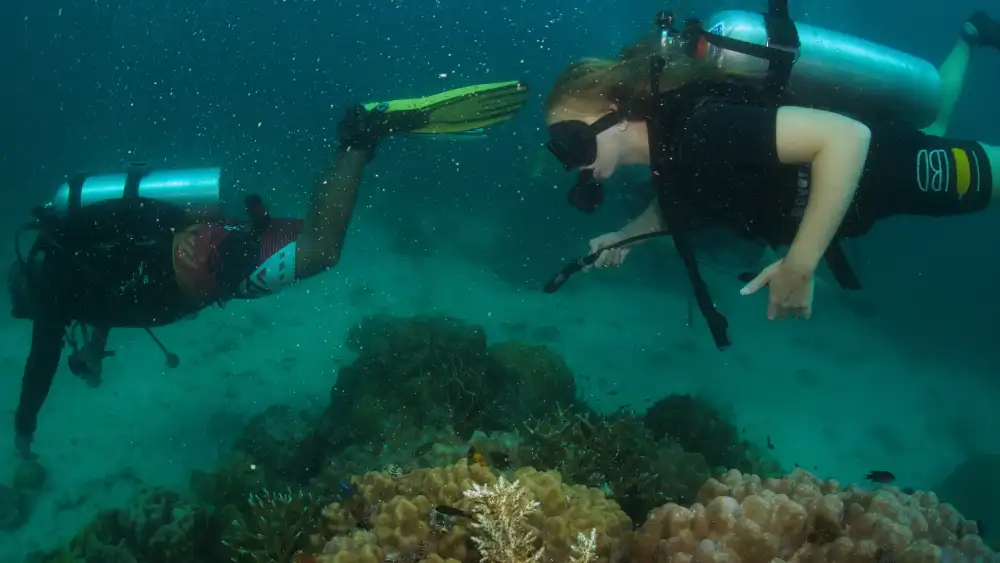
The best underwater photographers on Koh Tao dive early, ask their divemaster specific questions before every dive, manage light deliberately, and spend weeks building diving skills before ever touching a camera.
Visibility is usually clearest between 8 am and 11 am, before boat traffic disturbs sediment on the seabed. Morning dives often produce noticeably sharper and cleaner images than afternoon dives at the same site.
Experienced divemasters know which nudibranch species are active, where they are hiding, and the best depth to find them. This helps photographers choose the right lens and prepare before entering the water.
Flash photography ruins natural bioluminescence. Skilled photographers use manual mode, long exposures and steady buoyancy to capture the natural glow created by plankton during night dives.
Broadclub cuttlefish mating season usually runs from March to May around Koh Tao. Local guides often know the exact coral areas where egg-laying activity happens, giving photographers better opportunities for rare underwater shots.
Shooting too far from the subject. Water particles quickly reduce sharpness, contrast and colour underwater. The closer you are to your subject, the clearer and more detailed your image will appear.
Using the wrong white balance with flash. Combining a strobe with Underwater or Cloudy white balance often creates orange, overexposed images. Use Auto white balance when shooting with artificial light.
Touching the reef for stability. Using coral to steady yourself damages fragile reef systems and disturbs marine life. Good buoyancy control should always replace physical contact with the reef.
Using flash near sensitive marine life. Repeated bright flashes can stress species such as sea turtles, whale sharks and cave-dwelling creatures. Always follow your guide’s advice before using flash underwater.
Starting photography before building dive skills. Adding a camera too early often slows diving progress and affects safety underwater. Focus on buoyancy, breathing and movement control before introducing photography equipment.
Post-processing underwater images means correcting the blue or green colour cast, restoring contrast and applying lens corrections. Adobe Lightroom is the most widely used tool for this.
A quick beginner workflow in Lightroom:
Keep it simple at this stage. Heavy editing cannot rescue a fundamentally poor image. The best post-processing is the one you barely notice.
Great underwater photography starts long before you pick up a camera. It starts the moment you decide to learn to dive properly, build your buoyancy and truly understand the ocean around you. Master the water first, and the photographs will follow naturally, beautifully, and on every single dive.
Ready to dive into your first underwater shot? The best underwater photographs are taken by confident, skilled divers. At La Bombona Diving Koh Tao, our experienced instructors have been teaching divers since 2014 in some of Southeast Asia’s most biodiverse waters. Start with an Open Water course and build the buoyancy skills that make photography possible. Already certified? Join one of our guided fun dives or experience the magic of a night dive and capture bioluminescence for the first time. Explore our courses.
Basic water confidence is essential, but an Open Water certification is strongly recommended before using a camera underwater. Certified diving improves buoyancy control, safety and overall comfort, which are all important for taking stable underwater photographs.
Olympus TG series cameras and GoPro models are popular beginner choices because they are compact, durable and easy to use underwater. For more creative control and sharper image quality, many photographers eventually upgrade to mirrorless cameras with underwater housings.
Most beginner divers with an Open Water certification can safely dive to 18 metres. Many colourful marine subjects, including turtles and reef fish, are commonly found between 5 and 15 metres, where lighting conditions are also better for photography.
Water absorbs warm colours like red and orange very quickly, especially below 10 metres. Without proper lighting, white balance adjustment or a colour-correcting filter, underwater images naturally appear blue or green due to the limited light wavelengths.
Flash photography can disturb sensitive marine animals if used repeatedly at close range. Species such as turtles, seahorses and cave-dwelling creatures may become stressed, so responsible photographers avoid excessive flash use and follow local diving guidelines underwater.
More in Diving Tips
 Diving Tips
Depth, breathing, training, safety, equipment and cost compared side by side, so you can decide whether a snorkel afternoon, a Try Dive or a full Open Water course is the right fit for your Koh Tao trip.
 Diving Tips
An Open Water course in Koh Tao usually takes three to four days — but the advertised number of days tells only part of the story. Here is what actually fills those days, why schedules differ between dive schools, and how to plan your stay around the course.
 Diving Tips
PADI, RAID and SSI compared across the whole training pathway — Open Water, advanced, rescue, specialities, Divemaster, instructor and technical — plus what actually decides the quality of your course in Koh Tao.
Message us on WhatsApp — courses, fun dives and honest advice about Koh Tao.
Chat on WhatsApp