How many calories scuba diving really burns (300–700 per hour), why cold water, currents and gear push the number up, and how to fuel and recover on dive days.
24 May 2025 · updated 27 February 2026 · by Bryan Roseman
In short. Scuba diving burns 300–700 calories per hour depending on water temperature, diving conditions and your body weight. Cold-water diving significantly increases calorie expenditure, while factors like current strength, equipment handling and diving technique all affect the intensity of your underwater workout.
Scuba diving provides an exceptional combination of adventure and exercise that many people don’t realise qualifies as a serious workout. While exploring Koh Tao’s incredible marine life, you’re simultaneously engaging in cardiovascular exercise, strength training and endurance conditioning that can rival traditional gym workouts.
Understanding how many calories you burn while diving helps you prepare better for dive days, maintain proper nutrition and appreciate the physical benefits of your underwater adventures. Whether you’re planning to visit Koh Tao’s top dive sites or simply curious about diving’s fitness benefits, this guide covers everything you need to know.
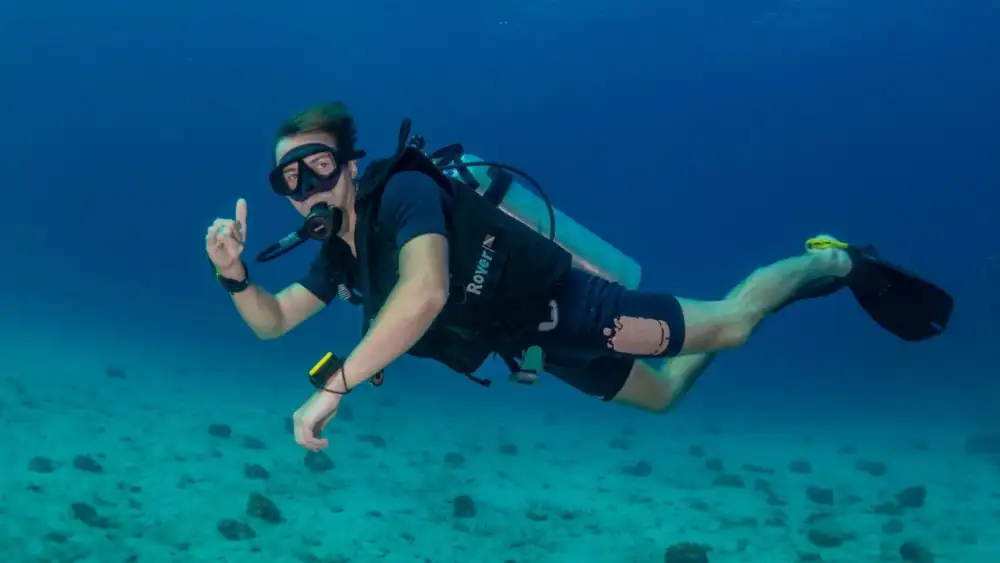
The calorie burn from scuba diving varies significantly based on multiple factors, but research and diving physiology studies provide clear ranges for different conditions:
| Diving conditions | Calories per hour | Equivalent activity | Intensity level |
|---|---|---|---|
| Warm water (tropical) | 300–400 | Brisk walking | Moderate |
| Cold-water diving | 500–700 | Cycling (12–14 mph) | High |
| Drift diving | 400–500 | Swimming laps | Moderate–high |
| Strong current conditions | 600–800 | Running (6 mph) | High |
| Shore diving with gear | 400–600 | Hiking with a pack | Moderate–high |
These numbers represent substantial calorie expenditure, especially considering that diving feels more like exploration than exercise. A typical two-dive day can burn 600–1,400 calories, making it an excellent addition to any fitness routine.
To estimate how many calories you’ll burn on a dive, combine three inputs:
Take the hourly figure for your conditions from the table above, scale it to your dive time, and adjust up or down a little for body weight. Then compare the result with the equivalent land activity in the table to see what your dive was worth.
Several unique physiological and physical factors make diving a surprisingly demanding activity that burns significant calories:
Your body constantly works to maintain core temperature underwater. Even in tropical waters around 26–28°C, heat loss occurs 25 times faster than in air, requiring continuous metabolic energy to compensate.
Carrying and manoeuvring 40–60 pounds (18–27 kg) of dive gear requires significant muscle engagement. From walking to entry points to maintaining position underwater, equipment weight adds substantial physical demands.
Water provides 800 times more resistance than air. Every movement becomes a strength exercise, engaging multiple muscle groups simultaneously while swimming, adjusting position or fighting currents.
Breathing compressed air requires additional effort. Your respiratory muscles work harder to move denser gas, and maintaining controlled breathing patterns demands conscious energy expenditure.
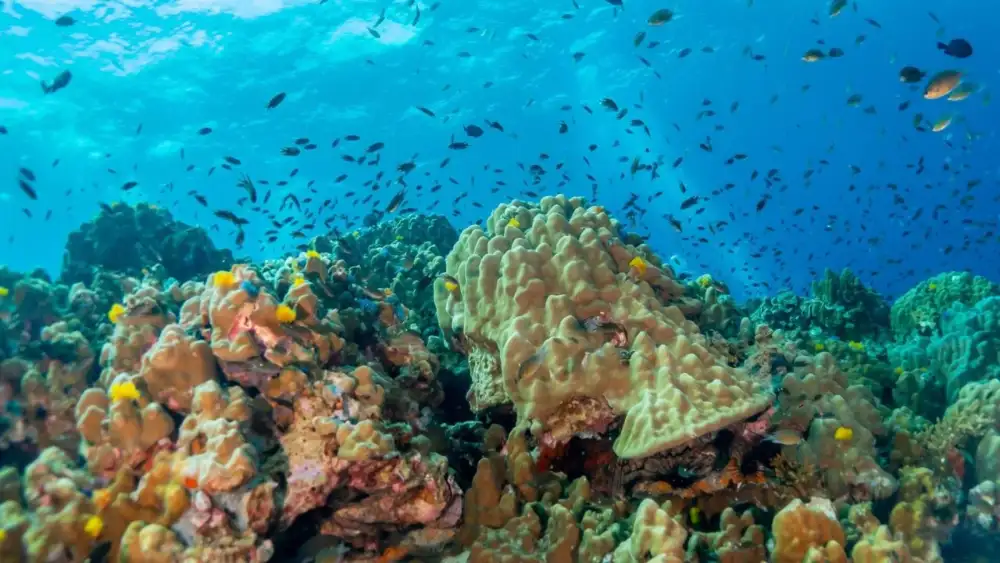
Water temperature is the single most significant factor affecting calories burned while diving. Cold water dramatically increases calorie expenditure as your body’s heating system works overtime to maintain core temperature. This process, called thermogenesis, can add 200–400 calories per hour to your baseline expenditure even before you feel cold.
When planning diving adventures, consider that Koh Tao’s water temperatures remain consistently warm year-round, typically 26–30°C, which provides a moderate calorie burn — perfect for comfortable, extended diving.
Water movement significantly affects your workout intensity:
Your skill level directly impacts energy expenditure. Experienced divers with excellent buoyancy control and efficient movement patterns burn fewer calories than beginners who make frequent adjustments, overweight themselves or use inefficient swimming techniques.
New divers benefit from taking comprehensive courses that teach energy-efficient techniques. Koh Tao offers diving programmes for all experience levels, helping you develop skills that make diving both safer and less physically demanding.
Shore diving generally burns more calories than boat diving due to additional physical demands:
Certain diving specialities naturally increase calorie burn:
Exploring Koh Tao’s diverse marine ecosystems naturally incorporates many of these elements, from photography opportunities to varying depth ranges and current conditions.
With potentially 600–1,400 calories burned during a two-dive day, proper nutrition becomes crucial for maintaining energy, safety and enjoyment. Your nutritional strategy should account for the unique demands of diving:
Many divers find that the physical demands of diving naturally encourage healthier eating habits and better hydration practices, contributing to overall fitness improvements beyond just calorie burning.
The combination of calorie burn, thermal stress and mental demands explains why divers often feel surprisingly tired after dive days. This fatigue results from:
Recognising diving as legitimate exercise helps explain this fatigue and emphasises the importance of proper rest, nutrition and gradual conditioning for dive trips.
Ready to burn calories while exploring one of the world’s most beautiful diving destinations? La Bombona Diving offers the perfect introduction to scuba diving’s fitness benefits: our instructors make sure you develop efficient techniques that maximise enjoyment while giving you excellent exercise in Koh Tao’s warm, clear waters, with small groups and all equipment included. A Try Dive (2,500 ฿, with an optional second dive for 1,000 ฿) is the perfect way to test diving’s fitness benefits with professional guidance.
Understanding the fitness benefits of scuba diving adds another dimension to this already amazing activity. Whether you’re burning calories in Koh Tao’s protected marine areas or simply appreciating the physical demands of underwater exploration, diving provides a unique combination of adventure and exercise that’s difficult to match.
As you plan your diving adventures, consider how getting to Koh Tao opens up opportunities for some of the world’s best diving fitness experiences. The island’s perfect water temperatures, diverse marine life and varied dive sites create ideal conditions for enjoying the physical benefits of scuba diving while exploring one of Thailand’s most beautiful underwater destinations.
Absolutely! Scuba diving provides cardiovascular exercise, strength training and endurance conditioning all in one activity. Burning 300–700 calories per hour while engaging multiple muscle groups makes it comparable to many traditional gym workouts, with the added benefit of being incredibly enjoyable and mentally stimulating.
Diving can contribute significantly to weight loss as part of a healthy lifestyle. With potential calorie burns of 600–1,400 calories per two-dive day, regular diving creates substantial calorie deficits. However, weight loss still depends on your overall calorie balance, including diet and other activities.
Diving fatigue comes from multiple unique factors beyond just calorie burn: thermal stress from temperature regulation, breathing compressed air under pressure, nitrogen absorption affecting mental alertness, heightened concentration underwater and the physical demands of equipment handling. This combination creates a more comprehensive exhaustion than typical land-based exercise.
Some modern dive computers include calorie estimates, but these vary in accuracy. For better tracking, use fitness watches designed for swimming (waterproof to your diving depth), note dive duration and conditions, and apply the general estimates based on water temperature and current strength. Remember that individual variation is significant.
Diving and swimming offer different benefits. Swimming provides more consistent cardiovascular training, while diving combines cardio with strength training, thermal regulation and mental engagement. Diving's equipment weight, water resistance and temperature factors often result in a higher calorie burn than casual swimming, making it excellent cross-training for overall fitness.
More in Diving Tips
 Diving Tips
Depth, breathing, training, safety, equipment and cost compared side by side, so you can decide whether a snorkel afternoon, a Try Dive or a full Open Water course is the right fit for your Koh Tao trip.
 Diving Tips
An Open Water course in Koh Tao usually takes three to four days — but the advertised number of days tells only part of the story. Here is what actually fills those days, why schedules differ between dive schools, and how to plan your stay around the course.
 Diving Tips
PADI, RAID and SSI compared across the whole training pathway — Open Water, advanced, rescue, specialities, Divemaster, instructor and technical — plus what actually decides the quality of your course in Koh Tao.
Message us on WhatsApp — courses, fun dives and honest advice about Koh Tao.
Chat on WhatsApp