Try Dive, Open Water, Refresh, Fun Dives, Night Dive, Sail Rock, Advanced, Rescue or Divemaster? A practical guide to choosing the right diving course in Koh Tao based on your experience, time and goals.
29 June 2026 · updated 30 June 2026 · by Bryan Roseman
Key takeaways
- If you have never dived before and only have one day, a Try Dive is usually the best option because it gives you a simple, instructor-guided introduction to scuba diving without committing to a full course.
- If you want to become a certified diver, the Open Water course is the right starting point and usually requires around 3–4 days in Koh Tao.
- Certified divers who have not dived for a while should consider a Refresh Dive before joining fun dives, night dives, Sail Rock trips or more advanced training.
- Advanced and Rescue-level courses are ideal for divers who want to improve confidence, buoyancy, navigation, safety awareness and real-world problem-solving skills underwater.
- Divemaster training is best suited to experienced divers who want to move beyond recreational diving and develop leadership, supervision and professional diving skills.
Many travellers arrive in Koh Tao excited to explore the underwater world but unsure which diving course or experience is right for them.
Some only have a day and want to try scuba diving for the first time. Others want to earn their first certification through an Open Water course. Many certified divers are returning to diving after a long break, while others are looking for fun dives, night dives, trips to Sail Rock, advanced training, Rescue courses, or even a pathway into a professional diving career.
With so many options available, choosing the right course is important.
The best choice depends on several factors:
In this guide, we’ll explain the most popular diving options in Koh Tao and help you choose the course that best matches your experience level, comfort, schedule and future goals.
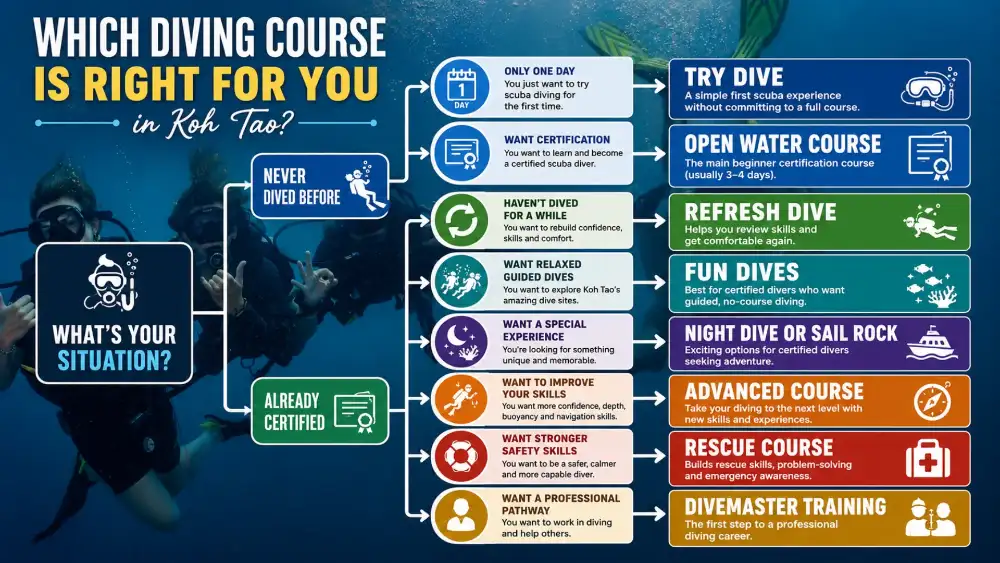
The table below provides a simple overview of the most popular diving courses and experiences, helping you find the right fit before exploring the details.
| Your situation | Best course/option | Why it fits |
|---|---|---|
| You have never dived before and only have one day | Try Dive | A simple first scuba experience without committing to a full course |
| You have never dived before and want certification | Open Water | The main beginner certification course |
| You are certified but have not dived for a while | Refresh Dive | Helps rebuild confidence, skills and comfort |
| You are certified and want relaxed guided dives | Fun Dives | Best for exploring Koh Tao dive sites without taking another course |
| You want a special dive experience | Night Dive or Sail Rock | Good for certified divers looking for something memorable |
| You want to improve your diving skills | Advanced Course | Helps with confidence, depth, buoyancy, navigation and new dive experiences |
| You want stronger safety and rescue skills | Rescue / Master Rescue training | Helps serious divers become safer, calmer and more capable underwater |
| You want to work in diving | Divemaster | A professional-level pathway for long-stay and career-focused divers |
The amount of time you have in Koh Tao can play a major role in determining which diving experience is right for you. A traveller visiting for a single day will have very different options compared to someone staying for a week or planning a longer-term diving journey.
| Time in Koh Tao | Best option | Why it makes sense |
|---|---|---|
| 1 day | Try Dive or Fun Dive | Ideal for experiencing scuba diving without committing to a full course. |
| 2 days | Try Dive + extra dive, Refresh Dive, or Fun Dives | Great for building confidence, refreshing old skills or enjoying recreational dives. |
| 3–4 days | Open Water course | The most realistic timeframe for completing a beginner scuba certification. |
| 1 week | Open Water + Fun Dives or Advanced course | Allows time to gain experience, improve skills and explore more dive sites. |
| 1–2 months | Divemaster training | Suitable for divers seeking professional-level training, leadership development and extensive diving experience. |
While time is important, it should not be the only factor in your decision. Your experience level, confidence in the water, certification goals and long-term diving plans should also influence your choice of diving course.
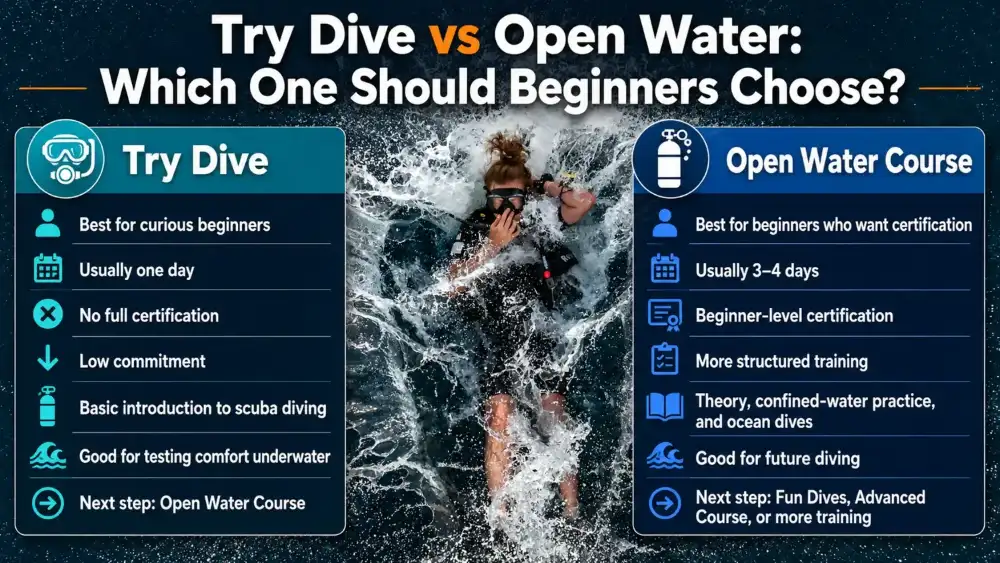
For many first-time visitors to Koh Tao, the biggest decision is whether to start with a Try Dive experience or enrol directly in an Open Water certification course.
While both options are designed for beginners, they serve different purposes. The right choice depends on your goals, confidence level, available time and whether you want to become a certified diver.
In simple terms, a Try Dive is an introductory diving experience, while an Open Water course is a certification programme that allows you to dive independently with a buddy after qualification.
Both are excellent options, but they are designed to achieve different outcomes.
This is one of the most important comparisons for beginners.
| Factor | Try Dive | Open Water |
|---|---|---|
| Best for | Curious beginners who want a first experience | Beginners who want certification |
| Time needed | Usually one day | Usually multiple days |
| Certification | No full diver certification | Yes, beginner-level certification |
| Commitment level | Low | Higher |
| Skill depth | Basic introduction | Theory, pool/confined practice and ocean dives |
| Swimming confidence | Good for testing comfort | Requires more comfort and course prerequisites |
| Next step | Open Water | Fun Dives, Advanced course or more training |
In short, a Try Dive is best when you want to experience scuba diving without committing to a full course, and Open Water is best when you want a beginner-level certification and to continue diving in Koh Tao or other destinations.
It is completely normal for first-time divers to have questions or concerns before entering the water. A professional dive school should be able to address these concerns clearly and help you feel comfortable throughout the experience.
| Concern | What you should know |
|---|---|
| ”What if I panic underwater?” | Professional instructors introduce skills gradually, provide clear briefings and remain close throughout the dive to ensure you feel supported. |
| ”Do I need to be a strong swimmer?” | You do not need to be an athlete, but a reasonable level of water confidence is important, particularly for certification courses. |
| ”Will the instructor stay with me?” | Yes. Beginner dives and entry-level courses are conducted under the direct supervision of qualified diving professionals. |
| ”Should I try diving before taking an Open Water course?” | A Try Dive can be a useful introduction for those who are uncertain about certification, although many beginners choose to start directly with Open Water training. |
| ”What if I don’t enjoy it?” | A reputable dive centre will discuss your goals and concerns beforehand to help you choose the most suitable starting point. |
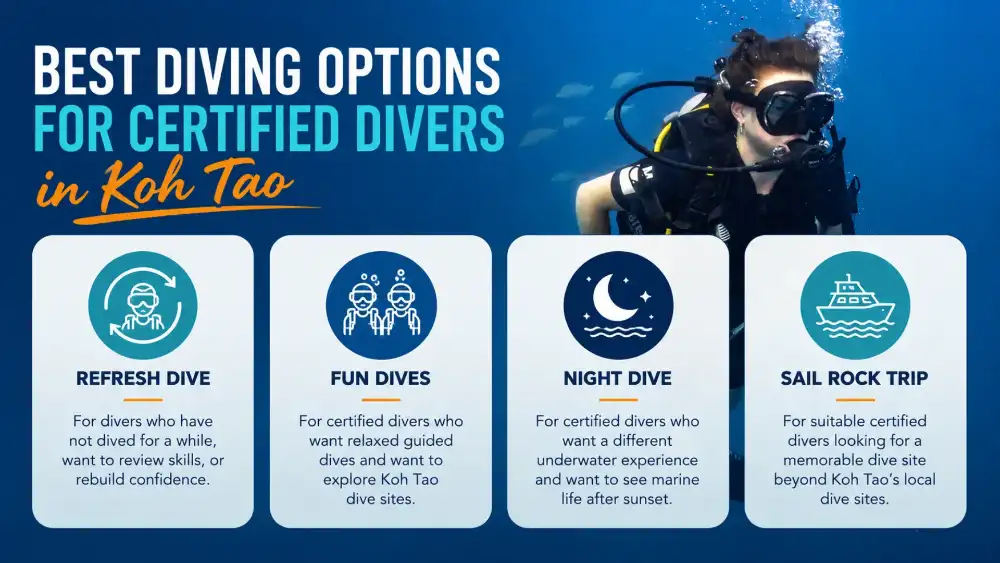
Some certified divers haven’t been underwater for years and need a skills refresher before returning to diving. Others simply want to explore Koh Tao’s dive sites through guided fun dives. More experienced divers may be looking for unique experiences such as Night Dives or trips to Sail Rock.
The right choice depends on your recent diving experience, confidence level and what you want to achieve during your stay.
Remember, a Refresh Dive is designed to help certified divers rebuild confidence, review essential skills and return to the water feeling prepared and comfortable.
Fun Dives are ideal for certified divers who want to maximise their time underwater and experience the diversity of Koh Tao’s dive sites.
Night diving reveals a completely different side of the underwater world, offering the opportunity to observe species and behaviours that are rarely seen during daylight hours.
Sail Rock is widely regarded as one of the premier dive sites accessible from Koh Tao and is often considered a highlight for visiting certified divers.
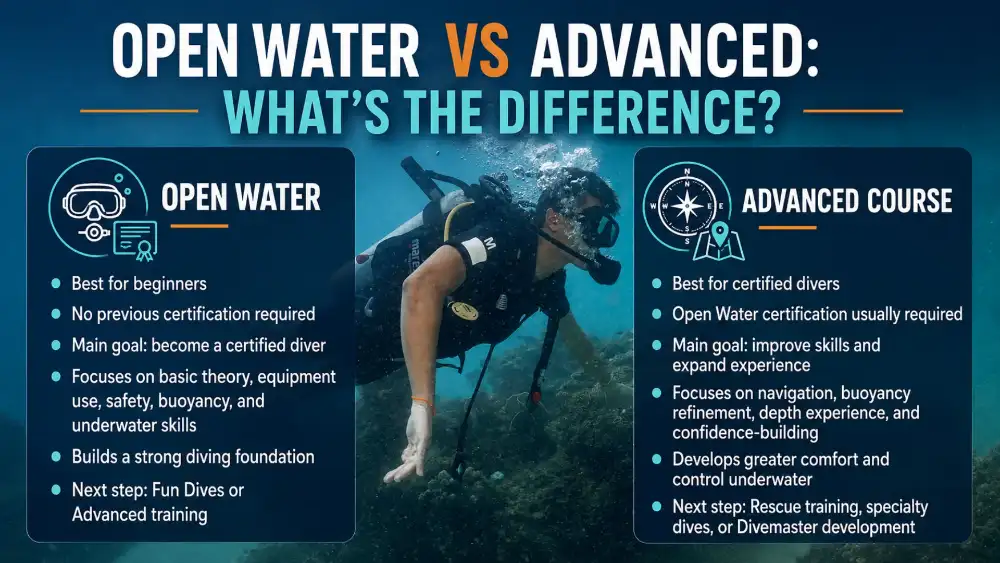
Once you are comfortable with the fundamentals of scuba diving, you may start looking for ways to build confidence, improve your skills and gain experience in different diving environments. This is where many divers begin considering Advanced-level training.
While Open Water and Advanced courses are often suggested together, they are designed for different stages of a diver’s journey. Open Water focuses on learning the core skills needed to become a certified diver, whereas Advanced training helps certified divers expand their experience, refine their abilities and become more comfortable in a wider range of diving situations.
| Factor | Open Water | Advanced / Advanced-style training |
|---|---|---|
| Best for | Beginners | Certified divers |
| Experience needed | No previous certification required | Open Water certification or equivalent is usually required |
| Main goal | Become a certified diver | Improve skills and expand diving experience |
| Skills covered | Basic theory, equipment use, safety procedures, buoyancy and underwater skills | Navigation, buoyancy refinement, depth experience, specialty-style dives and confidence-building |
| Dive confidence | Builds a strong foundation | Develops greater comfort, control and awareness underwater |
| Typical next step | Fun Dives or Advanced training | Rescue training, specialty dives, more experience or Divemaster development |
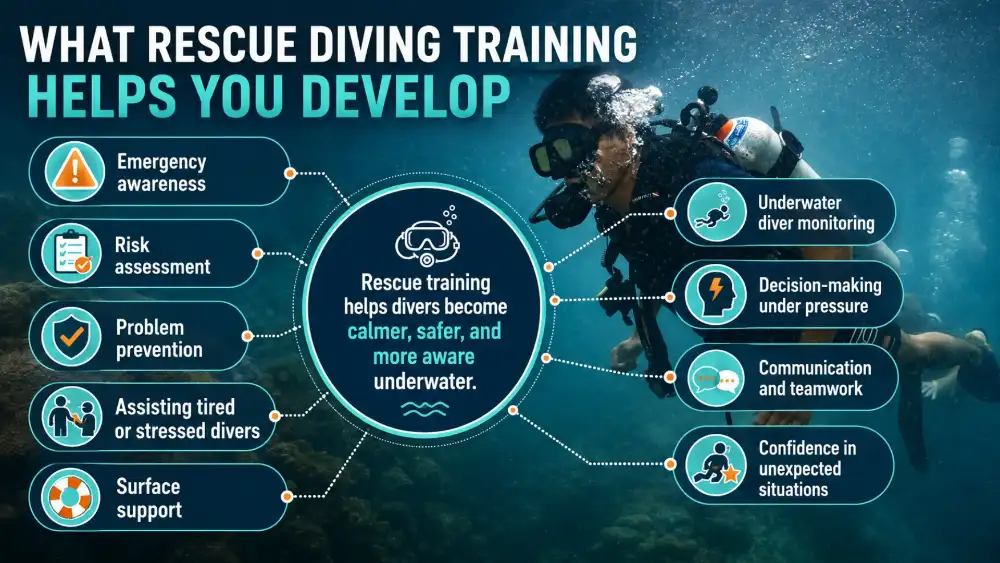
For many divers, the next step after gaining experience and improving core diving skills is developing stronger safety awareness and emergency response capabilities. This is where Rescue or Master Rescue training can provide significant value.
These courses are designed to help you become a more observant, confident and capable diver by teaching you how to recognise potential problems early, respond effectively under pressure and support others both on the surface and underwater.
Rescue training is often regarded as one of the most rewarding stages of diver development because it shifts your focus from managing only yourself to becoming more aware of the safety and well-being of everyone around you.
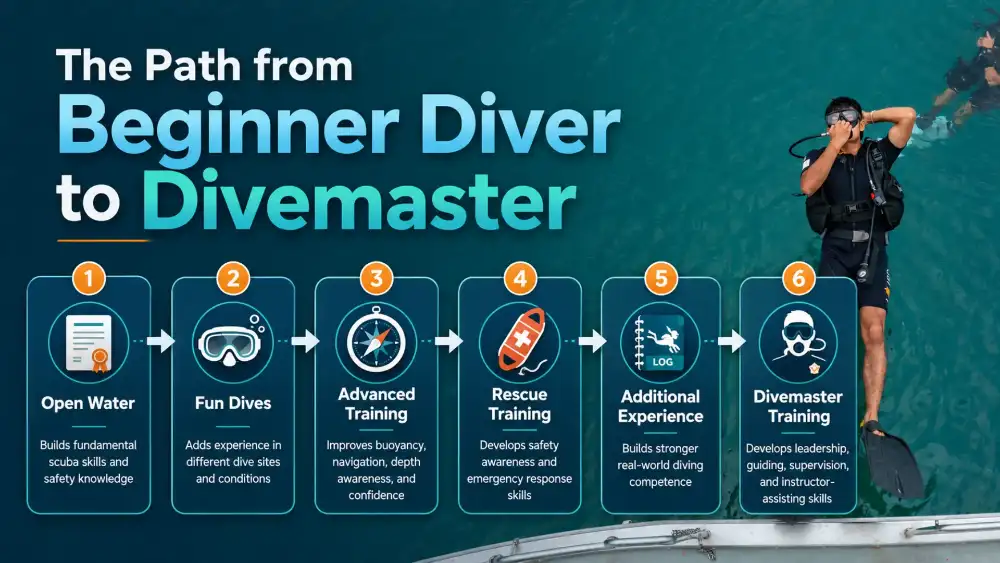
For many divers, Rescue training is the point where recreational diving starts to become something more. If you enjoy helping other divers, want to deepen your knowledge and are interested in taking on greater responsibility underwater, Divemaster training may be the next logical step.
Unlike recreational courses, Divemaster training is a professional-level programme designed to develop leadership, supervision and mentoring skills. You learn how to guide certified divers, assist instructors during courses, manage dive groups, conduct briefings and approach diving from a leadership perspective.
Before starting a Divemaster programme, it is important to have a strong diving foundation, real-world experience and confidence in a variety of diving situations.
A typical progression towards Divemaster training often looks like this:
| Stage | Why it matters |
|---|---|
| Open Water | Builds the fundamental scuba skills and knowledge required for safe diving. |
| Fun Dives | Provides valuable experience in different dive sites and conditions. |
| Advanced training | Improves navigation, buoyancy control, depth awareness and overall diving confidence. |
| Rescue / Master Rescue training | Develops safety awareness, problem-solving abilities and emergency response skills. |
| Additional experience or specialty training | Expands experience and strengthens overall competence as a diver. |
| Divemaster training | Focuses on leadership, diver supervision, guiding and assisting instructors. |
Not all Divemaster programmes provide the same level of training and professional development. When comparing options, look beyond the advertised price and evaluate the overall learning experience. For more information, check out How to Choose the Best Divemaster Course in Koh Tao.
The right choice about the best diving course in Koh Tao depends on your experience level, available time, confidence in the water and what you want to achieve from your diving journey.
If you want to try scuba for the first time, a Try Dive can be a great introduction. If your goal is to become a certified diver, Open Water is the ideal starting point. Certified divers may benefit from Refresh Dives, Fun Dives, Night Dives or a Sail Rock trip depending on their experience and interests. For those looking to improve their skills, Advanced and Rescue-level training offer valuable progression, while Divemaster training is the next step for divers considering a professional pathway.
The most important thing is to choose a course that matches your current abilities and long-term goals rather than simply selecting the most popular option.
If you’re unsure which course is right for you, speaking with an experienced dive team can help you make an informed decision.
For this, La Bombona Diving offers a range of experiences and training options, from beginner Try Dives and Open Water courses to Advanced, Rescue and Divemaster programmes. Whether you’re taking your first breath underwater or working towards a professional diving career, the team can help you find the training path that best suits your needs, experience level and time in Koh Tao.
A good diving course should offer more than just certification. Before booking, check what is included and whether the course provides good value for money. Look for:
PADI and RAID are both internationally recognised scuba training agencies, but they differ in their approach to diver education. PADI is the world's largest scuba certification organisation and is widely recognised by divers and dive centres around the globe. RAID is known for its digital-first learning platform and performance-based training approach, with a strong emphasis on skill development and diver competency. Both agencies offer beginner and advanced training pathways, and certifications from both are accepted internationally. The main differences lie in the learning systems, training philosophy and course delivery rather than where the certification can be used.
There is no single course that automatically prepares you for Divemaster training. However, most divers benefit from building experience gradually before moving into a professional-level programme. In most training pathways, Rescue or Master Rescue training is considered one of the most valuable steps before Divemaster because it develops safety awareness, problem-solving abilities and the confidence to assist other divers.
SSI and RAID are both internationally recognised scuba training agencies that offer beginner and advanced certification pathways. SSI is widely used by dive centres around the world and is known for its flexible digital learning system. RAID is often recognised for its modern, digital-first approach and strong emphasis on skill-based, performance-focused training. Both certifications allow divers to continue training and dive internationally. The main differences are in the learning platform, course structure and training philosophy rather than the recognition or usability of the certification itself.
Becoming a Divemaster is considered moderately challenging, but very achievable if you are consistent, fit and genuinely comfortable in the water. It is the first professional level in recreational diving, so the training is more demanding than basic certifications like Open Water or Advanced. The course typically takes a few weeks to a couple of months, depending on your experience and dive frequency. You'll need strong diving skills, good buoyancy control and the ability to demonstrate and assist with underwater exercises. You'll also complete theory sessions, rescue skills and practical work like guiding divers and supporting instructors. What makes it "hard" for some people is not just the diving itself but the responsibility: being aware of safety, managing groups and staying calm under pressure. However, with regular practice and proper guidance, most dedicated divers successfully complete the Divemaster course.
Yes, Koh Tao can be a safe and beginner-friendly place to learn scuba diving, as long as you choose a professional dive school with qualified instructors, small training groups, good equipment and clear safety procedures. Many first-time divers choose Koh Tao because the island has calm beginner dive sites, warm water, affordable courses and lots of experience teaching new divers. That said, scuba diving is still an adventure activity, so safety depends on proper training and responsible supervision. Beginners should always complete the required theory, practise basic skills in shallow or confined water, listen carefully to their instructor and never feel pressured to dive if they are uncomfortable. Before booking, check whether the dive school explains emergency planning, keeps group sizes manageable, maintains equipment properly and supports nervous beginners. With the right instructor and dive school, Koh Tao is one of the most popular places in Thailand for first-time scuba divers to learn safely and confidently.
The number of days you need in Koh Tao depends on the type of diving experience you want. If you only want to try scuba diving for the first time, 1 day is usually enough. If you want to become a certified beginner diver, you should plan 3–4 days for an Open Water course, which usually includes theory, confined-water or pool training and open-water dives. Some Koh Tao dive schools list Open Water courses as around 3 days, while others describe the course as 3–4 days depending on the schedule and student pace. For certified divers, 1–2 days are enough for fun dives, while 2–3 extra days are useful if you want to do Advanced Open Water, night dives or special dive trips. If diving is a main part of your Koh Tao trip, staying 4–5 days gives you more flexibility for weather, rest, course timing and extra dives without feeling rushed.
More in Diving Tips
 Diving Tips
Depth, breathing, training, safety, equipment and cost compared side by side, so you can decide whether a snorkel afternoon, a Try Dive or a full Open Water course is the right fit for your Koh Tao trip.
 Diving Tips
An Open Water course in Koh Tao usually takes three to four days — but the advertised number of days tells only part of the story. Here is what actually fills those days, why schedules differ between dive schools, and how to plan your stay around the course.
 Diving Tips
PADI, RAID and SSI compared across the whole training pathway — Open Water, advanced, rescue, specialities, Divemaster, instructor and technical — plus what actually decides the quality of your course in Koh Tao.
Message us on WhatsApp — courses, fun dives and honest advice about Koh Tao.
Chat on WhatsApp