What a scuba refresher course covers, who needs one and when, how it compares with Open Water and Advanced courses, and how to prepare for getting back in the water.
13 April 2025 · updated 27 February 2026 · by Bryan Roseman
In short. A scuba refresher course is a structured programme designed to help certified divers regain confidence and brush up on essential diving skills after an extended break from diving. Perfect for divers who haven’t been underwater in over six months, these courses cover gear setup, buoyancy control, emergency procedures and safety protocols through confined water practice followed by an open water session, so you’re ready for your next underwater adventure.
Whether you’re planning to explore the top dive sites around Koh Tao or simply want to refresh your skills before your next holiday, understanding what a scuba refresher course involves is crucial for maintaining your diving competency and safety underwater.
A scuba refresher course bridges the gap between certification and active diving, making sure that time away from the water doesn’t compromise your safety or enjoyment. This guide covers everything you need to know about refresher courses, from when you need one to what to expect during training.
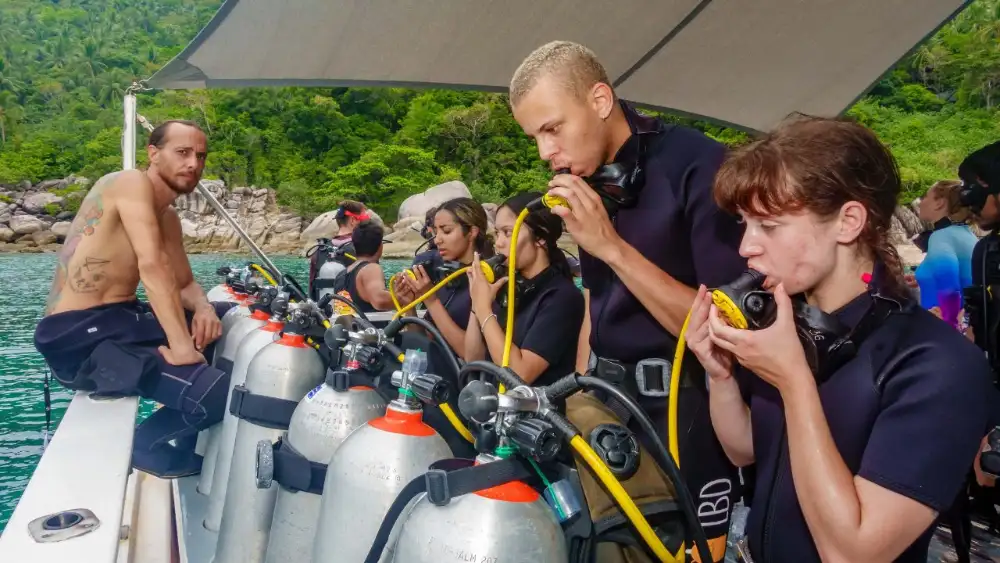
A scuba refresher course is specifically designed for certified divers who need to regain their underwater confidence and skills. Unlike initial certification courses, refresher programmes focus on rekindling existing knowledge rather than teaching from scratch. These courses are essential for maintaining the muscle memory and decision-making skills that keep divers safe underwater.
The best time to take a refresher course depends on your individual diving frequency and comfort level, but most diving professionals recommend refresher training if you haven’t dived in over six months.
Duration: 1 full day
Target: Certified divers (inactive 6+ months)
Duration: 4 days
Target: New divers
Duration: 2 days
Target: Certified divers seeking advancement
Go through the list below and be honest about which skills you still feel confident about. If several of them feel rusty, a refresher course would benefit you:
Refresher courses benefit a wide range of divers, particularly those returning to diving after extended breaks. The underwater environment demands continuous skill maintenance, and even experienced divers can benefit from professional guidance when resuming their diving activities.
| Diver profile | Time since last dive | Recommendation | Priority level |
|---|---|---|---|
| Recreational diver | 6–12 months | Strongly recommended | High |
| Experienced diver | 1–2 years | Essential | Critical |
| Advanced certified | 2+ years | Mandatory | Critical |
| Nervous/uncertain diver | Any timeframe | Beneficial | High |
| Regular diver | 3–6 months | Optional | Low |
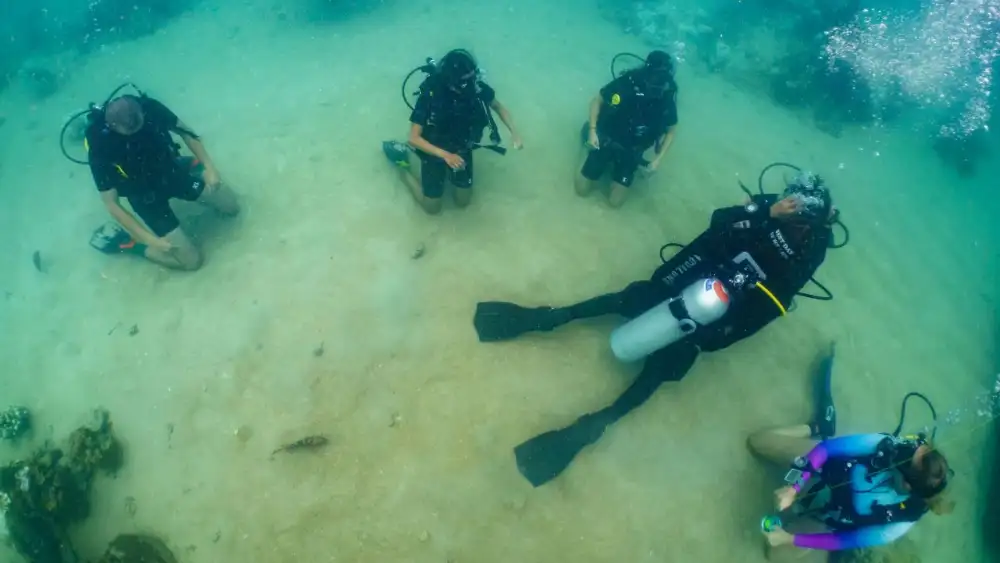
A comprehensive scuba refresher course covers three main components: theory review, confined water practice and open water application. This progressive structure ensures divers rebuild confidence gradually while reinforcing critical safety procedures.
The course begins with a review of fundamental diving principles, including pressure effects, decompression theory and safety protocols. This theoretical foundation is crucial for understanding how diving affects your body and environment, especially when visiting diverse locations known for exceptional marine life encounters.
Skills practice takes place in a controlled environment where divers can safely rehearse essential techniques. Key skills include mask clearing, regulator recovery, buoyancy control and emergency procedures. This controlled practice builds confidence before entering open water.
The final component involves applying the practised skills in real diving conditions. This session typically includes navigation practice, safety stop procedures and demonstrating comfortable underwater movement. For divers planning to explore specific regions, understanding diving opportunities for different skill levels helps set appropriate post-refresher goals.
Refresher courses reinforce critical safety procedures and emergency responses, reducing underwater risks and improving your ability to handle unexpected situations confidently.
Professional guidance helps overcome anxiety about returning to diving, ensuring you feel comfortable and secure underwater after an extended break.
Stay current with modern equipment, updated safety protocols and new diving techniques that may have evolved since your last dive.
Practise essential skills in controlled conditions, improving technique and muscle memory for smoother, more enjoyable diving.
Prepare for advanced diving opportunities by making sure your fundamental skills are solid, opening doors to specialised courses and challenging dive sites.
Meet fellow divers and instructors, building networks that enhance your diving journey and provide ongoing support and diving opportunities.
Medical clearance: Make sure you’re medically fit to dive. Schedule any required medical check-ups and obtain clearance if needed.
Equipment check: Gather certification cards, logbook and personal gear. Service any personal equipment if necessary.
Knowledge review: Review basic diving theory, hand signals and safety procedures from your original training materials.
Physical preparation: Get adequate rest, hydrate properly and avoid alcohol. Prepare questions for your instructor.
Before attending your refresher course, gather these essential items:
Warning. Important safety reminder. Never attempt challenging dives immediately after a refresher course. Start with easy, shallow dives to gradually rebuild your confidence and comfort underwater. Consider the local conditions and marine environment when planning your first post-refresher dives.
Completing a refresher course marks the beginning of renewed diving adventures. Many divers find that refresher training reignites their passion for underwater exploration and opens doors to new diving opportunities. The renewed confidence and updated skills prepare you for more advanced training or challenging dive locations.
After your refresher, consider gradually increasing dive complexity while maintaining regular practice. Many divers use their refresher experience as a stepping stone to advanced certifications or specialised diving activities. For those interested in exploring new destinations, understanding how to reach premier diving locations helps plan future diving adventures.
Skill maintenance requires regular practice and continued education. Consider joining local diving groups, taking part in regular dive trips, and staying up to date with diving publications and training materials. Some divers benefit from annual skills reviews or specialised courses to maintain proficiency.
Understanding the diving heritage of established dive destinations can inspire continued diving education and adventure planning. Regular diving keeps skills sharp while providing ongoing enjoyment of the underwater world.
Ready to refresh your diving skills in Koh Tao? La Bombona Diving’s Reboot/Refresh course gets you back underwater safely and confidently: a full-day programme (9:30 AM – 5:30 PM) combining a complete skills review and confined water practice with a supervised open water dive, in small groups with all equipment included, for 2,500 ฿.
Most diving professionals recommend a refresher course if you haven't dived in 6–12 months. However, if you feel uncertain about your skills or it's been over a year, a refresher course is highly beneficial regardless of your experience level. Some divers choose refresher training even after shorter breaks if they feel their confidence has diminished.
A refresher course is typically more comprehensive, including theory review, confined water practice and open water application. A scuba review might be shorter and focus primarily on a basic skills assessment. Refresher courses provide more thorough preparation for returning to regular diving.
Absolutely. Refresher courses are specifically designed for divers who feel uncertain about their skills or haven't practised in a while. The controlled environment and professional instruction help rebuild confidence gradually, making it the perfect solution for nervous or uncertain divers returning to the sport.
Scuba diving certifications typically don't expire, but your skills and confidence may diminish over time. Most dive operators and insurance companies consider divers inactive after 12–24 months and may require proof of recent diving experience or completion of a refresher course before allowing participation in diving activities.
Refresher courses are significantly more affordable than full certification programmes. At La Bombona Diving, the Reboot course costs 2,500 ฿ compared to 11,000 ฿ for Open Water certification. The refresher provides excellent value by focusing specifically on skill review and confidence building rather than complete re-certification.
More in Diving Tips
 Diving Tips
Depth, breathing, training, safety, equipment and cost compared side by side, so you can decide whether a snorkel afternoon, a Try Dive or a full Open Water course is the right fit for your Koh Tao trip.
 Diving Tips
An Open Water course in Koh Tao usually takes three to four days — but the advertised number of days tells only part of the story. Here is what actually fills those days, why schedules differ between dive schools, and how to plan your stay around the course.
 Diving Tips
PADI, RAID and SSI compared across the whole training pathway — Open Water, advanced, rescue, specialities, Divemaster, instructor and technical — plus what actually decides the quality of your course in Koh Tao.
Message us on WhatsApp — courses, fun dives and honest advice about Koh Tao.
Chat on WhatsApp