A full cost breakdown for diving on Koh Tao — courses, gear, packages, travel, seasons and the small extras — plus practical tips for getting world-class diving without overspending.
20 March 2026 · updated 25 June 2026 · by Bryan Roseman
Key takeaways
- Your scuba budget shapes everything from certification and gear to dive sites and travel. Rentals are usually included in course packages, while fun dives cost around 800–1,000 ฿ per dive. Plan ahead to reach the turtles and reefs without surprises.
- Koh Tao Open Water courses cost around 270–330 USD (9,000–11,000 ฿). Bundling courses saves money compared with separate bookings.
- Gear is included in all courses at La Bombona Diving, so beginners pay nothing extra for equipment. As you dive more, investing 1,000–3,000 ฿ in your own mask and fins significantly improves comfort on repeat dives.
- Dive in the shoulder season (October–November or late January–February). Save 30–50% on stays starting at 300 ฿ per night, with fewer crowds and 20–30 m visibility.
- Master sustainable diving practices that protect marine ecosystems.
Imagine standing on the deck of a dive boat, the warm Gulf of Thailand stretching out before you, and somewhere beneath those turquoise waters a sea turtle is gliding past a coral reef. The question is whether you are about to join it. But the only thing you’re worried about is your scuba diving budget.
Your budget shapes almost every part of the experience, from the certification agency you choose to the dive sites you can access and the gear strapped to your back. But here is the good news: a well-thought-out dive planning approach can get you underwater in some of the world’s most spectacular locations without punishing your wallet.
This guide breaks down every cost you need to know, so you can plan your perfect dive trip with full confidence.
Your scuba diving budget shapes everything — from certification and gear to dive sites and overall experience. The good news? With the right planning, you can unlock world-class diving without overspending.
Understanding your scuba diving costs before you arrive saves you from unpleasant surprises. There are several categories to plan for, and each one can swing dramatically depending on the choices you make. Here is the full picture of your diving trip expenses.
For your first dives, renting everything from the dive school is almost always the smarter move. Full equipment rental on Koh Tao is typically included in course packages, meaning you pay nothing extra as a beginner. Learn more about essential scuba diving gear.
Scuba diving package deals are one of the best ways to stretch your money. Options include Try Dives, Open Water courses, multi-day course bundles and fun dive packages. Booking courses together almost always costs less than doing them separately.
Your scuba dive vacation expenses extend well beyond course fees. Getting to Koh Tao from Bangkok involves a ferry, train or bus. Budget accommodation starts from around 300 ฿ per night; some schools offer bundled stays.
Always built into reputable course packages. What matters is the student-to-instructor ratio. Small groups like those at La Bombona Diving mean more personal attention and a much better learning experience.
Budget for the mandatory dive insurance (100 ฿ at La Bombona Diving — there is no marine park fee on Koh Tao), tips for boat crew and instructors, optional underwater photo or video packages, and optional second dives (e.g. 1,000 ฿ extra on a Try Dive at La Bombona Diving).
A beautiful keepsake that captures your first underwater moments. La Bombona Diving offers excellent-value photo and video packages, typically offered on the final day of your course.
It is natural to wonder whether paying less means experiencing less. The honest answer is: it depends entirely on where you choose to dive and who you choose to dive with.
A low scuba diving budget can restrict access to certain luxury liveaboards or remote destinations, but it absolutely does not mean compromising on safety, quality instruction or underwater wonder.
Budget diving does not mean basic diving. A lower budget may mean sharing a boat rather than having a private charter. What it does not mean is poorer safety standards or less spectacular marine life.
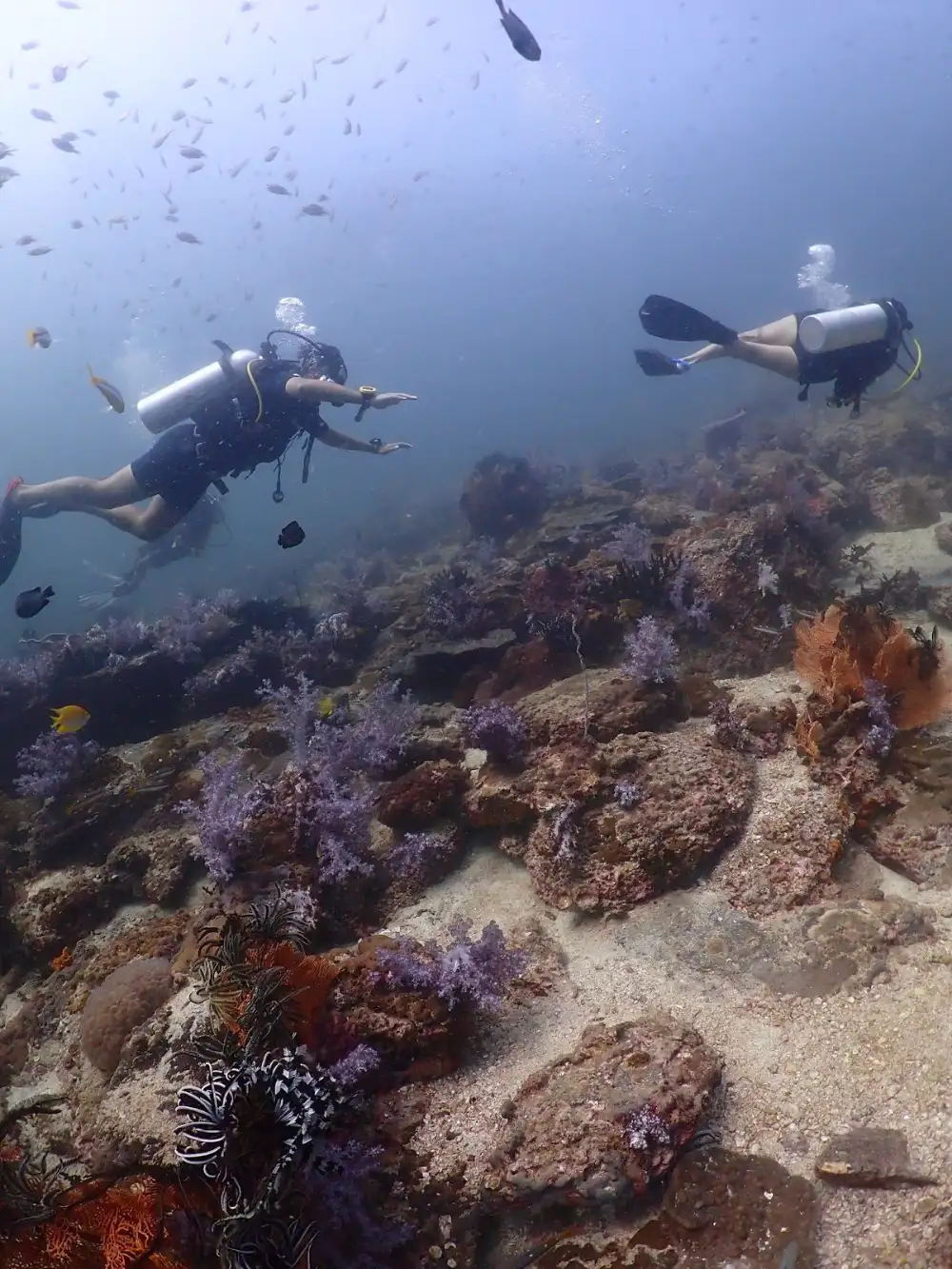
Koh Tao’s waters are home to whale sharks, sea turtles, barracuda, reef sharks and some of the richest coral ecosystems in Southeast Asia, and they are accessible to divers on every level of budget.
La Bombona Diving has been rated the best Open Water course provider on Koh Tao, with a decade of experience since 2014, consistently small class sizes, well-maintained gear and instructors who are genuinely passionate about the ocean.
Spend wisely on the things that matter: a reputable school, qualified instructors and proper equipment. Everything else is a preference, not a necessity.
Your diving certification cost is one of the most important investments you will make as a diver. The level of certification you hold directly determines which dive sites you can access, how deep you can go and what adventures await you.
The good news is that Koh Tao is one of the most cost-effective diving trip destinations in the world for certifications.
Open Water courses that cost 600–900 USD in Australia or Europe regularly run for 270–330 USD on Koh Tao, with no drop in international standards.
La Bombona Diving offers RAID certifications (as well as SSI). The Open Water course certifies you to 18 metres, which is enough to explore most of Koh Tao’s best sites right from your first certification.
Tip. For more on certification levels, read scuba certification levels for different dive experiences.
| Certification | Cost range (Koh Tao) | Depth rating | What it unlocks |
|---|---|---|---|
| Try Dive | ~2,500–3,500 ฿ | No cert required | 1-day underwater taste, guided by an instructor, no certification awarded |
| Open Water (RAID) / Open Water Diver (PADI/SSI) | ~9,000–11,000 ฿ (~270–330 USD) | Beginner | Certified to dive to 18 m, ocean dives worldwide |
| Advanced / Explorer 30 | ~8,500–10,000 ฿ | Intermediate | Certified to 30 m, deep dives, wreck, night diving and navigation specialties |
| Master Rescue | Varies by school | Advanced | Emergency response, rescue scenarios, essential safety skills for all divers |
| Divemaster | 40,000–62,000 ฿ (base) | Professional | Guide certified divers, assist instructors, first step to a career in diving |
| Instructor (PADI IDC) | 130,000–150,000 ฿ | Professional | Teach scuba diving, wide global job opportunities with PADI certification |
| Instructor (RAID IDP) | 65,000–75,000 ฿ | Professional | Modern e-learning approach, includes Nitrox, Deep and O2 instructor ratings |
Prices are indicative ranges for Koh Tao in 2025/2026. Exact prices vary by school. Always check directly with your dive provider for current pricing.
Where you choose to dive is arguably the single biggest driver of your total scuba dive vacation expenses. Understanding the options helps you match your budget to the experience you actually want.
| Budget-friendly destinations | Luxury destinations |
|---|---|
| Koh Tao, Thailand — Open Water from ~9,000 ฿, fun dives from ~800 ฿, accommodation from 300 ฿/night. World-class marine life included. | Maldives — Some of the world’s most spectacular diving with luxury resorts. Expect 200–500+ USD per day, all in. |
| Bali / Lombok, Indonesia — Excellent value with spectacular biodiversity. Strong infrastructure for divers of all levels. | Raja Ampat, Indonesia — The world’s richest marine biodiversity hotspot. Remote location means higher travel costs. |
| Philippines (Coron) — Legendary wreck diving at very affordable rates. | Galápagos Islands — Iconic for hammerheads and marine iguanas. Liveaboards from 3,000–5,000 USD per week. |
| Egypt (Red Sea) — Incredible reefs and consistently good visibility at budget-friendly package prices. | Palau — World-famous drift diving and jellyfish lake. Remote and premium priced. |
| Peak season (Dec–Mar) | Shoulder season (Oct–Nov, Jan–Feb) |
|---|---|
| Best visibility: 20–30 metres | Lower accommodation rates |
| Accommodation is 50–100% pricier | Fewer crowds, more relaxed pace |
| Busier boats, more tourists on the island | Still excellent diving conditions |
| Advance booking essential | Best balance of value and quality |
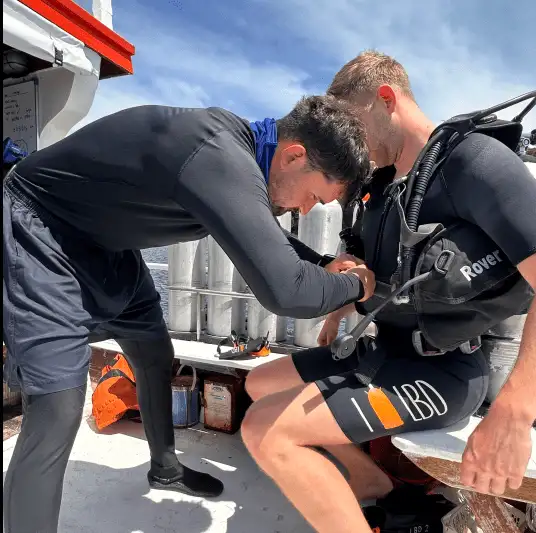
Gear matters, but the extent to which it affects your experience depends heavily on how often you dive. Understanding the scuba diving equipment landscape helps you spend where it counts and save where it does not.
Rent everything. La Bombona Diving includes all equipment in course packages. Just arrive in swimwear. Zero gear cost, zero stress.
Invest in your own mask and fins. A well-fitting mask transforms your underwater experience. Budget 1,000–3,000 ฿ for quality beginner options.
A personal wetsuit and dive computer start making financial sense. Entry-level dive computers begin from around 150–200 USD.
Owning your complete kit is essential. At this level, quality gear directly impacts safety and performance in the water.
Diver insight. Good quality gear does not have to break the bank. Opt for rentals for your first dives to save, then consider investing in personal gear for regular diving. The items that matter most for comfort and hygiene are your mask, fins and wetsuit. These are also the items least suited to being shared.
One of the most liberating truths about scuba diving is that the ocean does not charge an entry fee. The fish, the coral, the turtles: they are there for anyone who shows up with the right training and a reasonable budget. Here is how to make the most of yours.
Tip. You do not need a huge budget to witness once-in-a-lifetime moments. Whale shark encounters, sea turtle flyovers, reef shark sightings: these happen at Koh Tao’s accessible dive sites on a regular basis. No liveaboard required.
Tip. Read what real divers have said about their experiences at La Bombona Diving.
The smartest approach to budgeting for scuba diving is to invest in the things that genuinely matter: a school with a strong safety record, a qualified instructor who loves what they do, well-maintained equipment and a destination with world-class diving. On Koh Tao, all of those things come together at a fraction of the cost you would pay elsewhere in the world.
Whether your budget is 10,000 ฿ or 100,000 ฿, there is a dive experience waiting for you in these waters. Plan carefully, choose wisely, and the ocean will do the rest.
October through November and late January to February offer the best combination of decent diving conditions and lower accommodation prices on Koh Tao. These shoulder-season months sit outside the peak tourist rush, meaning fewer crowds, cheaper beds and more space on the boat.
A minimum of 4 to 5 days covers a full Open Water course. Adding 2 more days gives you time for an Advanced course or extra fun dives after certifying. For a well-rounded experience that includes exploring the island, 7 to 10 days is ideal. Read our full guide on how long to stay on Koh Tao.
For your first dive or course, you should expect to spend nothing on gear. All necessary equipment is provided by the dive school as part of your course package. Just bring swimwear, sunscreen and a towel.
Absolutely. A Try Dive is specifically designed for people with zero experience, and it requires no prior training. You will be guided through every step by a certified instructor. If you want a full certification, the Open Water course takes 4 days and gives you access to dive sites around the world.
Koh Tao sits in a sweet spot where even mid-range resorts feel luxurious compared to their price. Beachfront bungalows with great amenities are available from around 800 to 1,500 ฿ per night. True luxury resorts do exist on the island, but even these cost a fraction of comparable properties in the Maldives or the Seychelles.
Koh Tao tops the list for certified value. Sites like Chumphon Pinnacle, Sail Rock, Japanese Gardens and Twins offer some of Thailand’s most diverse marine life. Explore the top dive sites on Koh Tao.
Koh Tao offers remarkable value without the remote-location premium. Visibility regularly exceeds 20 metres, water temperatures sit at a comfortable 29°C year-round and the marine life density rivals destinations that cost five to ten times more. The main trade-off is that truly remote spots like the Maldives or Raja Ampat offer more untouched reefs, but for accessibility, price and training quality, Koh Tao is hard to beat.
Open Water courses typically range from 9,000 to 11,000 ฿ (approximately 270 to 330 USD). Advanced courses run from approximately 8,500 to 10,000 ฿. For the most current pricing at La Bombona Diving, visit our courses page.
Yes, in almost every case. Bundling courses together, combining accommodation with your course, or booking a multi-dive fun dive package saves money across the board. Schools like La Bombona Diving specifically structure packages to make it easier (and cheaper) to do more while you are on the island.
In practice, PADI, SSI and RAID Open Water courses on Koh Tao are priced similarly, generally in the 9,000 to 11,000 ฿ range. The differences in cost are minimal and often depend more on the individual school than the certification agency. La Bombona Diving teaches RAID and SSI, and all three certifications are internationally recognised and accepted worldwide.
More in Diving Tips
 Diving Tips
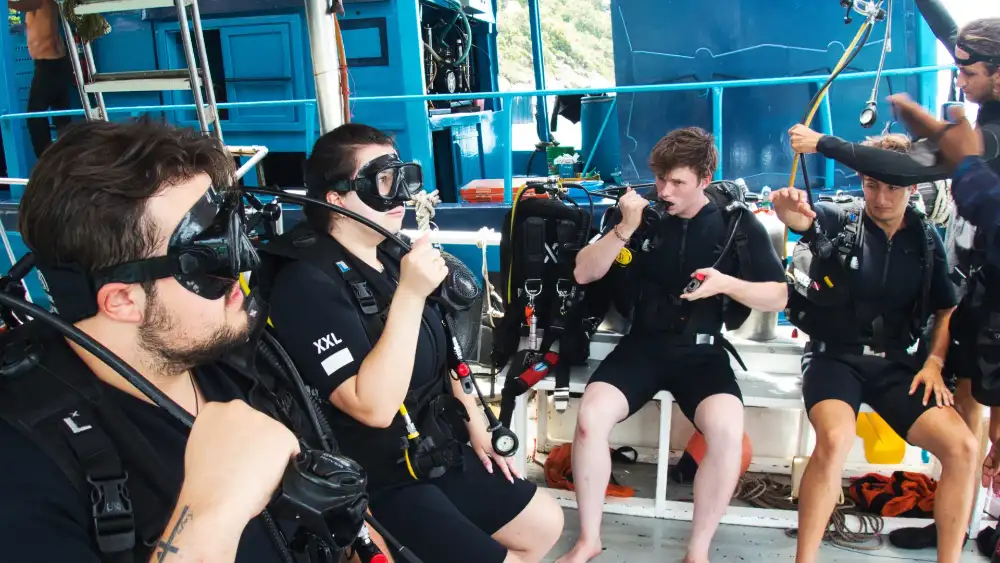
Depth, breathing, training, safety, equipment and cost compared side by side, so you can decide whether a snorkel afternoon, a Try Dive or a full Open Water course is the right fit for your Koh Tao trip.
 Diving Tips
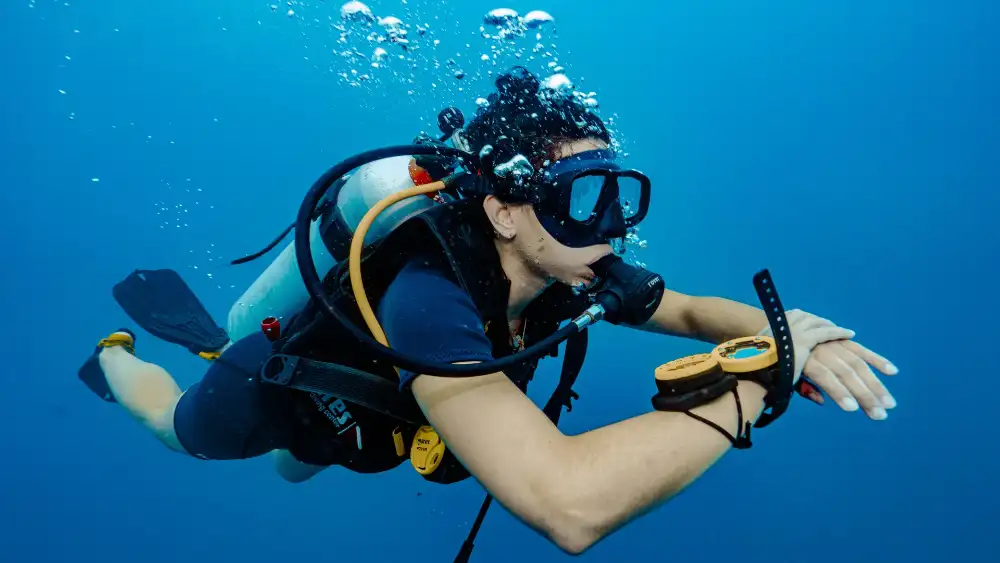
An Open Water course in Koh Tao usually takes three to four days — but the advertised number of days tells only part of the story. Here is what actually fills those days, why schedules differ between dive schools, and how to plan your stay around the course.
 Diving Tips
PADI, RAID and SSI compared across the whole training pathway — Open Water, advanced, rescue, specialities, Divemaster, instructor and technical — plus what actually decides the quality of your course in Koh Tao.
Message us on WhatsApp — courses, fun dives and honest advice about Koh Tao.
Chat on WhatsApp