An honest look at Koh Tao's safety record, the real risks for first-time divers, how to pick a safe dive school, the medical questions that matter and what your first dive actually feels like.
21 May 2026 · updated 1 June 2026 · by Bryan Roseman
Key takeaways
- Koh Tao is one of the world’s most popular beginner scuba diving destinations, certifying over 40,000 divers each year.
- Scuba diving is generally safe for beginners when proper training and reputable dive schools are involved.
- Most beginner diving risks, including ear pressure issues and panic, are preventable through training.
- You do not need certification for a Try Dive, but Open Water certification allows independent diving down to 18 metres.
- Koh Tao offers beginner-friendly conditions with calm water, warm temperatures and good visibility year-round.
- The best way to stay safe underwater is to follow instructions, communicate honestly and never rush the process.
You found Koh Tao on Instagram. The water looked unreal, crystal clear, bright blue, and sea turtles glided past divers who looked completely relaxed underwater. For a moment, you thought, “I want to try that.” Then the next question hit: but is scuba diving actually safe for beginners?
After a few Google searches, the answers probably felt confusing. Some websites make diving sound effortless, while others focus only on worst-case scenarios. The reality sits somewhere in between. Koh Tao certifies more than 40,000 divers every year and has over 50 established dive sites, making it one of the world’s biggest beginner diving destinations. With the right training and a reputable dive school, scuba diving in Koh Tao is generally very safe for beginners.
This guide gives you the full picture. No fluff, no scare tactics, just everything you actually need to know before you get in the water.
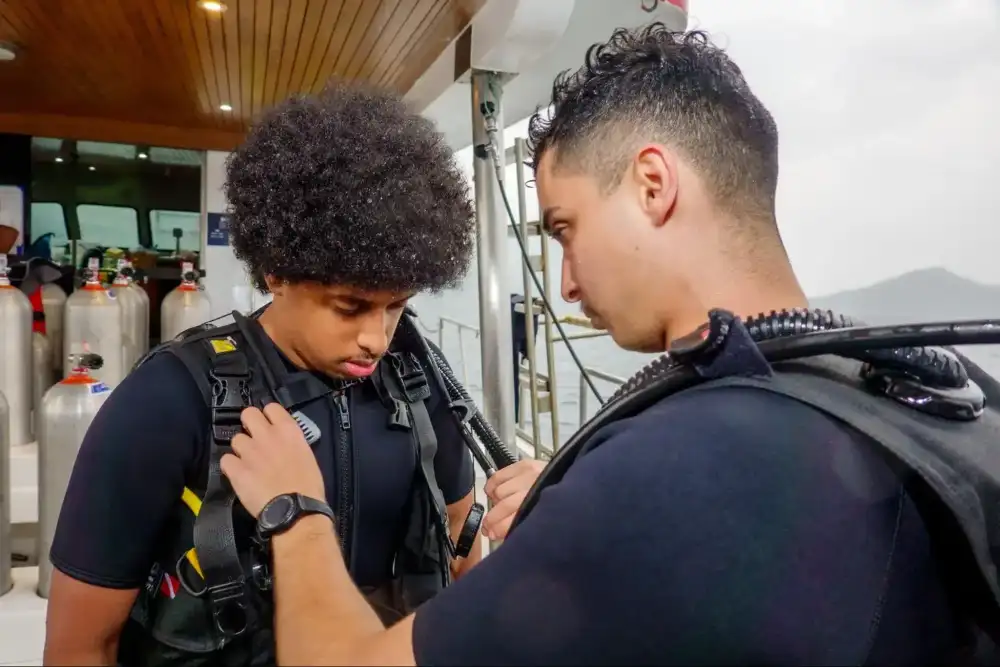
You’ve probably seen the headlines. Maybe that’s part of why you’re nervous. Here’s what those headlines almost never tell you.
Here’s the honest version. More divers means more visibility of every incident that occurs. Koh Tao gets attention precisely because it’s so popular, not because it’s uniquely dangerous. The emergency facilities, experienced instructors and established safety protocols exist because of the high volume of divers, not despite it.
The risk is real. Diving is an adventure sport, and pretending otherwise does no one any good. But it is understood, managed, and no greater here than anywhere else with the same reputation.
You’re probably wondering: do I have to do a full course, or can I just try it once and see if I even like it?
Good news: you have options. Here’s exactly what each one gives you.
| Course / Activity | Duration | Experience level | Maximum depth | Best for | What is included |
|---|---|---|---|---|---|
| Try Dive (Discover Scuba Diving) | 1 day | Complete beginners | 12 metres | First-time divers wanting a supervised introduction to scuba diving | Theory briefing, shallow water skills, instructor supervision, 1–2 dives, equipment |
| Open Water course | 3–4 days | Beginners | 18 metres | Becoming a certified diver | Theory lessons, pool sessions, 4 open water dives, full equipment, certification |
| Fun dives | Half or full day | Certified divers | Depends on certification level | Exploring Koh Tao dive sites recreationally | Guided boat dives, tanks, weights, dive supervision |
| Refresh course | Half day to full day | Certified divers who have not dived recently | Depends on certification level | Rebuilding confidence and refreshing scuba skills | Safety review, scuba skill practice, instructor guidance |
Important things beginners should know
- A Try Dive is an introduction, not an independent diving licence.
- You cannot join regular fun dives or rent equipment without certification.
- Pool sessions and theory lessons are where beginners build confidence and emergency habits.
- Skipping training to “save time” usually increases stress underwater.
If you want a clearer understanding of scuba certification levels for different dive experiences, it helps to compare what each course allows you to do before booking your first dive.
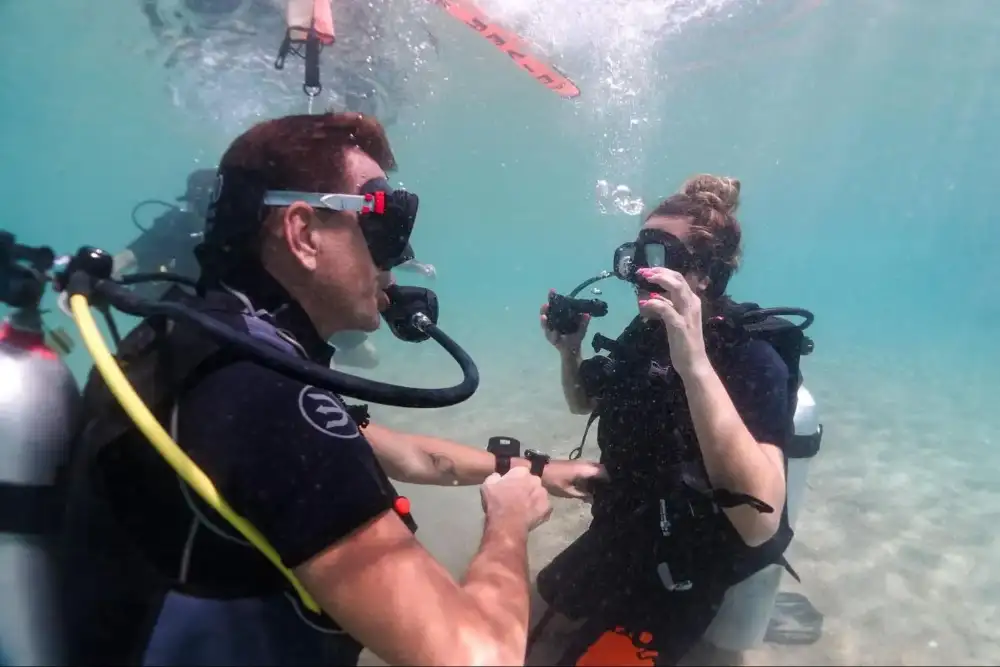
Let’s say it straight, because you’ve probably been imagining worst-case scenarios that have nothing to do with what beginner diving actually involves.
The three risks that genuinely matter:
What beginners usually don’t need to worry about
- Sharks at beginner depths are not considered a serious threat.
- Decompression sickness is extremely uncommon on supervised shallow dives.
- Nitrogen narcosis occurs at much deeper depths than beginner training dives.
If you still have first-dive nerves, these most common questions before your first dive answer many of the concerns beginners usually have before entering the water for the first time.
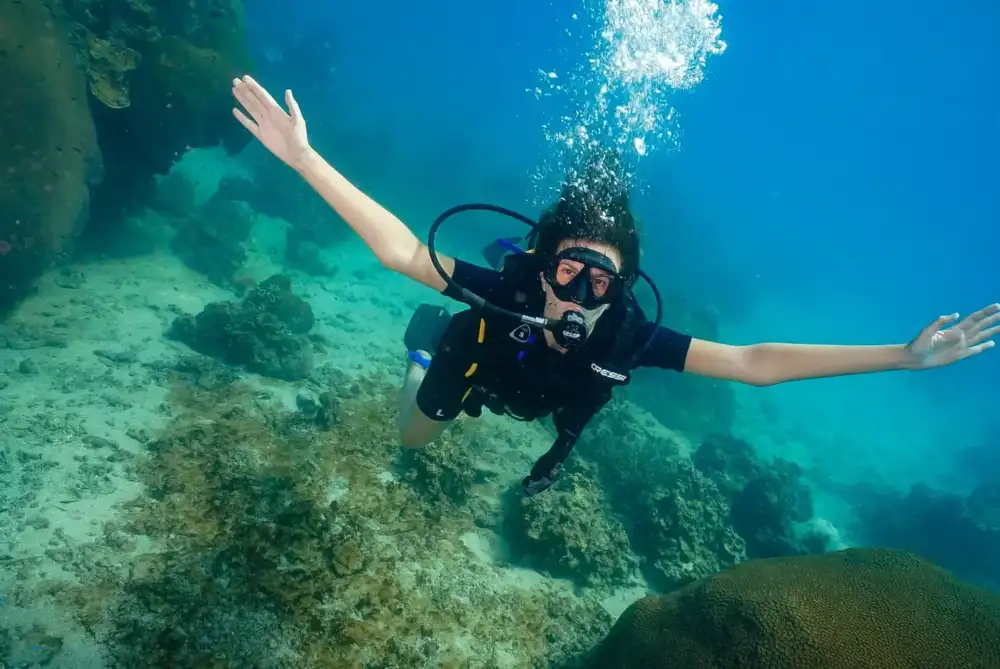
This is the question that actually determines your safety. Not the water conditions, those are consistent. Not the depth, beginners dive shallow. The school you choose is the single most important factor.
Red flags that should make you walk away
- Anyone pressuring you to skip pool sessions to save time.
- Prices that are significantly lower than everywhere else on the island.
- Vague or defensive answers when you ask direct questions about safety.
- Overcrowded boats with no clear structure.
At La Bombona Diving, beginner groups are intentionally kept small so instructors can focus properly on each diver’s comfort, buoyancy and confidence underwater. That slower pace makes a major difference for nervous first-time divers.
If you’re researching the best Open Water course in Koh Tao, pay attention to group size, training structure and how much time schools spend building confidence before open water dives.
You might be wondering: what if I have something that prevents me from diving? Should I even bother looking into this?
The answer is: be honest, and find out. The medical form every diver fills out before getting in the water exists for good reason, and it’s not there to turn people away without cause.
Note. The reassuring reality: the vast majority of healthy adults with no chronic conditions are cleared without any issue at all. If something on the medical form makes you uncertain, check with a doctor familiar with dive medicine, or consult the Divers Alert Network (DAN), the leading global resource for exactly this kind of question.
And if you’re tempted to leave something off the form because you’re worried about being turned away, don’t. An instructor who catches a concern before you dive is protecting you, not blocking you.
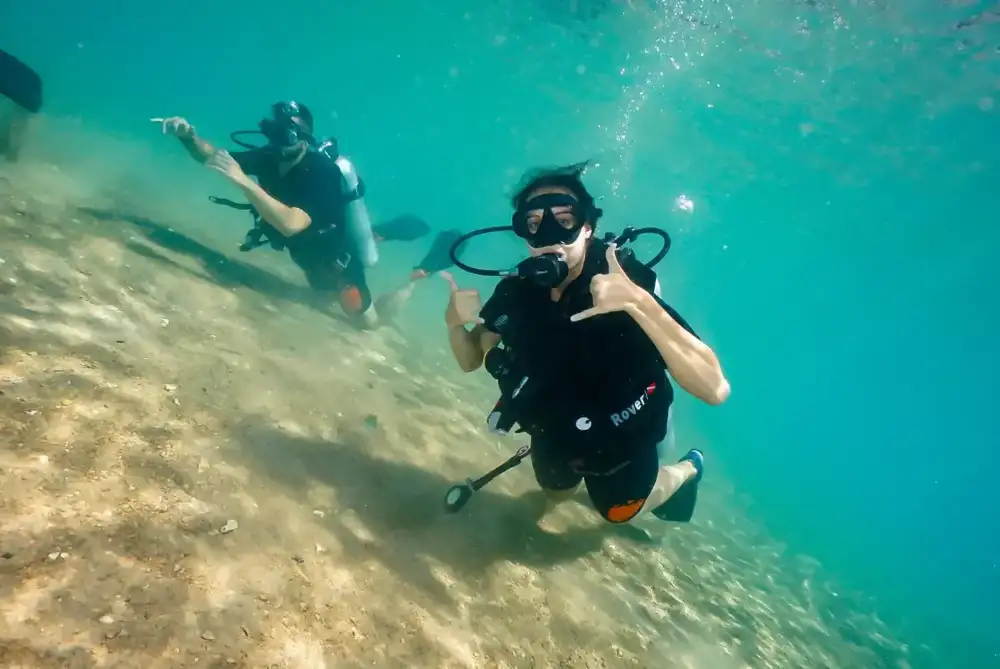
You’re probably picturing one of two things: either you’ll be completely fine, or you’ll panic the moment your face goes underwater. The reality sits somewhere in the middle, and it’s better than both.
What to bring
- Swimsuit and towel.
- Reef-safe sunscreen: regular sunscreen damages coral, and most schools will ask you to use it anyway.
- Sunglasses and a small dry bag for personal items on the boat.
- Water and a light snack; you’ll be out for several hours.
That flutter of nerves before the first descent? Completely normal. Almost every diver has it. And almost every diver describes the same moment, when they settle underwater, start breathing steadily, and suddenly feel weightless and calm, as the point where the nerves disappear entirely. The first dive isn’t about the highlight reel. It’s about that moment. And it tends to arrive faster than you’d expect.
Yes, scuba diving in Koh Tao is safe for beginners when proper training, experienced instructors and reputable dive schools are involved. The island’s calm waters, warm temperatures, beginner-friendly dive sites and strong diving infrastructure make it one of the world’s most popular places to learn scuba diving.
Most beginner risks are manageable with good instruction and careful adherence to safety procedures.
At La Bombona Diving Koh Tao, beginner courses focus on small groups, confidence-building and personalised instruction to help new divers feel comfortable underwater. With the right approach, your first scuba diving experience in Koh Tao can be both safe and unforgettable.
Yes, and solo travellers often find it one of the easiest places to do it. Koh Tao has a well-established tourist infrastructure, English-speaking instructors at reputable schools and a dive community accustomed to welcoming solo travellers. At La Bombona Diving, our team is also fluent in Spanish and French, so language is rarely a barrier.
You don't need to be a competitive swimmer; you need to be comfortable in water. For the Open Water course, there's a simple swim test. For a Try Dive, the bar is lower: if you can float calmly and move gently in the water, you can do it. Your instructor handles everything else.
Most courses take 3–4 days. At La Bombona Diving, the Open Water course runs over 4 days with 4 ocean dives and certifies you to 18 metres. We teach with the RAID training system, which sets a higher benchmark than most agencies, with more in-water time spent on buoyancy and confidence.
You stop. A good dive school never pressures you to continue if you're not comfortable, and at La Bombona Diving that's not a policy, it's how we operate. Before you enter the water, you'll be taught the hand signals that let you communicate exactly this to your instructor. You are always in control.
Diving is possible year-round, but March to September gives you the calmest water and best visibility. Between October and February, rougher conditions can limit access to certain dive sites. Reputable schools check conditions daily and will reschedule or adapt your dive plan if the water isn't right, especially for beginners.
More in Diving Tips
 Diving Tips
Depth, breathing, training, safety, equipment and cost compared side by side, so you can decide whether a snorkel afternoon, a Try Dive or a full Open Water course is the right fit for your Koh Tao trip.
 Diving Tips
An Open Water course in Koh Tao usually takes three to four days — but the advertised number of days tells only part of the story. Here is what actually fills those days, why schedules differ between dive schools, and how to plan your stay around the course.
 Diving Tips
PADI, RAID and SSI compared across the whole training pathway — Open Water, advanced, rescue, specialities, Divemaster, instructor and technical — plus what actually decides the quality of your course in Koh Tao.
Message us on WhatsApp — courses, fun dives and honest advice about Koh Tao.
Chat on WhatsApp