What causes seasickness, what to eat and avoid, which medications are safe alongside diving, where to sit on the boat, how to rehydrate after vomiting and what to expect on the Koh Tao ferries.
27 May 2025 · updated 15 May 2026 · by Bryan Roseman
In short. Sea sickness is one of the most common concerns for divers heading to Koh Tao, but it is almost always preventable with the right preparation. This guide explains what causes motion sickness, what to eat and avoid the night before and the morning of your trip, which medications are safe to take alongside scuba diving, and how to position yourself on the boat for the smoothest possible crossing. It also covers natural remedies, electrolyte replacement after vomiting, the specific ferry routes to Koh Tao and their seasickness risk levels, and how to decide whether it is safe to dive after feeling unwell. Whether you are catching the Lomprayah from Koh Samui or heading out on a dive boat from the island, this guide has you covered before, during and after your journey.
Sea sickness is one of the most common worries among new and experienced divers alike, and for good reason. Whether you are crossing from Koh Samui on a speedboat, taking the Lomprayah catamaran to Koh Tao for the first time, or bobbing at anchor above a dive site in the Gulf of Thailand, the motion of the sea can catch even seasoned travellers off guard.
The bright side is that sea sickness is almost always preventable, or at the very least manageable, with the right preparation. This guide covers everything you need to know to prevent sea sickness before you even leave the shore, and how to recover quickly so that nothing gets between you and the underwater world you came to explore.
Medical advisory for divers. This guide provides general information on preventing motion sickness for diving activities. Always consult a healthcare professional before taking any medication, particularly if you plan to dive on the same day. Some medications used to treat seasickness can cause drowsiness, impair equalisation, or interact with the pressure changes involved in scuba diving. When in doubt, speak to your instructor or a dive medicine specialist before your trip.
Before you can prevent sea sickness, it is important to understand why it happens. Sea sickness, technically a form of motion sickness, occurs when your brain receives conflicting signals from your sensory systems.
Your inner ears (the vestibular system) detect the rolling and pitching of the boat. Your muscles and joints register the shifting of your weight. But if you are sitting inside a cabin or looking down at your dive gear, your eyes are telling your brain that your surroundings are perfectly still. This sensory mismatch confuses the brain, triggering a cascade of symptoms that can range from mild queasiness to full vomiting.
The important thing to remember is that sea sickness is a physiological response, not a sign of weakness. Studies suggest that people vary in their susceptibility, but given a sufficient stimulus, almost everyone with a functional vestibular system can develop motion sickness.
The steps you take in the 24 hours before your boat journey can make an enormous difference to how you feel on the water.
Your choices the evening before a dive day have a direct bearing on how your body handles the motion of a boat. Follow these guidelines the night before:
On the morning of your trip, small decisions matter significantly:
The choice of medication matters greatly for divers because many standard options carry side effects, particularly drowsiness, that are incompatible with safe scuba diving.
The table below summarises the main options, their timing and their compatibility with diving:
| Medication | Type | Timing | Duration | Diving compatibility | Notes |
|---|---|---|---|---|---|
| Meclizine (Bonine / Antivert) | Antihistamine | 1 hour before | 12–24 hrs | Generally acceptable | Less sedating than dimenhydrinate; preferred by many divers |
| Dimenhydrinate (Dramamine) | Antihistamine | 1–2 hours before | 4–6 hrs | Use with caution | Causes significant drowsiness; opt for the “Less Drowsy” formula |
| Scopolamine patch (Transderm Scōp) | Anticholinergic | 8 hours before | Up to 3 days | Not recommended for diving | Can cause blurred vision, dry mouth and confusion; masks DCS symptoms if worn more than 3 days |
| Promethazine (Phenergan) | Antihistamine | 1–2 hours before | 6–12 hrs | Not recommended for diving | High sedation risk; impairs motor function and judgement |
| Ginger (capsules/chews) | Natural supplement | 30–60 mins before | Varies | Diving-safe | Mild evidence base; no drowsiness; worth trying if medication is unsuitable |
| Acupressure bands (Sea-Bands) | Pressure therapy | Worn at any time | Ongoing | Diving-safe | Targets the P6 wrist point; variable efficacy; no side effects |
Warning. If you are planning to scuba dive the same day, avoid scopolamine patches and high-sedation antihistamines. Drowsiness underwater is dangerous. Always test any new medication on a non-diving day to understand how your body responds before relying on it at sea.
Not everyone wants to rely on medication, and for milder cases of seasickness, several natural approaches have genuine merit:
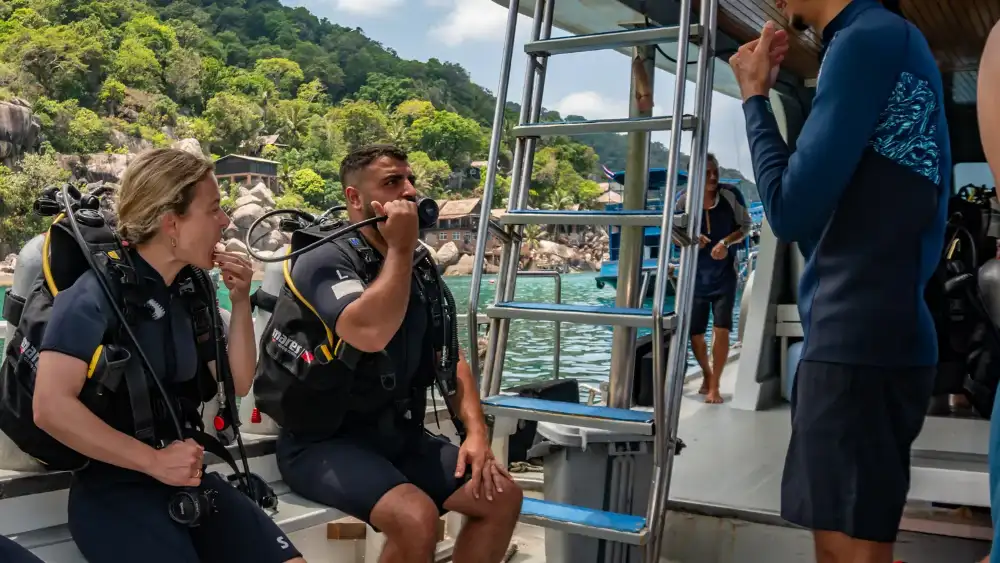
Once you are aboard the dive boat, where you sit and how you behave has a significant impact on whether sea sickness takes hold.
| Boat position | Why it helps | Why to avoid |
|---|---|---|
| Midship, lower deck | Least movement; closest to the boat’s centre of gravity | Can feel enclosed; limited view of the horizon |
| Stern (back of boat), on deck | Good airflow; you can face the direction of travel | Engine fumes can cause nausea in some people |
| Bow (front of boat), on deck | Good horizon view; fresh air | Most movement in choppy conditions |
| Inside cabin below deck | Sheltered from sun and rain | Worst position for seasickness; no horizon reference |
| Upper deck | Wide horizon view; good airflow | More pronounced boat movement at height |
Do these things:
Avoid these things:
It depends, as many divers find their symptoms vanish the moment they descend. Once submerged, the rocking stops and the sensory conflict resolves. The descent itself is often an instant cure.
That said, if your seasickness was severe, weigh these before entering the water:
Always speak to your instructor or divemaster before entering the water. At La Bombona Diving, we will always prioritise your safety over a rushed dive schedule. If seasickness has left you feeling anxious about getting in the water, our guide on overcoming scuba diving fear may help.
Rehydration after vomiting is not optional; it is a diving safety requirement. Vomiting depletes fluids and key electrolytes (sodium, potassium, magnesium, chloride), all of which your body needs to safely off-gas nitrogen after a dive.
| Option | Notes |
|---|---|
| Oral rehydration sachets (ORS) | Best option. Available at pharmacies across Koh Tao and Koh Samui. Sip slowly mixed with water. |
| Isotonic sports drinks | Good alternative. Look for drinks containing both sodium and potassium. |
| Coconut water | Widely available on Koh Tao. Gentle on the stomach; a natural electrolyte source. |
| Water + salty crackers | Simple and accessible. Provides hydration and basic sodium replacement. |
| Avoid | Carbonated drinks, sugary juices in large quantities, and alcohol in any amount. |
If you have been repeatedly sick and feel weak or confused, do not dive that day. Rest, rehydrate, and consult a pharmacist or doctor if symptoms continue.
For many divers, their first encounter with seasickness comes before they even reach the dive site, during the ferry or speedboat journey to Koh Tao itself.
The main ferry routes and their typical conditions are summarised below:
| Route | Operator | Typical duration | Sea conditions | Seasickness risk |
|---|---|---|---|---|
| Chumphon → Koh Tao | Lomprayah catamaran | ~1.5 hours | Generally calm; can be bumpy in the monsoon season | Low–Moderate |
| Surat Thani → Koh Tao | Lomprayah / Songserm | ~3–4 hours (night ferry) or ~6 hours slow | Longer crossing; more movement on the slow ferry | Moderate–High |
| Koh Samui → Koh Tao | Lomprayah catamaran | ~2.5 hours | Faster boat; can be choppy in rougher weather | Moderate |
| Koh Phangan → Koh Tao | Lomprayah / Songserm | ~1 hour | Short crossing | Low |
| Koh Samui → Sail Rock | Speedboat (dive operators) | ~50 minutes | Open water; significant chop possible | Moderate–High |
Worried about seasickness on your Koh Tao trip? Speak to our instructors at La Bombona Diving before you book: we advise on the best dive sites, boat journey options and preparation strategies for motion-sensitive divers, with small groups, flexible dive planning based on sea conditions and instructors who understand seasickness concerns. Have a look at our dive courses or contact our team.
Sea sickness should never be a reason not to dive. At La Bombona Diving, we have worked with hundreds of divers who were convinced that their tendency to feel seasick would rule out a Koh Tao diving experience, and almost all of them went on to enjoy incredible dives. The key is preparation, not willpower.
Pack your ginger, take your medication at the right time, eat sensibly, get a good night’s sleep, and tell us if you are feeling off on the way out. We have experienced instructors and small group sizes, and we will always prioritise your comfort and safety over a rushed dive schedule. The ocean will still be there; we just want to make sure you can enjoy it fully when you get there.
Act immediately. Move to the outer deck, stay midship, face forward, and focus on the horizon. Sip cool water and breathe slowly. Inform your divemaster. Avoid enclosed spaces, as early action helps prevent symptoms from worsening.
Yes, in many cases symptoms ease underwater. However, if you have vomited, rehydrate with fluids and electrolytes first. Avoid diving if drowsy from medication. Always inform your instructor so they can assess your readiness safely.
Meclizine is generally preferred for divers due to lower drowsiness compared to dimenhydrinate. Ginger and acupressure bands are safe alternatives. Avoid highly sedating medications. Always test any medication beforehand to understand how your body reacts.
Electrolyte sachets, sports drinks and tablets are widely available at pharmacies and convenience stores across Koh Samui, especially near ferry areas. Coconut water is also an easy, natural option to support hydration before your journey.
Yes, conditions are calmest from March to September. Rougher seas occur during the Gulf monsoon season from October to January, increasing seasickness risk, especially on ferry crossings from nearby islands or the mainland.
Fly to Koh Samui, then take a high-speed catamaran to Koh Tao. Choose morning departures for calmer seas, sit outside if possible, and take preventive medication in advance to reduce the risk of motion sickness on the boat.
Choose nearby sites with short boat rides, such as Japanese Gardens and Mango Bay. These minimise time on open water. As comfort improves, gradually try slightly farther sites while monitoring sea conditions and your personal tolerance.
More in Diving Tips
 Diving Tips
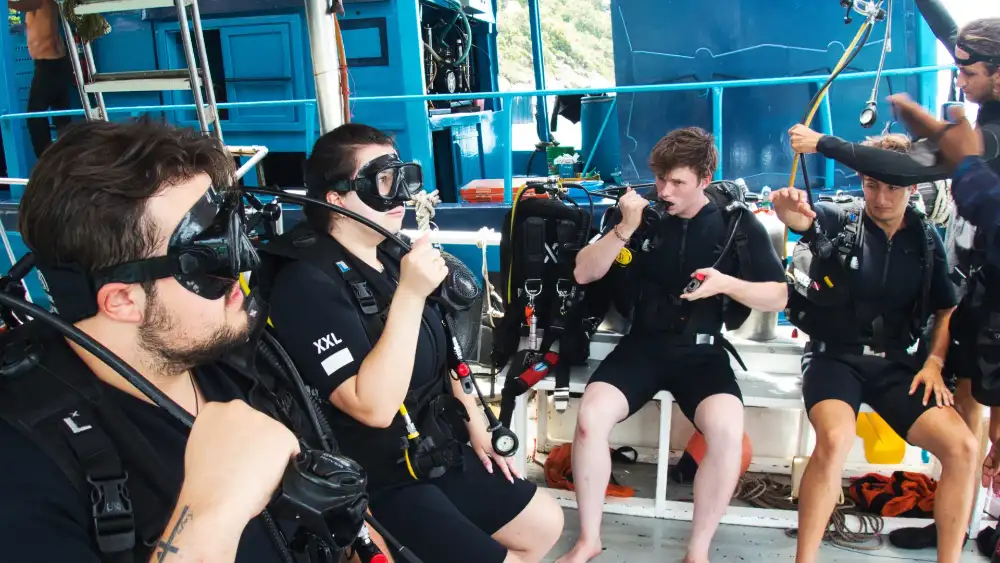
Depth, breathing, training, safety, equipment and cost compared side by side, so you can decide whether a snorkel afternoon, a Try Dive or a full Open Water course is the right fit for your Koh Tao trip.
 Diving Tips
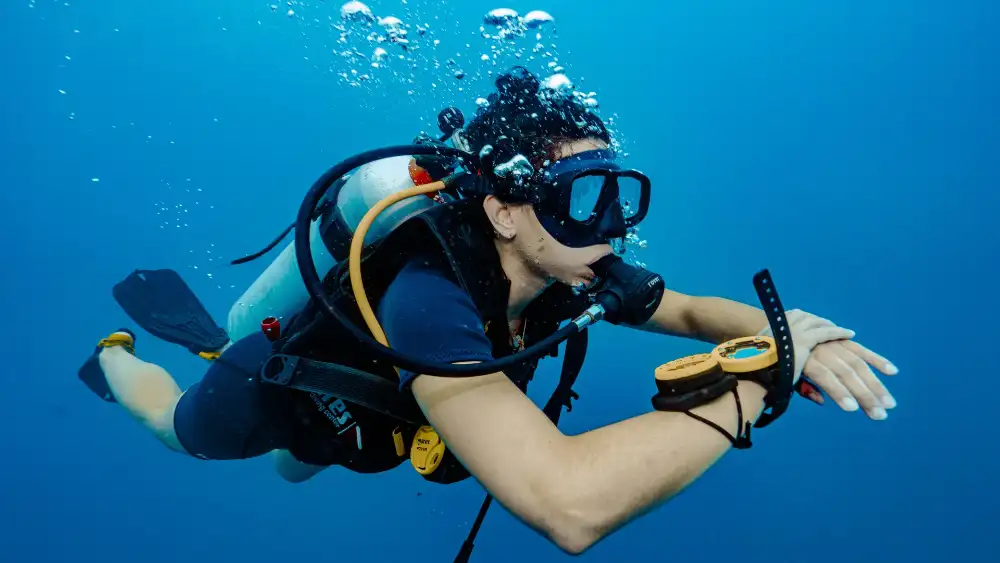
An Open Water course in Koh Tao usually takes three to four days — but the advertised number of days tells only part of the story. Here is what actually fills those days, why schedules differ between dive schools, and how to plan your stay around the course.
 Diving Tips
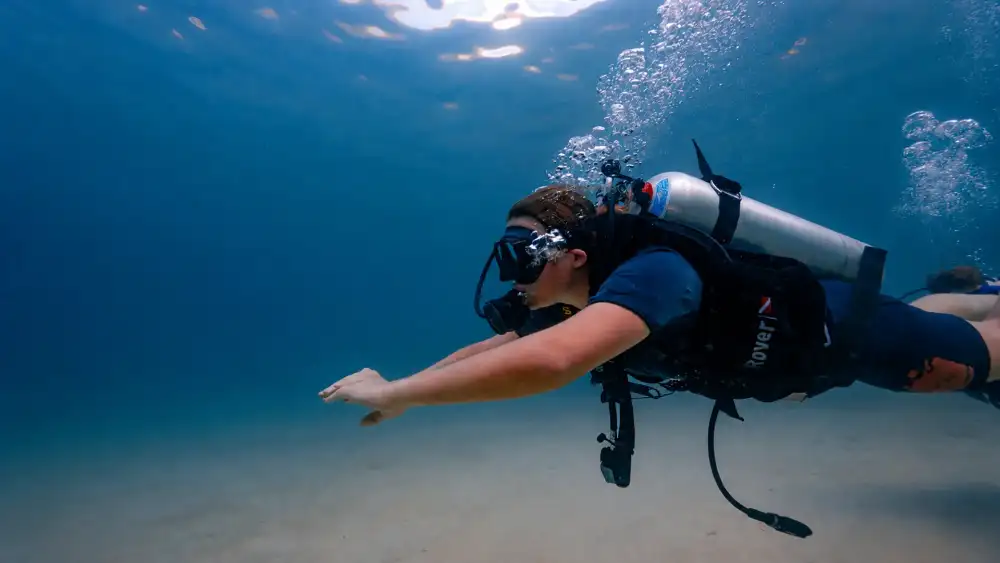
PADI, RAID and SSI compared across the whole training pathway — Open Water, advanced, rescue, specialities, Divemaster, instructor and technical — plus what actually decides the quality of your course in Koh Tao.
Message us on WhatsApp — courses, fun dives and honest advice about Koh Tao.
Chat on WhatsApp