How to identify longfin batfish (Platax teira), where to find them around Koh Tao, how they behave around divers, and what threatens them — with a site-by-site guide and a short knowledge quiz.
13 May 2025 · updated 27 February 2026 · by Bryan Roseman
In short. Batfish Koh Tao encounters offer some of Thailand’s most memorable underwater experiences. The longfin batfish (Platax teira), with their distinctive diamond-shaped bodies and curious behaviour toward divers, can be found at multiple dive sites around Koh Tao including Chumphon Pinnacle, White Rock and Southwest Pinnacle, making them accessible to divers of all certification levels.
Among the diverse marine life inhabiting the waters surrounding Koh Tao, the longfin batfish stands out as one of the most distinctive and charismatic species. These social creatures, with their unusual diamond-shaped bodies and elongated fins, capture the attention of divers exploring Thailand’s underwater paradise, often approaching visitors with apparent curiosity rather than fleeing like many other reef fish.
Understanding where and when to find batfish in Koh Tao, along with their behaviour patterns and identification features, enhances every underwater encounter and contributes to the meaningful marine life observations that make Koh Tao diving truly special.
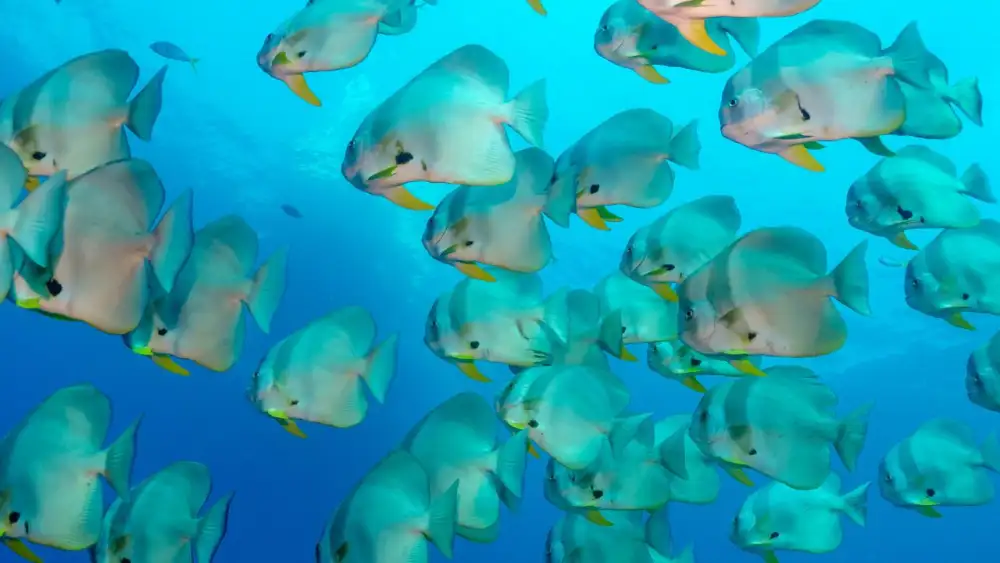
The Platax teira is immediately recognisable by its highly compressed, disc-like body forming a distinctive diamond or triangle shape. Adults typically grow to 30–40 cm in length, though specimens reaching 70 cm have been recorded around Koh Tao.
Batfish sightings occur at multiple dive sites around the island, with certain locations offering more reliable encounters depending on experience level and diving conditions. Understanding the best time to dive Koh Tao enhances your chances of memorable batfish encounters.
| Dive site | Depth range | Experience level | Sighting chance | Best time |
|---|---|---|---|---|
| Chumphon Pinnacle | 18–30 metres | Advanced | High | Early morning |
| White Rock | 12–25 metres | Intermediate | High | All day |
| Southwest Pinnacle | 15–28 metres | Advanced | High | Morning/afternoon |
| Shark Island | 5–18 metres | Beginner | Medium | All day |
| Twins | 8–20 metres | Beginner | Medium | Morning |
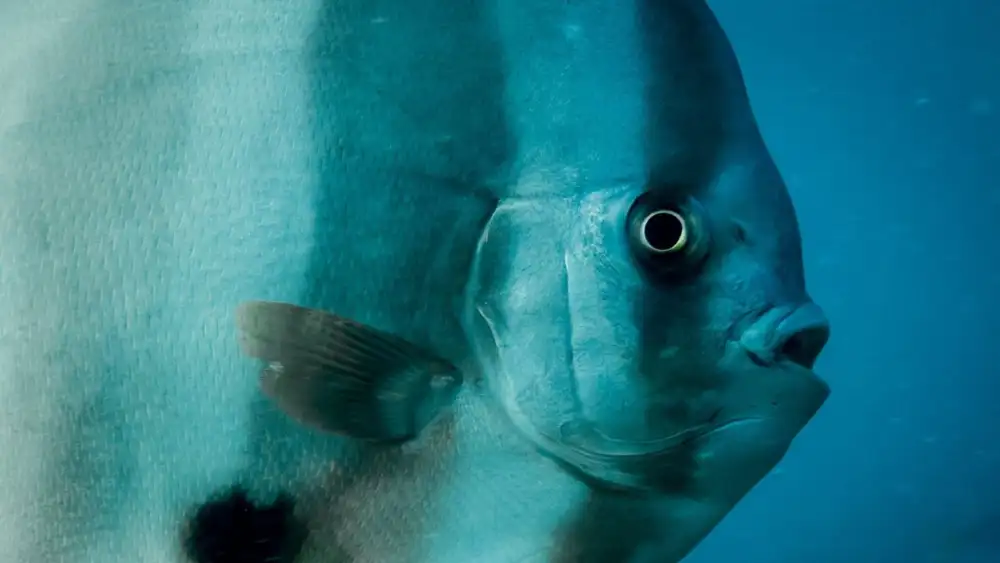
Longfin batfish are highly social creatures that exhibit fascinating behaviours, making them particularly engaging for underwater observation around Koh Tao.
Typically found in groups of 3–5 individuals, though larger aggregations of dozens can occur at sites like Chumphon Pinnacle during optimal conditions.
A naturally curious disposition leads batfish to approach divers rather than flee, often hovering nearby in their distinctive vertical posture to inspect visitors.
A semi-pelagic lifestyle means they travel throughout the water column and across different habitats rather than maintaining defined territories.
A distinctive vertical feeding posture while picking at algae and small invertebrates allows efficient manoeuvring between coral structures.
While longfin batfish are not currently endangered, they face various threats common to reef fish in the Gulf of Thailand that require ongoing conservation attention.
Coral reef degradation due to climate change and sedimentation reduces suitable habitat for all life stages.
Occasionally caught as bycatch or for the aquarium trade, particularly the colourful juveniles.
Generally resilient to diver presence, though excessive traffic and poor practices can disrupt behaviour.
Artificial reef projects, clean-up dives and diver education programmes help protect batfish habitat.
Test your understanding of longfin batfish characteristics and behaviour patterns around Koh Tao:
1. What is the most distinctive physical feature of adult longfin batfish?
2. Which dive site offers the most reliable batfish sightings for advanced divers?
3. How do juvenile batfish differ from adults?
4. What feeding behaviour is characteristic of batfish?
5. Why do batfish often approach divers?
Answers: 1 — diamond-shaped body with elongated fins · 2 — Chumphon Pinnacle · 3 — bright yellow with a leaf-like swimming pattern · 4 — vertical hovering while picking at algae and invertebrates · 5 — natural curiosity and social behaviour.
Ready to experience the magic of batfish encounters in Koh Tao’s waters? La Bombona Diving runs expert-guided fun dives (฿2,000 for 2 dives, all equipment included) to the best batfish sites around the island, such as Chumphon Pinnacle and White Rock, in small groups with marine life briefings and conservation-focused diving practices — all experience levels welcome. Whether you’re planning your first visit or returning to explore more marine life around Koh Tao, getting to this diving paradise is easier than ever with comprehensive transport options from anywhere in Thailand.
Longfin batfish exhibit curious behaviour toward divers due to their natural social disposition rather than actual "friendliness". Unlike many reef fish that perceive divers as threats, batfish investigate new objects in their environment. Their behaviour may be reinforced by the experience that divers don't represent danger, and some marine biologists suggest they might associate divers with disturbances that stir up food particles.
While batfish may approach closely, touching any marine life, including longfin batfish, is strongly discouraged. Human touch can damage the protective mucus coating that shields them from parasites and disease. Physical contact risks injuring their delicate fins and compressed bodies, and regularly touched marine life may develop behavioural changes that affect their survival strategies. Keep a respectful distance while enjoying their company.
Juvenile longfin batfish look remarkably different from adults. Juveniles display bright yellow colouration with dark vertical bars, more rounded bodies with proportionally longer fin extensions, and leaf-like swimming patterns that mimic floating debris. Adults have silvery-grey bodies with defined diamond shapes, less vivid colouration and a prominent dark stripe through the eye area. The transitional sub-adult phase displays characteristics of both stages.
Early morning dives between 07:00 and 09:00 typically offer the best opportunities to observe active batfish behaviour around Koh Tao. During these hours, batfish are more engaged in feeding and form more cohesive schools. Morning light provides ideal conditions for viewing their silvery bodies against the blue water. Afternoon dives sometimes reveal different behaviours, with fish hovering in the water column or seeking shelter near reef structures.
Current observations suggest longfin batfish populations around Koh Tao remain relatively stable, though systematic studies specific to the island are limited. Local dive professionals report consistent sightings across multiple sites year after year. The species benefits from marine protected areas and local conservation initiatives that improve habitat quality. Organisations such as the New Heaven Reef Conservation Program conduct regular surveys that include batfish sightings as part of population monitoring efforts.
More in Marine Life
 Marine Life
From barracuda and trevally to lionfish, cuttlefish, pufferfish, boxfish, moray eels, batfish and sea kraits — a species-by-species guide to the marine life you can meet on Koh Tao's reefs.
 Marine Life
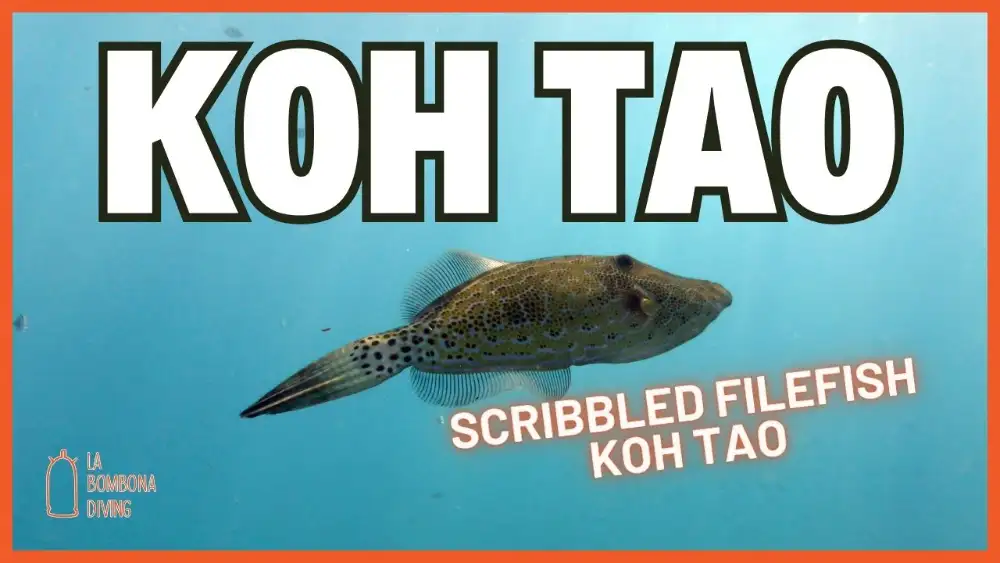
The enigmatic scribbled filefish of Koh Tao — how to identify these living artworks, how they behave, where to find them on the island's dive sites, and the conservation challenges they face.
 Marine Life
Everything about Koh Tao's blacktip reef sharks — how to identify them, how they behave and hunt, the bays where you can reliably see them, the best time of day, and how to watch them responsibly.
Message us on WhatsApp — courses, fun dives and honest advice about Koh Tao.
Chat on WhatsApp