What actually happens on a guided night dive in Koh Tao, step by step — the briefing, torch signals, what you see in the beam, how to tell if you’re ready and the mistakes first-timers make.
17 July 2026 · by Bryan Roseman
Key takeaways
- A night dive in Koh Tao is a planned, guided and torch-lit experience in which divers receive a detailed briefing on the route, depth, communication signals, buddy positioning, entry and exit procedures, and emergency protocols before entering the water.
- A beginner night dive is intended for an already-certified scuba diver who is comfortable with buoyancy control, equalisation, depth and air monitoring, equipment use and staying close to a buddy; it is not suitable for someone learning basic scuba skills for the first time.
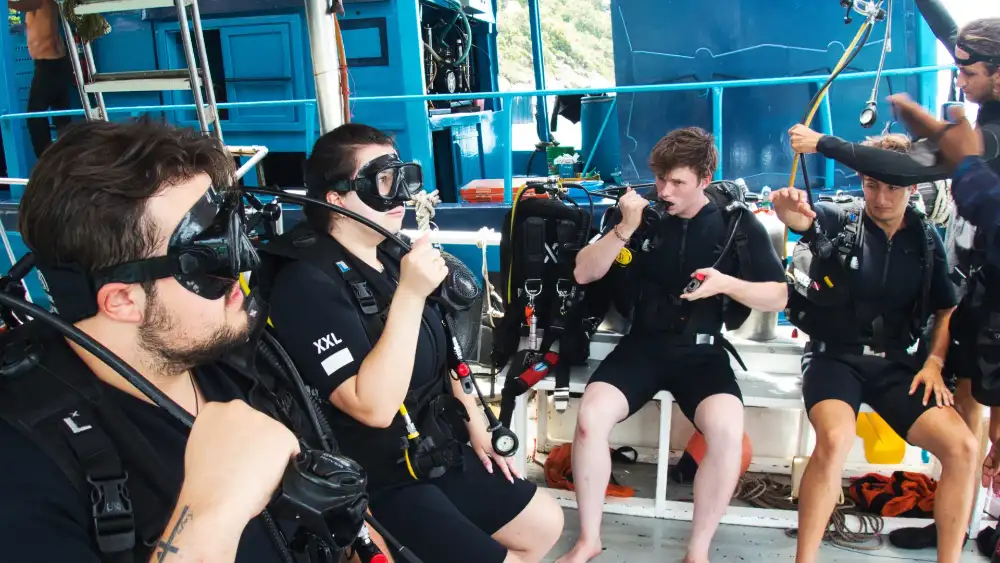
- Most first night dives begin before sunset so divers can assemble their equipment, test their primary and backup lights, meet their buddy, review signals and complete safety checks while natural light is still available.
- Night diving reveals a different side of Koh Tao’s reefs, where divers may observe resting reef fish, active crustaceans, moray eels, stingrays, squid, cuttlefish, hunting fish and occasional bioluminescence, although sightings always depend on the site, season and conditions.
- A guided night dive can feel slower, quieter and calmer than expected, but its safety depends on honest self-assessment, careful torch control, close buddy awareness, regular depth and air checks, clear communication and a willingness to end the dive if discomfort develops.
Watching the sea turn dark before your first night dive can feel strange, even when you are already comfortable scuba diving during the day.
You may wonder whether you will be able to see your buddy, recognise the reef, communicate properly or stay calm once you descend. These are normal concerns. The good news is that a night dive is not an unplanned swim through complete darkness.
It is a structured, torch-lit dive completed with a buddy and guide. Before entering the water, you are briefed on the route, depth, group position, communication signals, equipment, and procedures for possible problems. Underwater, your torch creates a clear field of vision, while the lights carried by your buddy and guide provide additional reference points.
Many divers find that the most intimidating part is looking at the dark water from the boat. Once they descend and begin following the reef through the beam of their torch, the experience often feels slower, quieter, and more focused than expected.
This guide explains exactly what happens during night diving in Koh Tao, what you may see, how to prepare, and how to decide whether you are ready.
Night diving can feel intimidating before you enter the water, but you are not dropped into uncontrolled darkness. You carry a dive torch, stay near your buddy and guide, and follow a route explained during a detailed briefing. Once underwater, the torch creates a clear window into the reef, which many divers find calmer and more manageable than they expected.
That does not mean every diver immediately stops feeling nervous. Reduced ambient light changes your sense of distance, direction, and space. Your breathing and bubbles may also sound more noticeable because there are fewer visual distractions.
The purpose of good preparation is not to convince you that fear is irrational. It is to remove avoidable uncertainty.
Before entering, you should understand:
Knowing the plan makes the darkness feel less unpredictable.
A beginner night dive doesn’t mean learning to scuba dive for the first time after dark. Instead, it refers to a diver who is already certified and comfortable with the fundamentals of scuba diving but has never experienced a dive at night.
Before trying a night dive, you should be able to:
While certification is the minimum requirement, it isn’t the only factor that determines whether you’re ready. Your recent diving experience, confidence in the water, current sea conditions, and the dive centre’s own participation requirements all play an important role. If you’re unsure whether you’re ready, speak to your instructor; they can help you decide if a night dive is the right next step or whether gaining a little more daytime experience would be beneficial first.
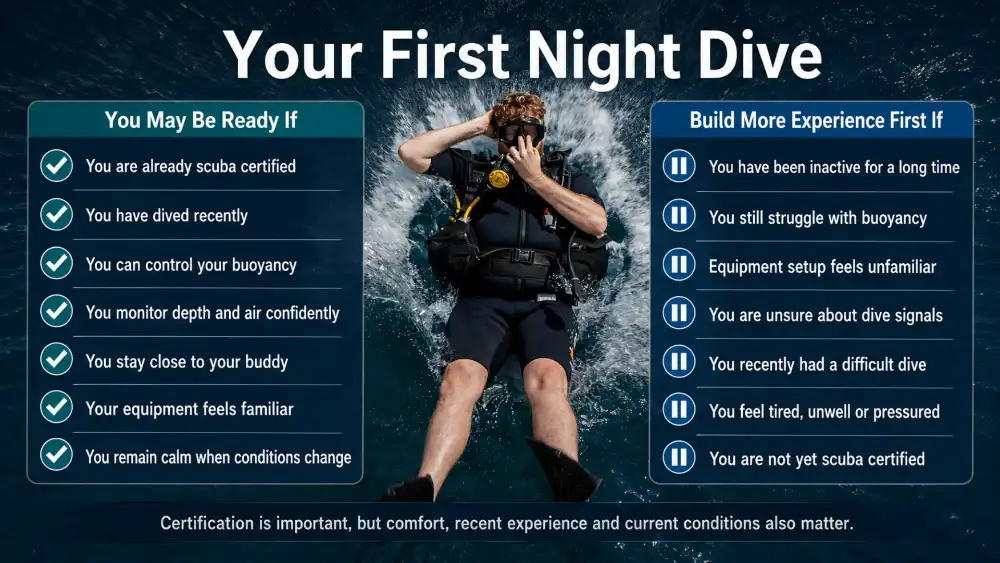
There isn’t a single checklist that determines whether someone is ready for a night dive. Some newly certified divers are comfortable trying one with a guide, while others benefit from gaining more daytime experience first. The table below can help you assess your current situation and choose the most sensible next step.
| Your current situation | Sensible next step |
|---|---|
| Certified, recently active and comfortable underwater | You may be ready for a guided night dive |
| Newly certified but confident with basic skills | Discuss your experience with the guide |
| Certified but inactive for a long period | Consider a Refresh Dive first |
| Still struggling with buoyancy | Complete more daytime dives |
| Uncertain about equipment setup or signals | Refresh your knowledge before diving at night |
| Anxious after a difficult recent dive | Explain the experience honestly to the dive team |
| Uncomfortable staying close to a buddy | Practise buddy awareness during daytime dives |
| Uncertified traveller | Choose a Try Dive or Open Water course instead |
| Tired, unwell or affected by alcohol | Do not dive until you are fit and prepared |
A night dive adds new tasks. It should not become the place where you are also trying to relearn fundamental Open Water skills.
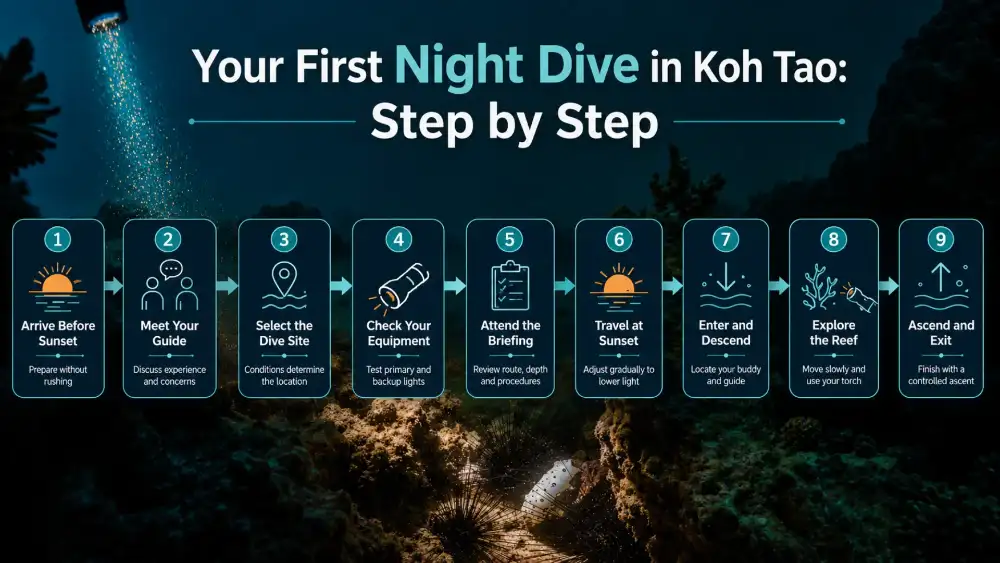
One of the most effective ways to reduce anxiety is to understand the entire experience before it begins.
Exact procedures vary between dive centres and dive sites, but a typical Koh Tao night diving experience may follow these stages.
Most night dives begin before it gets completely dark. Arriving early gives you plenty of time to prepare without feeling rushed and allows the dive team to complete all pre-dive checks while there’s still natural light.
Before the dive, you’ll typically:
Preparing in daylight also makes it much easier to spot and fix small equipment issues, such as a twisted strap, loose regulator hose, poorly secured torch, or incorrectly fitted gear.
If it’s your first night dive, let your guide know during the briefing. The more they understand about your experience and comfort level, the better they can support you throughout the dive.
Your guide may ask about:
There’s no benefit in pretending you’re completely comfortable if you’re feeling nervous. Being honest allows your guide to explain procedures in more detail, offer reassurance, or suggest a different dive if they believe you’ll have a better experience.
Saying, “I’m worried about losing sight of my buddy,” gives your guide something specific to address and is far more helpful than keeping your concerns to yourself.
Not every dive site is suitable for a night dive, and the most popular daytime site isn’t always the best choice after sunset. Dive centres select sites based on the conditions that day to ensure the dive is as safe and enjoyable as possible.
Factors that influence site selection include:
For a beginner night dive, dive centres generally prioritise calm conditions, straightforward navigation, and easy entries and exits over choosing the most dramatic or challenging dive site.
The scuba equipment used for a night dive is largely the same as for a daytime dive, but your dive torch becomes an essential part of your setup. Before entering the water, you and your buddy will carry out a thorough equipment check to make sure everything is working correctly.
Your pre-dive check typically includes:
Completing these checks before it becomes fully dark helps ensure that any equipment issues can be identified and resolved while visibility is still good, allowing you to enter the water feeling prepared and confident.
The pre-dive briefing is one of the most important parts of a night dive. It explains exactly how the dive will be conducted, what to expect underwater, and how the group will communicate in low-light conditions.
During the briefing, your guide will typically cover:
Even if you’ve completed a night dive elsewhere, pay close attention. Briefings, communication methods, and safety procedures can vary between dive centres and dive sites.
Most of the hand signals you use during a daytime dive are still used at night, but they need to be visible. A common technique is to shine your torch onto your own hand while making the signal so your buddy or guide can see it clearly.
Your guide will also explain any torch signals used during the dive to communicate with the group or attract attention. These signals aren’t universal, so always follow the system explained during your briefing rather than assuming every dive centre uses the same light movements.
Good torch etiquette helps everyone stay comfortable and aware underwater. This includes:
Using your torch thoughtfully not only improves communication but also helps preserve everyone’s night vision and minimises disturbance to the reef and its wildlife.
Many night dive trips begin in the late afternoon, with the boat reaching the dive site as the sun sets or shortly after darkness falls. This timing gives everyone an opportunity to prepare while there’s still some natural light before transitioning into night diving.
A sunset departure also allows you to:
Before entering the water, your guide will usually carry out a final review of the entry procedure and answer any last-minute questions.
For many first-time night divers, entering the water is the most nerve-racking part of the experience. Looking into dark water from the boat can feel unfamiliar, but once you focus on the procedures you’ve already practised, those initial nerves often begin to fade.
After entering the water, you’ll typically:
There’s no need to rush. A well-run night dive allows everyone to descend when they’re comfortable, not simply because other divers are ready.
As you begin your descent, your dive torch provides a clear point of focus, helping you stay aware of your surroundings despite the reduced ambient light.
During the descent, you’ll use your torch to keep track of:
Descend slowly, equalise as you normally would, and monitor your depth regularly. Because it’s darker underwater, it’s easier to lose your sense of depth or movement, making your dive computer and visual references even more important than they are during a daytime dive.
Once you settle into the dive, it no longer feels like swimming through complete darkness. Instead, your dive torch creates a bright, focused beam that illuminates the reef directly in front of you, making it easier to concentrate on what you’re seeing.
Rather than taking in the entire reef at once, you’ll naturally explore one small area at a time, whether that’s:
Many divers find that this narrower field of view makes the experience feel calmer and more immersive than a daytime dive, allowing them to notice details they might otherwise swim past.
Night dives are rarely about covering long distances. Instead, they’re about slowing down, observing the reef carefully, and maintaining good awareness of your surroundings.
Moving at a relaxed pace helps you:
It’s important to stay with the group throughout the dive. Even if you spot an interesting animal or want to take a photograph, avoid swimming away from your buddy or following another diver’s torch beam. Staying together is one of the key safety practices during any night dive.
As the dive comes to an end, your guide will lead the group back toward the exit point and begin a controlled ascent based on the dive plan, conditions, and everyone’s remaining air supply.
During the ascent, continue to monitor:
Remember that the dive isn’t over when you reach the safety stop. Continue maintaining your position, stay aware of the rest of the group, and follow your guide’s instructions until everyone has safely surfaced and exited the water. A calm, controlled finish is just as important as the descent and exploration.
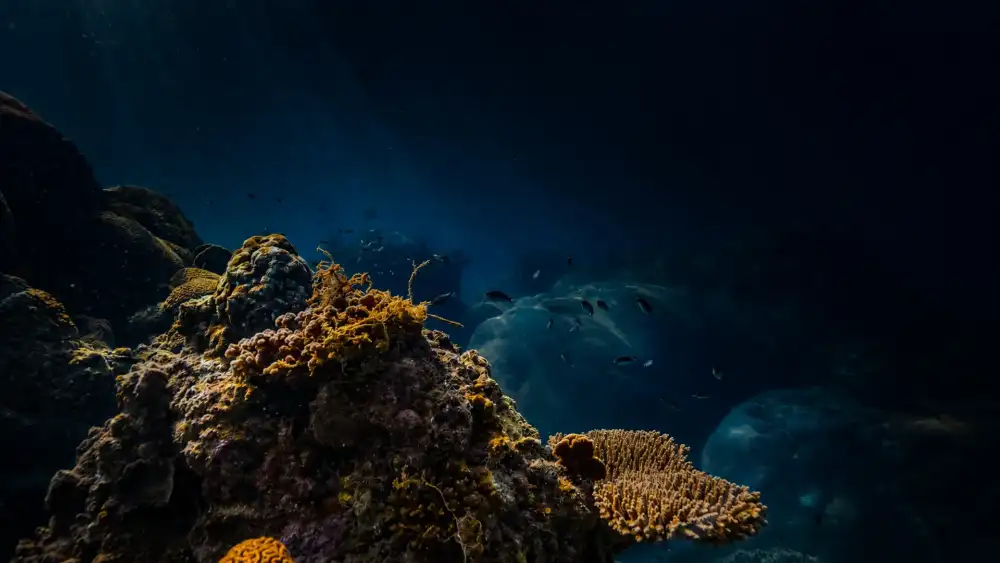
The ocean doesn’t become a featureless black void after sunset. While the water beyond your torch remains dark, the area illuminated by your light is surprisingly clear, allowing you to explore the reef in detail.
Within your torch beam, you’ll typically be able to see:
You’ll also notice the lights carried by other divers in your group, making it easier to maintain awareness of everyone’s position.
The biggest difference from a daytime dive isn’t that you see less—it’s that your attention naturally focuses on a smaller area at a time. This narrower view often makes reef textures, colours, and the behaviour of nocturnal marine life more noticeable, creating a completely different underwater experience.
Yes. During a guided night dive, you should always be able to see your buddy, provided you stay within the agreed distance and follow your guide’s instructions.
At night, your buddy’s dive torch becomes an additional point of reference, making it easier to keep track of each other. However, don’t rely solely on the light itself. At busy dive sites, there may be multiple groups underwater, and it’s possible to mistake another diver’s torch for your buddy’s.
Instead, regularly check:
Good buddy awareness means recognising the diver—not just following the nearest beam of light. This simple habit helps prevent confusion and keeps the group together throughout the dive.
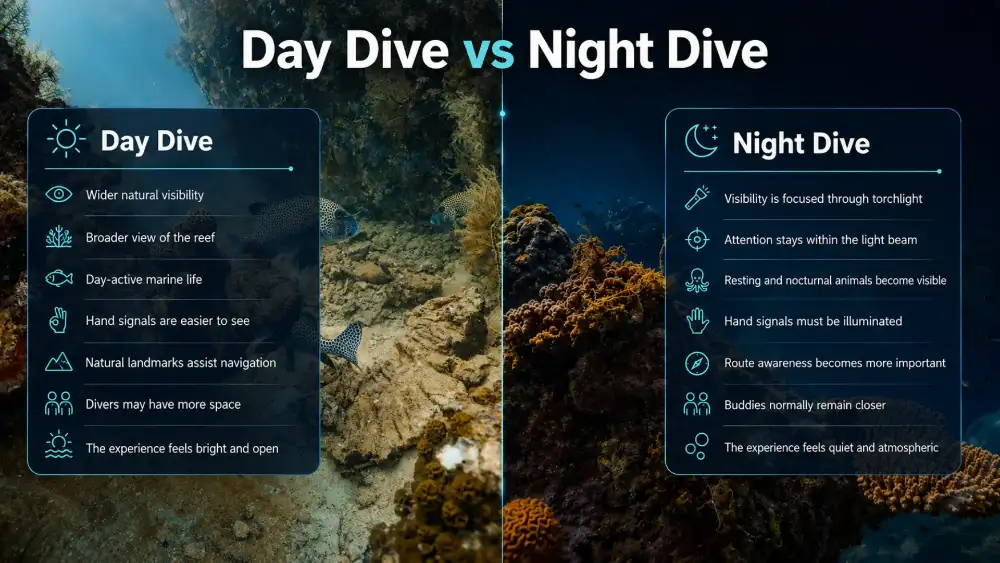
| Feature | Day Dive | Night Dive |
|---|---|---|
| Ambient light | Sunlight illuminates a wider area | Dive lights create the main field of visibility |
| Field of vision | Broad view of the reef | Focused view inside the torch beam |
| Marine-life behaviour | Day-active animals are feeding and moving | Resting animals and nocturnal activity become visible |
| Communication | Hand signals are normally easy to see | Signals need to be illuminated |
| Navigation | Natural landmarks are easier to recognise | Route awareness and close group positioning becomes more important |
| Buddy distance | Divers may spread out where appropriate | Buddies normally remain closer together |
| Pace | Depends on the site and dive objective | Often slower and more deliberate |
| Depth awareness | More natural visual references | Instruments and nearby references require closer attention |
| Photography | Ambient light can assist composition | Artificial lighting and task management become more demanding |
| Emotional experience | Bright, open and familiar | Quiet, concentrated and atmospheric |
A night dive does not replace daytime diving. It reveals a different shift on the reef.
Many divers expect their first night dive to feel stressful or overwhelming. In reality, it’s often the opposite. Once the initial nerves fade, the slower pace, focused visibility, and structured approach can make the experience feel surprisingly calm and immersive.
During a daytime dive, it’s easy to look in several directions at once—the reef, schools of fish, your buddy, and your dive guide. At night, your attention naturally stays within the beam of your torch. This smaller field of view reduces distractions and allows you to focus on one part of the reef at a time, which many divers find more relaxing.
Night dives are typically conducted with the group staying closer together than during many daytime dives. Keeping your buddy and guide within sight makes communication easier and provides a reassuring point of reference throughout the dive. Seeing their torch beams nearby can also help you feel more confident as you explore.
Night diving isn’t about covering as much reef as possible. The emphasis is on moving slowly, observing carefully, and staying aware of your surroundings.
A slower pace helps you:
A thorough briefing removes much of the uncertainty that causes pre-dive anxiety. Before entering the water, you’ll already know the planned route, maximum depth, communication signals, and how the dive will end. Having a clear plan allows you to focus on enjoying the experience rather than wondering what comes next.
A guided night dive is never about pushing through fear. If you feel uncomfortable at any point, let your guide know as early as possible. Depending on the situation, they may slow the dive, adjust the plan, or end the dive altogether.
Choosing to stop a dive because you’re no longer comfortable is a responsible decision. A good dive team will always prioritise your safety and wellbeing over completing the dive.
A guided night dive can be suitable for a certified diver who is new to diving after dark, provided that:
However, night diving should not be described as risk-free. It adds several considerations to an ordinary daytime dive.
| Additional consideration | Why it matters |
|---|---|
| Reduced ambient light | Natural references are less visible |
| Dependence on dive lights | Light problems must be anticipated |
| Closer buddy coordination | Separation can be more confusing after dark |
| Navigation | The route and exit require careful attention |
| Buoyancy | Fewer visual references can affect depth awareness |
| Communication | Signals must be deliberately illuminated |
| Entry and exit | The boat, shoreline or ladder must be clearly identified |
| Emotional stress | Darkness can increase anxiety for some divers |
The safest approach is to be honest about your ability rather than choosing the dive because everybody else is doing it.
Waiting until you feel ready does not make you a weaker diver.
Not always. Whether you need additional training depends on your certification, diving experience, the conditions, and the dive centre’s own participation requirements.
Before allowing someone to join a guided night dive, a dive centre may consider factors such as:
Many certified divers can join a guided night dive without first completing a dedicated night diving speciality. However, if you’re newly certified, haven’t dived for a while, or need to build confidence, your instructor may recommend gaining more experience first or completing additional training.
For divers who want to develop their skills, RAID offers the Night and Limited Visibility speciality. The course focuses on night-diving procedures, underwater navigation, communication, torch use, buddy awareness, and techniques for diving safely in low-visibility conditions. It’s designed to help divers build confidence before exploring more challenging environments.
The simplest approach is to speak with your chosen dive centre before booking. Tell them what certification you hold, how much recent diving experience you have, and whether this will be your first night dive. They can then advise whether you’re ready to join a guided dive or would benefit from additional training first.
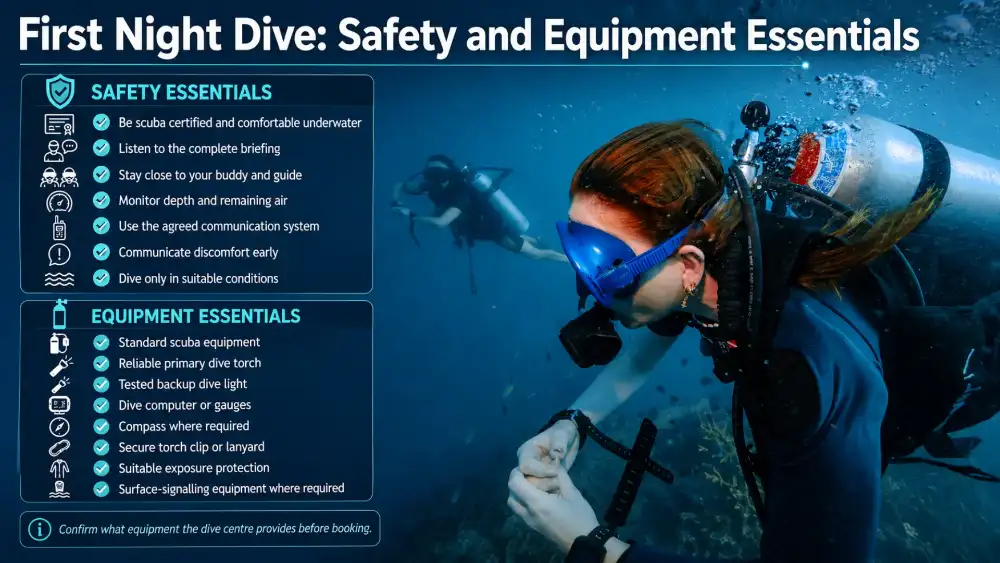
| Equipment | Why it matters |
|---|---|
| Standard scuba equipment | Breathing, buoyancy and exposure protection |
| Primary underwater torch | Visibility, communication and reef observation |
| Backup-light arrangement | Provides an alternative if the primary light fails |
| Dive computer or instruments | Helps monitor depth, time and ascent |
| Compass where required | Supports navigation when distant landmarks are not visible |
| Appropriate exposure protection | Helps maintain comfort after sunset |
| Surface-signalling equipment where required | Helps identify a diver at the surface |
| Secure torch attachment | Reduces the risk of losing the light |
Do:
Do Not:
Good torch control is part of both communication and responsible marine life observation.
A torch failure should be discussed during the briefing, before it happens.
Do not:
Instead:
A backup light does not automatically mean that the dive must continue. Its purpose is to help the team manage the situation safely and according to the dive plan.
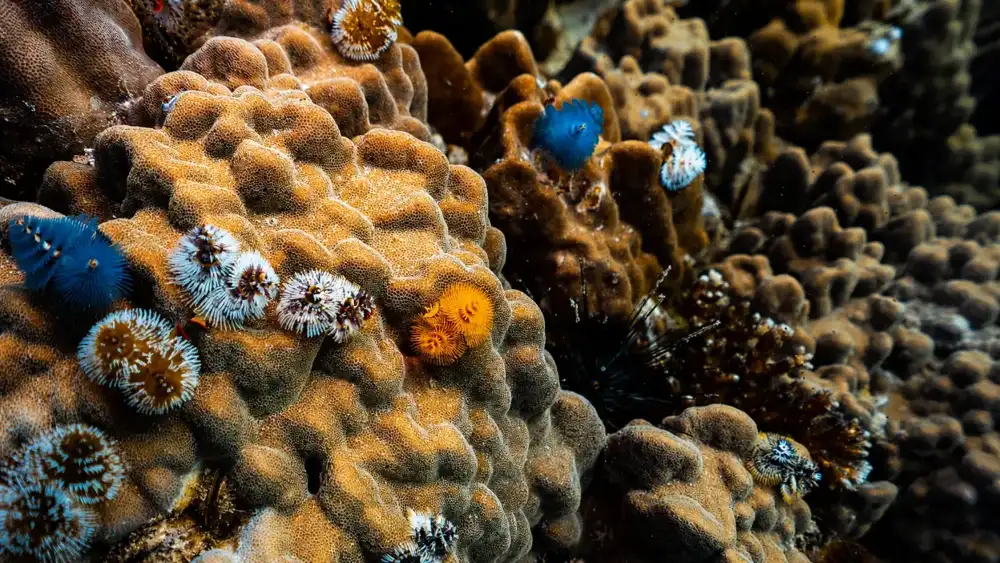
A night dive in Koh Tao gives you the opportunity to see nocturnal marine life that is often hidden during the day, along with daytime species resting on the reef. The exact sightings vary by dive site, season, and conditions, but the reef becomes noticeably different after sunset as many animals change their behaviour.
Rather than simply appearing darker, the reef becomes more active in new ways. Some daytime fish settle into sheltered areas to rest, while nocturnal species emerge to feed, hunt, and forage. This shift in activity is one of the reasons many divers describe night diving as a completely different experience from exploring the same site during the day.
Depending on the dive site and conditions, you may encounter:
| Possible sighting or behaviour | What may be different at night |
|---|---|
| Resting reef fish | Fish may shelter inside coral, crevices or protected reef areas |
| Parrotfish | Some may be seen resting within sheltered parts of the reef |
| Moray eels | They may move beyond their daytime hiding places |
| Crabs and shrimps | Small crustaceans may emerge from reef crevices |
| Squid or cuttlefish | Movement, hunting and colour changes may be easier to observe |
| Stingrays | They may move across sandy areas while feeding |
| Hunting fish | Predatory activity may become more noticeable |
| Coral polyps | Feeding activity and fine reef details may be more visible |
| Bioluminescent organisms | Tiny flashes may appear when conditions are suitable |
RAID notes that marine life behaves differently after dark, with nocturnal animals becoming active and reef activity changing significantly. Koh Tao night-diving guidance also commonly associates White Rock, Twins and Sairee-area reefs with possible encounters involving hunting fish, crustaceans, moray eels, stingrays, resting parrotfish and occasional bioluminescence.
These are possibilities, not promises. The site, season, conditions and chance all influence what you see.
Nocturnal animals are not automatically aggressive towards divers.
However, darkness does not remove the need for respectful behaviour.
Wild animals can behave unpredictably, so avoid describing any species as completely harmless or always docile.
A typical recreational night dive is usually kept at a moderate depth, but there is no single depth that applies to every dive. The planned depth depends on the dive site, conditions, the experience of the group, and the dive centre’s procedures.
Your guide will determine the maximum depth after considering factors such as:
For a first night dive, deeper isn’t better. Many beginner-friendly night dives take place on relatively shallow or moderate-depth reefs, where divers can focus on enjoying the experience rather than managing a more demanding profile.
These sites often provide:
During the pre-dive briefing, it’s worth asking both the maximum planned depth and the average depth you’ll spend most of the dive at. This gives you a clearer idea of what to expect before entering the water.
Earlier in the Day
Before Leaving the Dive Centre
On the Boat
Underwater
Yes, you may be able to bring a camera on your first night dive, but many dive professionals recommend leaving it behind. Your first night dive is about becoming comfortable with diving after dark, and adding photography can make the experience more demanding.
Using an underwater camera means you’ll also need to:
Instead of focusing on taking photos, your first night dive is usually better spent developing confidence and enjoying the experience. Prioritise:
Once you’ve completed a few night dives and feel comfortable navigating, communicating, and using your torch, you’ll be in a much better position to bring a camera and concentrate on capturing the reef without compromising safety or enjoyment.
Not necessarily. Light rain on its own doesn’t usually cancel a night dive. The decision depends on whether conditions remain safe for diving rather than whether it’s raining.
Before a night dive goes ahead, the dive team will assess factors such as:
Rain falling on the surface often has little effect on the dive itself. However, strong winds, rough seas, lightning, or other unsafe conditions may lead to the dive being delayed, moved to a more sheltered site, or cancelled altogether.
The final decision is always made by the dive centre based on the conditions at the time, with the safety of the divers and crew taking priority over completing the dive.
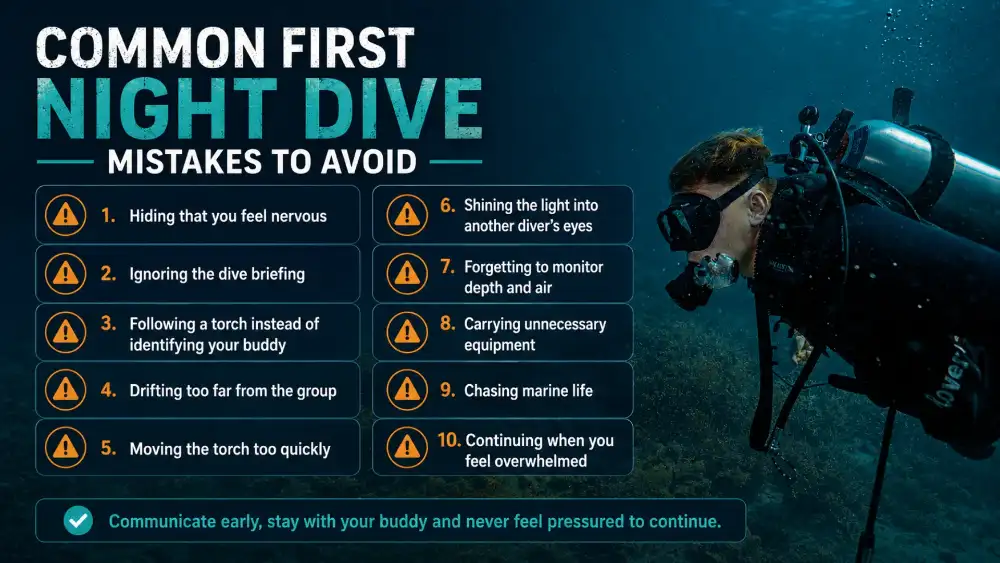
Even experienced divers can make mistakes during their first night dive. The good news is that most are easy to avoid with good preparation, clear communication, and by staying focused throughout the dive.
Feeling anxious before a night dive is completely normal. Let your guide know if you have any concerns so they can provide extra reassurance or explain procedures in more detail.
Even if you’ve completed a night dive elsewhere, every dive centre has its own procedures, communication methods, and dive plans. Listen carefully and ask questions if anything is unclear.
At popular dive sites, several groups may be underwater at the same time. Don’t assume every torch belongs to your buddy; identify the diver before following the light.
A small separation can become confusing at night. Stay within the agreed buddy distance and regularly check your buddy’s position throughout the dive.
Sweeping your torch around or making sudden movements can distract other divers and may even be mistaken for a signal that you need assistance. Keep your movements slow and deliberate.
Avoid pointing your light directly at other divers. It can temporarily affect their vision and make communication more difficult.
Reduced ambient light can make it harder to judge whether you’re ascending, descending, or maintaining depth. Check your dive computer or gauges regularly instead of relying solely on visual cues.
A first night dive is about gaining confidence, not managing extra tasks. Unless you’re already comfortable with night diving, it’s usually best to leave cameras and unnecessary accessories behind.
It’s tempting to follow an interesting octopus or crab, but swimming away from your buddy or the group can create unnecessary risk and disturb the animal. Observe marine life from a respectful distance.
If you become uncomfortable, let your guide know as soon as possible. Slowing the dive or ending it early is always a better choice than allowing anxiety to build.
For many certified divers, yes. A night dive offers a completely different perspective on the underwater world and is often remembered as one of the most unique and rewarding diving experiences.
After sunset, the reef transforms. Many daytime fish settle down to rest, while nocturnal species emerge to hunt and feed, revealing marine life and behaviours you may never see during a daytime dive.
Even if you’ve visited a dive site earlier the same day, exploring it at night can feel like discovering an entirely new reef. The focused beam of your torch highlights details and marine life that are easy to overlook in daylight.
Because your attention is concentrated within your torch beam, you naturally slow down and observe more closely. This often makes it easier to appreciate coral textures, tiny reef creatures, and the subtle behaviour of nocturnal marine life.
Night diving encourages good diving habits by helping you become more aware of:
These are valuable skills that can improve your confidence on all future dives, not just those after dark.
Successfully completing your first night dive shows that unfamiliar environments become much more manageable with proper preparation, a good briefing, and the support of an experienced dive team. Many divers finish the dive feeling far more confident than they expected.
A night dive should be enjoyable, not something you feel pressured to tick off your list. If you’re still working on buoyancy, communication, or basic scuba skills during daytime dives, you’ll probably have a better experience after gaining a little more practice first. Completing a few fun dives or a Refresh Dive can help you build the confidence needed to fully enjoy your first dive after sunset.
If you’re a certified diver thinking about your first night dive, choosing the right dive school can make all the difference. At La Bombona Diving, our experienced instructors keep groups small, provide thorough pre-dive briefings, and select dive sites based on the conditions and the experience of the group, not simply what’s most popular.
Whether you’re feeling excited, curious, or a little nervous, we’ll help you prepare, answer your questions, and guide you through every stage of the dive at a pace you’re comfortable with.
Get in touch with the team to discuss your experience level, ask about upcoming night dives, or book your next underwater adventure in Koh Tao.
Divers communicate during a night dive using the same basic hand signals as they do during the day, but they use their dive torches to make those signals visible. Your guide will also explain any torch signals used by the group before entering the water.
A typical communication process looks like this:
In addition to standard hand signals, your guide may use specific torch movements to communicate with the group or attract attention. These light signals can vary between dive centres, so always follow the system explained during the pre-dive briefing.
Avoid creating your own torch signals underwater. A movement that seems harmless to you could be mistaken for an emergency or attention signal by your buddy or another dive group, leading to unnecessary confusion. Consistent communication is one of the key reasons guided night dives remain safe and well organised.
A typical recreational night dive usually lasts between 40 and 60 minutes underwater, although the exact duration varies depending on the dive plan, conditions, and the divers in the group.
The amount of time you spend underwater may be influenced by air consumption, planned depth, sea and visibility conditions, group comfort and experience levels, no-decompression limits, the dive route and the guide’s dive plan.
It’s important to remember that the underwater portion is only part of the overall experience. A night dive trip often takes several hours from start to finish because it also includes check-in and registration, equipment preparation, the pre-dive briefing, boat travel to the dive site, entry preparation, the dive itself, exiting the water, the return journey and a post-dive debrief.
If you have dinner reservations, onward travel plans, or other evening activities, ask the dive centre for the expected meeting time, departure time, and return time before booking. This will give you a much clearer idea of how the night dive fits into your schedule.
For most divers, the underwater time passes surprisingly quickly. The slower pace, focused visibility, and unique marine life often make a night dive feel shorter than a daytime dive, even when the actual dive duration is similar.
White Rock is one of Koh Tao’s best-known night dive sites thanks to its varied reef, gentle depth profile, and the chance to encounter a wide range of nocturnal marine life. Depending on sea conditions and the experience level of the group, dive schools may also choose sites such as Twins or other Sairee-area reefs that offer suitable conditions for night diving.
The final dive site is always selected based on current conditions, including wind, waves, current, visibility, boat traffic, entry and exit conditions, depth, site layout and group experience.
Yes, a night dive can be safe for a beginner who is already scuba certified, comfortable underwater, and diving with an experienced instructor or guide. Night diving requires additional preparation because visibility is limited and communication relies on dive lights and agreed hand signals.
Before entering the water, your guide should explain how to use your primary and backup lights, stay close to your buddy, communicate in the dark, and respond if you feel uncomfortable. A calm briefing, suitable weather conditions, an appropriate dive site, and staying within your certification and experience limits all help make a first night dive safer and more enjoyable.
You do not need to be an advanced diver, but you should feel confident with basic skills such as buoyancy control, mask clearing, equalisation, and buddy awareness.
You do not always need a separate night-diving speciality certification to join a guided night dive. In most cases, you must already be a certified scuba diver, such as an Open Water Diver, and stay within the depth and training limits of your existing certification.
Requirements may vary depending on the dive centre, local conditions, your age, experience and comfort level underwater. Before your first night dive, you should receive a detailed briefing on dive-light use, night-time communication, buddy procedures, navigation and what to do if you become separated.
A Night and Limited Visibility speciality course is not always compulsory, but it can help you develop stronger skills and feel more confident when diving after dark.
For a night dive, you need your normal scuba equipment plus a few items designed for diving in darkness. The most important additions are:
You will also need standard scuba gear, including a mask, fins, regulator, buoyancy control device, cylinder, weights and suitable exposure protection. Check both dive lights and their batteries before entering the water, secure them with clips or wrist straps, and learn the light signals used for communication during the pre-dive briefing.
Some equipment may be supplied by the dive centre, so confirm what is included before your night dive.
For a night dive, the most important backup item is a reliable secondary dive light that can be used if your primary torch fails. It should be fully charged, tested before entry and secured with a clip or lanyard so it cannot be lost underwater.
You should also carry suitable surface-signalling equipment, such as a whistle and surface marker buoy, along with a functioning dive computer and compass where required. Some divers also carry a spare mask, particularly on boat dives. Confirm the dive centre’s equipment requirements before the dive, as backup-light and signalling procedures may vary.
More in Diving Tips
 Diving Tips
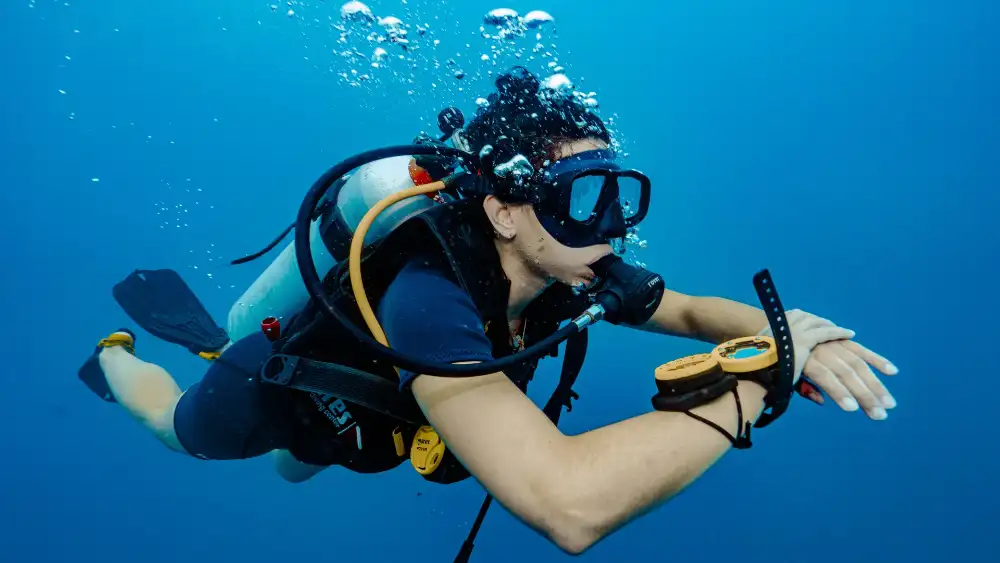
Depth, breathing, training, safety, equipment and cost compared side by side, so you can decide whether a snorkel afternoon, a Try Dive or a full Open Water course is the right fit for your Koh Tao trip.
 Diving Tips
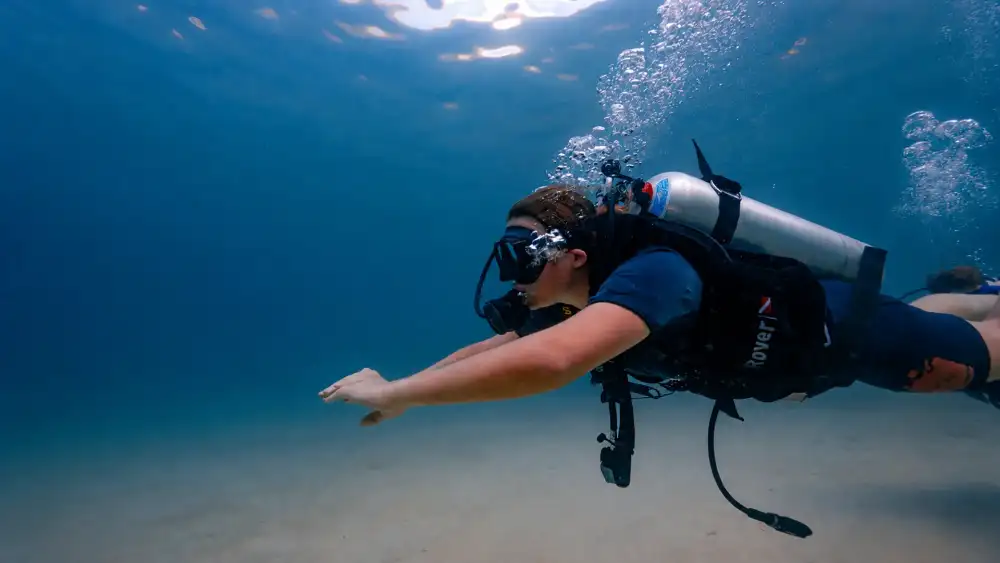
An Open Water course in Koh Tao usually takes three to four days — but the advertised number of days tells only part of the story. Here is what actually fills those days, why schedules differ between dive schools, and how to plan your stay around the course.
 Diving Tips
PADI, RAID and SSI compared across the whole training pathway — Open Water, advanced, rescue, specialities, Divemaster, instructor and technical — plus what actually decides the quality of your course in Koh Tao.
Message us on WhatsApp — courses, fun dives and honest advice about Koh Tao.
Chat on WhatsApp