Everything about diving Sail Rock — the famous Chimney swim-through, the pelagic fish and whale sharks, the best season and conditions, how to choose a dive operator, and how to dive it responsibly.
26 May 2024 · updated 27 February 2025 · by Bryan Roseman
Key takeaways
- Sail Rock is a premier dive site located between Koh Tao and Koh Phangan, famous for its rich marine life and the unique vertical swim-through known as the “Chimney”.
- To dive Sail Rock you should be certified, with Open Water or equivalent as a minimum, though an Advanced certification is recommended for deeper exploration.
- The best time to dive is the dry season from March to October, with visibility ranging from 10 to 40 metres and the chance to spot whale sharks.
- Choosing a reputable dive operator is crucial for safety and the best experience, with weather and sea conditions taken into account.
- Divers have a responsibility to follow sustainable diving practices to protect the vibrant ecosystem at Sail Rock.
Imagine descending into the blue, where schools of barracuda swirl in unison and the silhouette of a whale shark looms in the distance. This is Sail Rock, a dive site that captures the essence of underwater adventure. Here, each dive is a journey through a bustling city of marine life, clustered on a monolithic pinnacle that rises from the ocean floor.
It’s the sheer abundance and variety of life that sets Sail Rock apart. This underwater haven is a magnet for pelagic fish, offering divers face-to-face encounters with some of the ocean’s most majestic creatures. But it’s not just the wildlife; the dive site’s structure, with its famed “Chimney” swim-through, presents an exhilarating challenge for divers looking to add a thrilling chapter to their logbooks.
As with many iconic dive sites, there’s a tale woven into the name of Sail Rock. Some say it’s the shape of the rock, standing tall like a ship’s sail against the horizon, that earned it its title. Others believe it’s the way the site captures the spirit of sailing, with the freedom and exploration it promises beneath the waves.
The trip to Sail Rock is an adventure in itself. Whether you’re setting off from Koh Tao or Koh Phangan, the anticipation builds as the rock’s outline grows on the horizon. As you gear up, the energy on the boat is palpable; everyone is eager to dive one of the most talked-about spots in the Gulf of Thailand.
Here’s what you should look for in a dive operator:
These factors will make all the difference to your diving experience, so choose wisely.
The ride out to Sail Rock is usually smooth, but conditions can vary. On a clear day you’ll be greeted with panoramic views of the ocean, the perfect prelude to the underwater spectacle that awaits. Most trips include two dives and a surface interval where you can swap stories with fellow divers over lunch.
Once you’ve arrived at Sail Rock, it’s time to explore. The site’s topography is a diver’s dream, featuring steep walls that drop to the ocean floor and create a dramatic backdrop for your dive. The pinnacle itself is a vertical playground, offering various routes down and around its structure, each promising a unique perspective on this underwater marvel.
Below the surface, Sail Rock reveals its true grandeur. The rock formation is encrusted with anemones and soft corals, providing a kaleidoscope of colour against the deep blue. The seabed around the pinnacle slopes gently away, giving way to sand and silt where macro life thrives. Divers can navigate around massive boulders and through narrow crevices, each turn presenting a new discovery.
Perhaps the most exhilarating feature of Sail Rock is the “Chimney”, a vertical swim-through that starts at about 18 metres and exits at 6 metres. This natural tunnel is like a gateway to another world, with light filtering down from above and creating an ethereal glow that guides divers upward. It’s an experience that combines the thrill of exploration with the awe of natural beauty.
The biodiversity at Sail Rock is staggering. On each dive you’re likely to encounter species spanning the entire food chain, from tiny nudibranchs to imposing predators.
The pinnacle serves as a beacon for pelagic fish, drawing them in from the open ocean. It’s not uncommon to find yourself amidst schools of trevally, mackerel and the shimmering scales of barracuda. The currents that flow around Sail Rock enrich the waters, attracting these species in great numbers and making for some of the most memorable underwater encounters.
And then there are the whale sharks. These gentle giants are the ocean’s nomads, and while their appearances can’t be guaranteed, Sail Rock is one of the few places where the chance to swim with them is a real possibility. The best times to spot these magnificent creatures are during the plankton blooms, which typically occur in the warmer months.
Timing your dive can make all the difference to what you’ll experience at Sail Rock. The site is accessible year-round, but conditions do vary with the seasons.
Visibility at Sail Rock can range from 10 to 40 metres, influenced by weather patterns and plankton levels. The currents here can be strong, so it’s essential to plan your dive accordingly. A good dive operator will assess the conditions and advise on the best approach for a safe and enjoyable dive.
The dry season, from March to October, typically offers the best conditions for diving. During these months the seas are calmer and visibility is at its peak. However, always check the weather forecast before your trip, as the ocean can be unpredictable. Your safety and the quality of your dive depend on it.
As divers, we have the privilege of exploring the underwater world, but with that comes a responsibility to protect it. Sail Rock is no exception.
Sustainable diving practices at Sail Rock include:
These practices help preserve the site’s natural beauty for future generations of divers.
Divers can contribute to conservation efforts by taking part in clean-up dives and supporting local initiatives that promote marine protection. By choosing dive operators that prioritise eco-friendly practices, divers also encourage the industry to operate sustainably.
Remember, every dive is an opportunity to observe and appreciate the marine environment, but it’s also a chance to make a positive impact.
Levelling up your diving skills is a thrilling part of the sport, and Sail Rock is the perfect place to do it. With its deep water and complex structures, it offers a playground for advanced divers to refine their techniques and push their limits.
If you’re looking to dive deeper into Sail Rock’s mysteries, consider taking a RAID Deep 40 course. This certification allows you to safely explore depths of up to 40 metres, where the colours of the reef become more vivid and the marine life even more exotic. With the right training, you can navigate Sail Rock’s deeper areas with confidence and control.
For those who want to extend their time under the waves, diving with Enriched Air Nitrox is the way to go. This speciality course teaches you how to use oxygen-enriched air, which can extend your no-decompression limits, especially on repetitive dives. It’s a game-changer for maximising your experience at Sail Rock, allowing more time to take in the splendours of the deep.
As you prepare to end your dive at Sail Rock, there are a few spots you simply can’t miss. These are the places that have earned the site its reputation as the crown jewel of the Gulf of Thailand’s dive destinations.
The “Chimney” is an iconic feature of Sail Rock, a vertical swim-through that starts deep and ascends to a shallower exit. Diving through this natural tunnel feels like entering the heart of the rock itself, with the light above guiding you like a beacon. It’s a must-do for any diver visiting Sail Rock, combining adventure with a touch of the mystical.
Drift diving around Sail Rock is an exhilarating experience. The currents can be strong, but they offer a unique way to travel along the rock’s contours, gliding effortlessly as the underwater world passes by. It’s like flying, except you’re surrounded by a sea of life, each current bringing new sights and sensations.
As your dive day at Sail Rock comes to a close, you might still have questions. Here are the answers to some common queries to help you plan your underwater adventure.
While Sail Rock is a haven for advanced divers, beginners can still enjoy its shallower areas. The site offers a range of depths, so new divers can experience the excitement without venturing into the deep. Just make sure you're comfortable with your skills and always dive within your limits.
With these tips, even novice divers can have a memorable experience at Sail Rock.
As an uninhabited rock in the middle of the sea, Sail Rock doesn't offer on-site facilities. However, dive boats typically come equipped with essentials like food, water and first aid. Make sure to bring anything else you might need, such as a camera or extra sunscreen.
Numerous dive schools in Koh Tao venture out to Sail Rock regularly, though not all of them go every week and what's included varies. La Bombona Diving runs a Sail Rock trip every Friday for 2,800 ฿, with equipment, boat, snacks and two dives included — ask about the schedule when you book.
Your safety is paramount when diving at Sail Rock. Dive operators should brief you on emergency protocols, including the location of safety equipment and the procedures for lost divers or accidents. Make sure you're familiar with these protocols and know how to use your safety gear, such as surface marker buoys and whistles.
Yes, you can dive at Sail Rock throughout the year, but conditions will vary. The dry season offers the best visibility and sea conditions, while the wet season can bring stronger currents and reduced visibility. Always check with your dive operator for the latest conditions before planning your dive.
More in Diving Tips
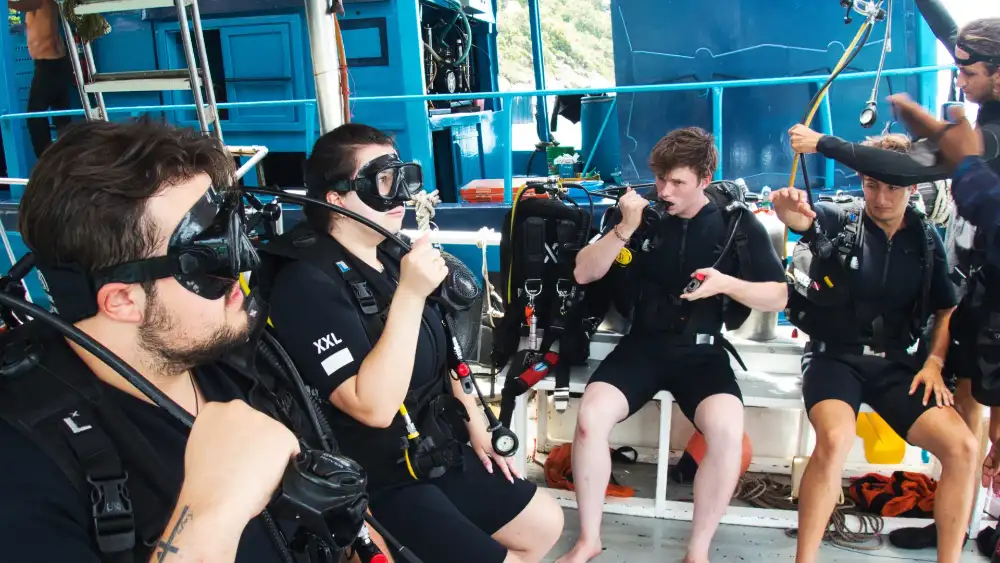 Diving Tips
Depth, breathing, training, safety, equipment and cost compared side by side, so you can decide whether a snorkel afternoon, a Try Dive or a full Open Water course is the right fit for your Koh Tao trip.
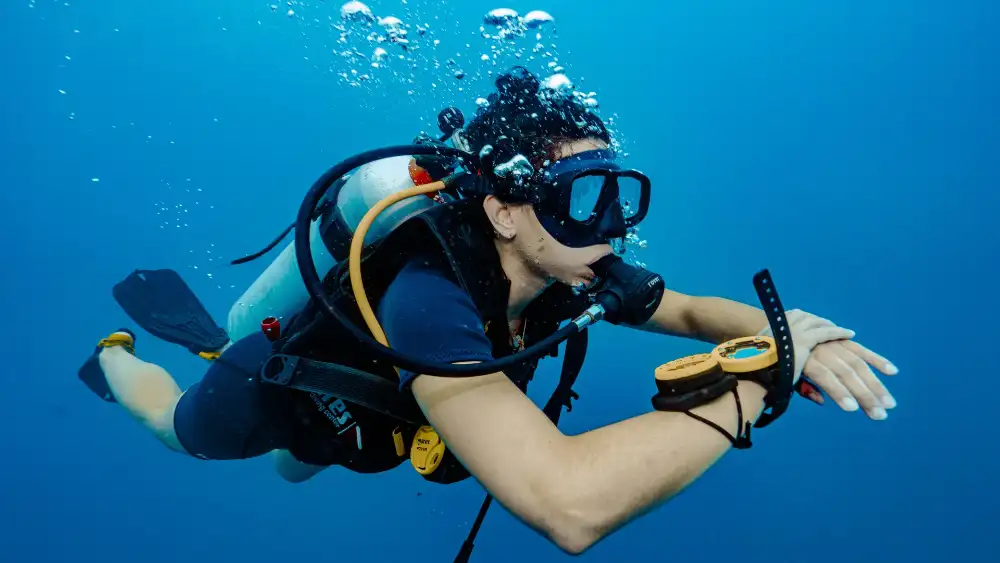 Diving Tips
An Open Water course in Koh Tao usually takes three to four days — but the advertised number of days tells only part of the story. Here is what actually fills those days, why schedules differ between dive schools, and how to plan your stay around the course.
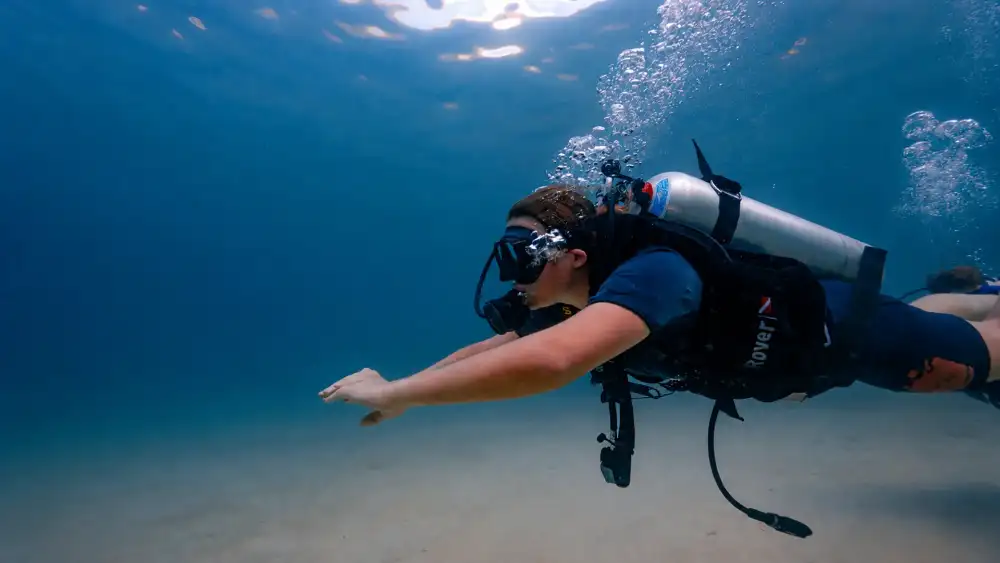 Diving Tips
PADI, RAID and SSI compared across the whole training pathway — Open Water, advanced, rescue, specialities, Divemaster, instructor and technical — plus what actually decides the quality of your course in Koh Tao.
Message us on WhatsApp — courses, fun dives and honest advice about Koh Tao.
Chat on WhatsApp