Mask, fins, wetsuit, BCD, regulator, dive computer and the safety kit — how to choose each piece, what it costs in Thailand, and our advice on what to buy first (mask, then computer) and what to rent until 30 dives.
23 May 2025 · updated 8 November 2026 · by Bryan Roseman
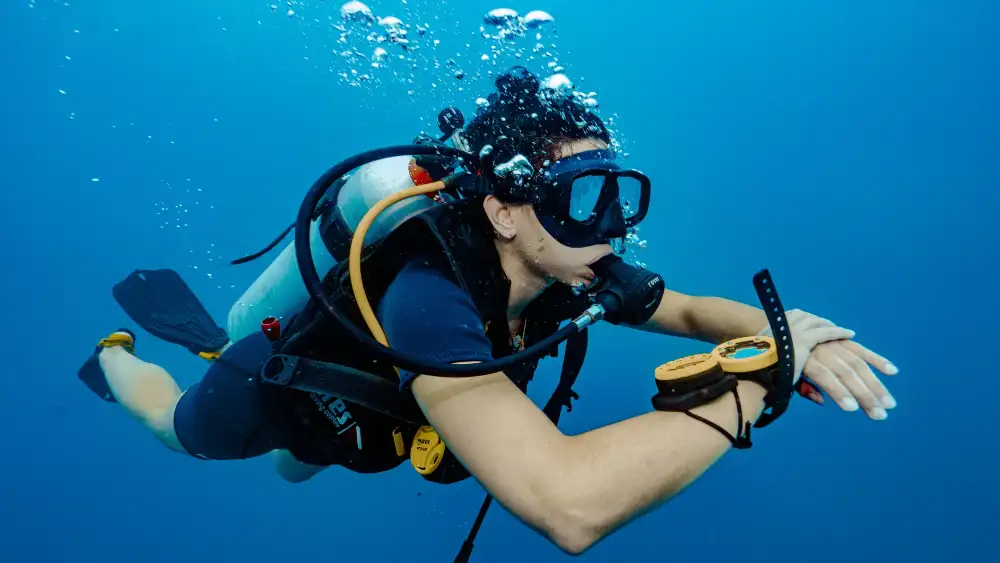
In short. Essential scuba diving gear includes primary equipment (mask, fins, BCD, regulator, wetsuit) and critical safety items (dive computer, SMB, cutting tool). A properly fitting mask creates your underwater window, while your BCD and regulator system provide life support. Modern dive computers track depth, time and decompression status. Quality gear focuses on proper fit and reliability rather than expense, with personal items like masks worth buying early while renting larger equipment initially.
Whether you’re newly certified or considering this incredible sport, understanding essential scuba diving gear is crucial for both safety and enjoyment underwater. The right equipment not only keeps you safe but transforms you from a land-dweller into a confident underwater explorer.
This comprehensive guide covers everything you need to know about selecting, using and maintaining your diving equipment for years of safe underwater adventures in destinations like Koh Tao.
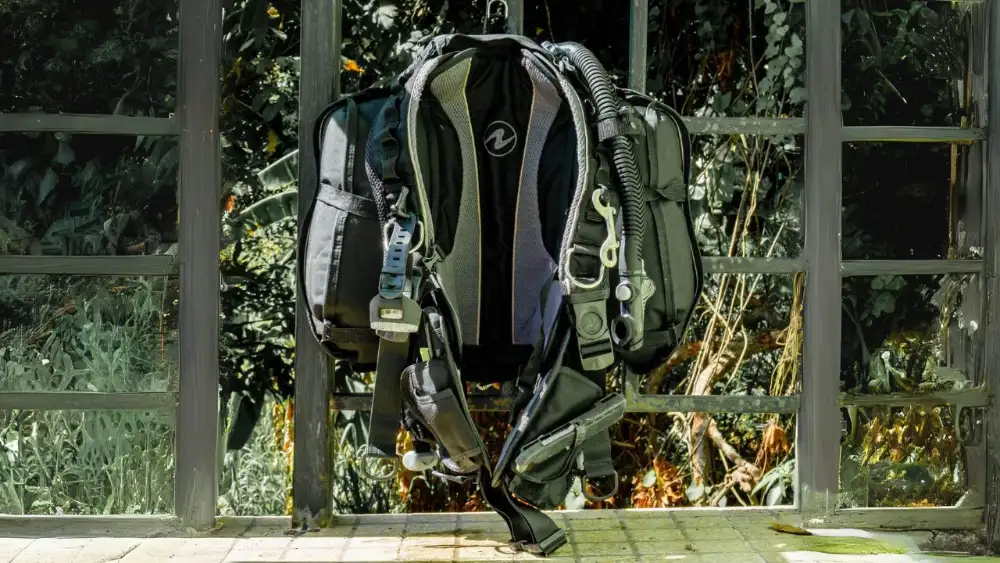
Complete equipment checklist
Essential
Your window to the underwater world. A properly fitting diving mask creates a comfortable, watertight seal without pressure from the strap.
Price range: ฿2,000–8,000
Essential
Transform your leg power into efficient underwater propulsion. Choose between open-heel and full-foot designs based on your diving environment.
Price range: ฿1,500–6,000
Essential
Thermal protection is crucial since water conducts heat 25 times faster than air. Choose thickness based on water temperature.
Price range: ฿4,000–15,000
Life support
Controls your buoyancy and secures your tank. Choose between jacket-style and back-inflation designs based on diving position preferences.
Price range: ฿8,000–25,000
Life support
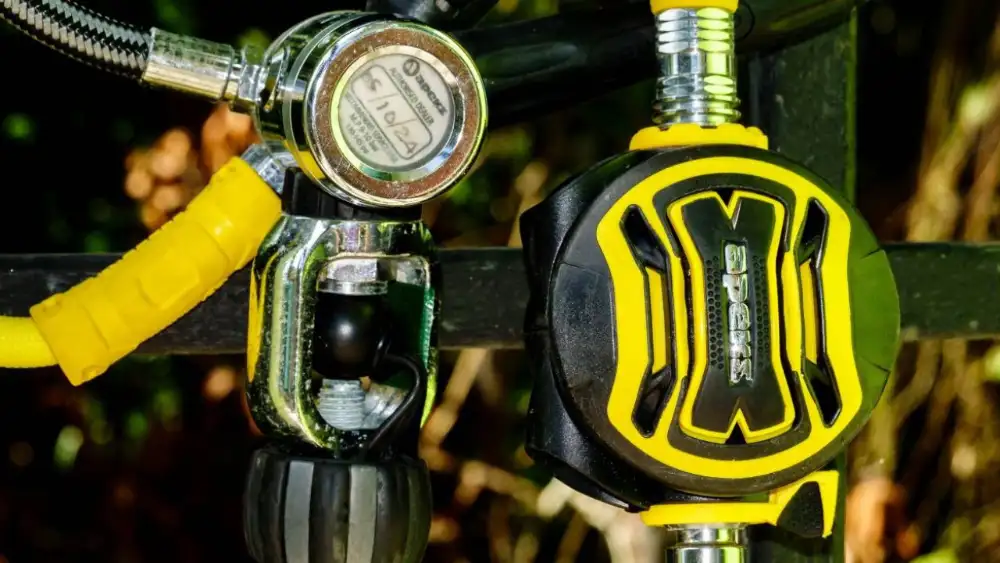
Delivers breathable air from your tank. A complete regulator system includes first stage, primary second stage, octopus, pressure gauge and BCD inflator.
Price range: ฿15,000–50,000
Safety
Modern dive computers are essential safety equipment, tracking depth, time, nitrogen absorption and decompression status.
Price range: ฿8,000–30,000
Essential equipment price ranges
Understanding typical costs for essential scuba diving gear helps you budget effectively and make informed purchasing decisions.
| Equipment | Budget range | Mid-range | Premium | Purchase priority |
|---|---|---|---|---|
| Diving mask | ฿1,500–3,000 | ฿3,000–6,000 | ฿6,000–12,000 | Buy first |
| Fins | ฿1,000–2,500 | ฿2,500–5,000 | ฿5,000–10,000 | Buy early if you’ll dive regularly (with boots) |
| Wetsuit (3–5 mm) | ฿3,000–6,000 | ฿6,000–12,000 | ฿12,000–25,000 | Rent until 30+ dives |
| Dive computer | ฿6,000–12,000 | ฿12,000–25,000 | ฿25,000–50,000 | Buy second |
| BCD | ฿6,000–12,000 | ฿12,000–20,000 | ฿20,000–35,000 | Rent until 30+ dives |
| Regulator system | ฿12,000–20,000 | ฿20,000–35,000 | ฿35,000–60,000 | Rent until 30+ dives |
| Surface marker buoy | ฿500–1,000 | ฿1,000–2,000 | ฿2,000–3,500 | Buy once certified |
| Cutting tool | ฿300–800 | ฿800–1,500 | ฿1,500–3,000 | Nice to have |
| Dive light | ฿800–2,000 | ฿2,000–4,000 | ฿4,000–8,000 | Nice to have |
| Safety item | Purpose | Priority level | Price range | Key features |
|---|---|---|---|---|
| Surface marker buoy (SMB) | Surface signalling and safety | Essential | ฿800–2,500 | Bright colour, oral inflation, durable material |
| Cutting tool | Entanglement release | Essential | ฿500–2,000 | Corrosion resistant, easy access, secure attachment |
| Dive light | Primary illumination | Important | ฿1,000–5,000 | LED technology, rechargeable, backup light |
| Underwater slate | Communication tool | Nice to have | ฿300–1,000 | Waterproof, easy writing, secure attachment |
Place the mask against your face without using the strap, then inhale gently through your nose. A well-fitting mask will stay in place using just the suction from your gentle inhalation. If air leaks in, try another style or size.
Fins should fit snugly but not tight enough to cause cramps. For open-heel fins with boots, ensure the heel strap holds securely without pressure points. Full-foot fins should fit like a comfortable shoe with no sliding movement.
A properly fitting wetsuit should be snug against your skin with minimal water movement inside. Check for flexibility at joints and ensure no binding at the neck, wrists or ankles. Thickness should match your diving environment’s water temperature.
Proper maintenance ensures your essential scuba diving gear works correctly when you need it most — underwater. After every dive, especially in saltwater:
Our advice to a new diver is simpler than most gear guides: buy a mask first, then a dive computer, and rent everything else until you’ve logged thirty or more dives.
Mask first. It’s the one piece where fit decides the dive. A leaking rental mask is the most common reason a beginner has a miserable time, and a mask that fits you costs less than a single day’s diving. Do the fit test above in the shop, not in the sea.
Computer second. On our courses a computer is included; on fun dives it’s 200 ฿ a day to rent. If you’ll dive more than a couple of weeks a year, your own pays for itself quickly, and you’ll learn what your profile actually looks like instead of trusting the guide’s.
Rent the rest. BCD, regulator, wetsuit, weights, tank — every dive shop supplies them, and until you’ve done thirty dives you don’t yet know which style suits you. Our rental kit is replaced within two years and the regulators are serviced every six months, so you’re not losing anything by waiting.
Fins and boots, if you’ll dive regularly. See the tip below.
If you think you’ll be diving regularly, I’d recommend buying at least a pair of fins with good neoprene boots, and of course your own mask. That way you know your dive won’t be ruined by ill-fitting dive-centre equipment. Dives are expensive, so the last thing you want is to be uncomfortable and unable to enjoy them fully.
On Koh Tao, ask your instructor where to go for a mask that fits your face — we’ll point you to a shop that will let you try several. On Koh Lipe, where good masks used to be hard to find, we run a dive gear shop inside our dive centre stocked by Dive Ventures — OMS, Sharkskin, Orcatorch and XDEEP — sold in person or by WhatsApp.
All equipment is included on every course with us — the Open Water course is 11,000 ฿ over 3.5 days with everything supplied — so you can try several masks, fins and suits during your training before you spend anything.
A complete set of quality entry-level scuba gear typically costs between ฿50,000 and 120,000. However, you don't need to buy everything at once. Start with personal items like mask, fins and wetsuit (฿8,000–25,000), then gradually add major components as you gain experience and determine your preferences.
Not necessarily. While very cheap equipment should be avoided for safety reasons, mid-range gear often provides the best value for essential scuba diving gear. Focus on proper fit, quality construction and suitability for your diving environment rather than price alone. A ฿4,000 mask that fits perfectly is better than a ฿10,000 mask that leaks.
Start by purchasing personal items that directly contact your body (mask, fins, snorkel, wetsuit) for hygiene and proper fit. Rent major life-support equipment initially to try different brands and styles. A dive computer should be an early purchase for safety and consistency in dive planning.
For masks, perform the suction test without the strap. Fins should be snug but not cause cramping. Wetsuits should be tight against the skin with minimal water circulation. BCDs should fit properly both inflated and deflated. Always test equipment in controlled conditions before important dives.
With proper maintenance, most essential scuba diving gear components last many years: BCDs and regulators 10+ years with annual servicing, wetsuits 3–7 years depending on usage, masks and fins 5–10 years, and dive computers 5–7 years with battery replacements. Quality equipment and proper care maximise lifespan.
Beyond basic life-support equipment, every diver should carry a surface marker buoy (SMB) for surface signalling, a cutting tool for entanglement emergencies, and a dive computer for monitoring depth, time and decompression status. These items can literally save your life in emergency situations.
More in Diving Tips
 Diving Tips
For most beginners on Koh Tao, the Open Water course is the best place to start: it's built for people who have never dived, starts in a calm pool and leaves you certified for life. Here's how it compares with a Try Dive.
 Diving Tips
Depth, breathing, training, safety, equipment and cost compared side by side, so you can decide whether a snorkel afternoon, a Try Dive or a full Open Water course is the right fit for your Koh Tao trip.
 Diving Tips
With us the Open Water course takes 3.5 days: a 4 pm orientation on arrival, then three training days. Here is every session with its time, why other schools quote 2.5–4 days, and how many nights to book.
Diving with us on Koh Tao
Message us on WhatsApp — courses, fun dives and honest advice about Koh Tao.
Chat on WhatsApp