Step by step through a first try dive in Koh Tao — the gear, the briefing, dive theory basics, hand signals, confined-water practice, your first breath underwater and the open water dive itself, plus what comes next.
5 May 2024 · updated 14 November 2025 · by Rocío García
Key takeaways
- A try dive in Koh Tao is a one-day experience ideal for beginners to get a taste of scuba diving.
- Choosing the right dive site is crucial for a safe and enjoyable first dive.
- Familiarisation with dive gear is the first step before getting into the water.
- RAID-certified instructors are essential for a safe and educational diving experience.
- Understanding basic dive theory and safety procedures prepares you for the underwater adventure.
Imagine taking your first breath underwater, surrounded by vibrant coral reefs and an abundance of marine life. That’s what awaits you in Koh Tao, a diving paradise nestled in the Gulf of Thailand. The island is a haven for beginners and seasoned divers alike, offering clear, warm waters and a variety of dive sites that cater to every level of experience. A try dive in Koh Tao is more than just an activity; it’s an introduction to a new world, a gateway to adventure beneath the waves.
Embarking on a try dive means you’ll be dipping your toes into the world of scuba diving without committing to a full certification course. It’s a one-day event that gives you a glimpse of the underwater realm. You’ll learn the basics of using scuba gear, get comfortable with breathing underwater, and perform a few essential skills to keep you safe. Most importantly, you’ll have the chance to explore the underwater landscape, all under the watchful eye of a professional instructor.
With numerous dive sites around Koh Tao, choosing the perfect spot for your first try dive is key. You want conditions that are calm and waters that are shallow enough to ease any initial nerves. Sites like Japanese Gardens or Mango Bay are ideal for beginners, offering sheltered bays with gentle currents and an abundance of marine life. Remember, the goal is to build confidence and ensure you have a memorable experience, so a site that’s known for its calm waters and beautiful scenery is just what you need.
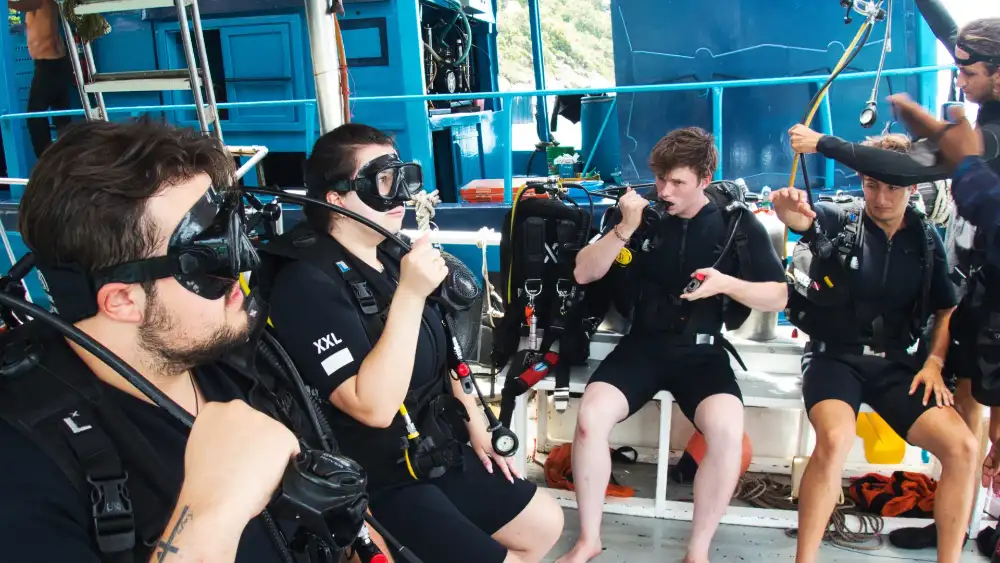
Before you can marvel at the underwater world, you’ll need to become one with your dive gear. This includes your mask, snorkel, fins, regulator, buoyancy control device (BCD) and a tank. Each piece plays a crucial role in your diving experience. The mask provides clear vision, the fins propel you through the water, the regulator is your underwater lifeline, and the BCD helps you float effortlessly. You’ll learn how to use each piece effectively, ensuring your comfort and safety throughout the dive.
When you meet your RAID-certified instructor, you’re meeting more than just a teacher; you’re meeting a dedicated professional committed to making your first dive an unforgettable experience. They’ve undergone rigorous training to ensure they can provide the highest standard of safety and education to beginner divers like you.
Your instructor is there to guide you through every step of your try dive. They’ll ensure you understand how to use your equipment, teach you basic underwater skills, and lead you as you explore the ocean. Their expertise is your assurance that you’ll be safe and well-informed throughout your adventure.
Before you even touch the water, your instructor will conduct a thorough briefing. You’ll learn about the diving equipment, the basics of buoyancy, and how to communicate underwater using hand signals. They’ll also introduce you to the marine life you might encounter and the importance of respecting the underwater environment. This briefing is crucial, as it lays the foundation for a successful and enjoyable dive.
Dive theory might sound intimidating, but it’s simply the foundation that keeps you safe and informed underwater. You’ll cover topics like how pressure affects your body, the importance of breathing continuously, and what to do if water gets into your mask. These concepts are not just academic; they’re practical tools that will enhance your diving experience.
Understanding the effects of pressure, for example, is essential for preventing discomfort or injury. As you descend, pressure increases, and you’ll need to equalise the pressure in your ears, just like you might do on an aeroplane. Your instructor will show you how to do this easily and comfortably.
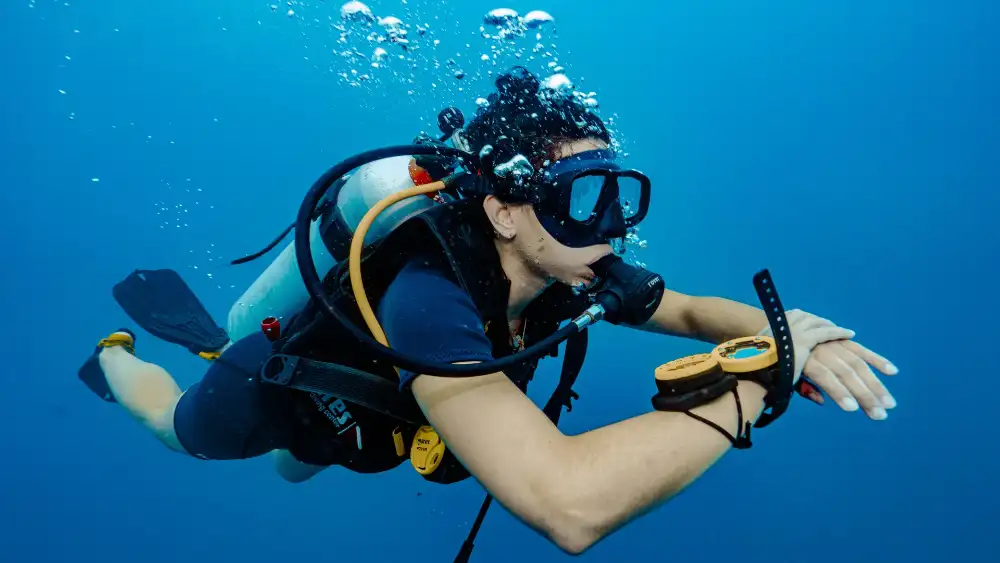
Communication is also a key part of dive theory. Underwater, you can’t speak, so you’ll use hand signals to convey messages like “I’m okay”, “I need to ascend” or “Look at that amazing fish!” These signals are the language of divers, and you’ll pick them up quickly with your instructor’s help.
Finally, you’ll discuss what to do if water enters your mask or if you need to adjust your buoyancy. These are common situations, and with a few simple techniques, you’ll handle them like a pro. Remember, the goal of dive theory is to prepare you for the water, not to overwhelm you. It’s all part of the adventure.
Next comes the practical side of your try dive journey in Koh Tao: your first breath underwater, mastering key scuba skills, and the main event – exploring the stunning underwater landscapes of Koh Tao. Get ready to immerse yourself in a world of wonder and excitement.
Once you’re suited up and ready to go, you’ll learn the essential underwater communication techniques. Under the waves, your voice won’t carry, so it’s all about hand signals. A thumbs-up doesn’t mean “all good” down here; it means “I need to go up”. A hand flat and waving side to side? That’s the signal for “something’s not right”. These are the basics that keep you safe and connected to your dive buddy and instructor.
But it’s not all about safety. You’ll also learn the fun stuff, like how to point out a clownfish or signal that you’ve spotted a turtle gliding by. These simple gestures make sharing your underwater discoveries part of the joy of diving.
Before you venture into the open ocean, you’ll start in confined water – a shallow, calm environment like a swimming pool or a protected bay. This is where you’ll get your first real taste of breathing underwater. It’s an exhilarating moment, and one you’re unlikely to forget. Under the watchful eye of your instructor, you’ll practise breathing slowly and deeply, feeling the cool tank air and the gentle resistance of the water.
Confined water sessions are all about building confidence. You’ll practise essential skills like clearing your mask, which might sound simple, but when you’re doing it for the first time underwater, it’s a whole new experience. You’ll also learn how to control your buoyancy, which is like learning to fly underwater – a skill that’s key to a smooth and enjoyable dive.
Once you’re feeling comfortable with these new skills, you’re ready for the next step – your first open water dive.
Taking that first breath underwater is a sensation that’s hard to describe. It’s a mix of awe, excitement and a dash of nerves. But as you take slow, steady breaths, you’ll feel a sense of calm wash over you. The underwater world operates at a different pace, and as you sync your breathing with this new environment, you’ll start to feel right at home with the Discover Scuba Diving programme on Koh Tao.
After getting used to breathing underwater, you’ll learn a few more skills that are crucial for your ocean dive. You’ll practise finning techniques to move efficiently through the water, and you’ll get comfortable with equalising – a simple method to balance the pressure in your ears, similar to what you might do on an aeroplane. These skills are the building blocks of a safe and enjoyable dive, and mastering them is key to your confidence as a new diver.
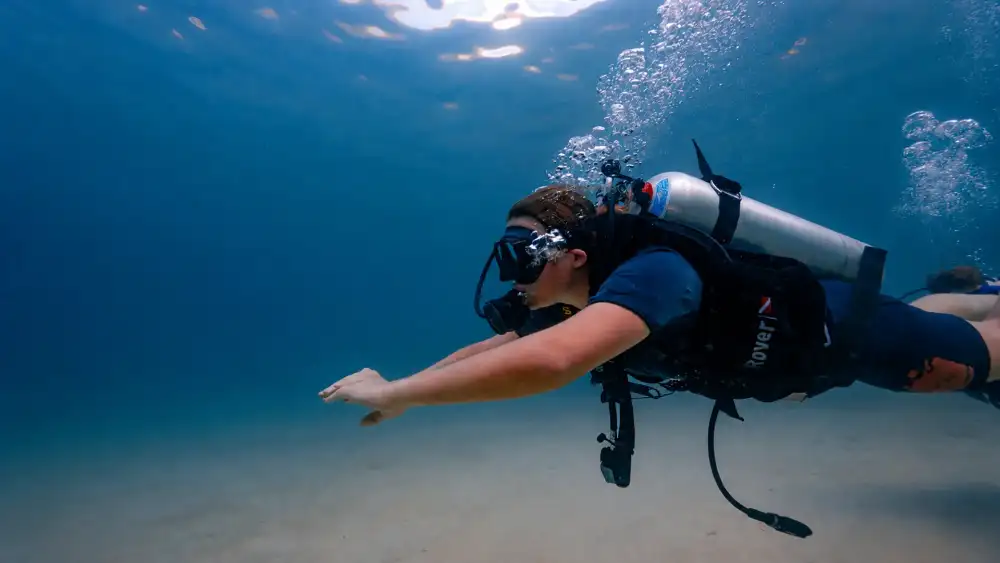
With the basics under your belt, it’s time for the main event – the open water dive. It’s a surreal experience, gliding alongside schools of fish, watching the light dance through the water, and exploring the intricate details of the coral reefs.
Koh Tao’s underwater landscapes are rich and varied. You might find yourself floating over a bed of soft corals, their delicate fronds waving in the current, or exploring the nooks and crannies of a rocky reef, home to moray eels and shy octopuses. Every dive site has its own character, and part of the fun is never knowing exactly what you’ll see next.
“The ocean is not our home; we’re just visitors. That’s why it’s important to interact with marine life responsibly. We admire from a distance, never touch, and take nothing but pictures. Remember, we’re here to observe the incredible biodiversity, not disrupt it.”
Responsible interaction with marine life is a cornerstone of scuba diving. It’s about preserving the underwater world for future generations to enjoy. Your instructor will teach you how to watch without disturbing, ensuring that the reefs and their inhabitants continue to thrive.
As you finish your dive and slowly ascend back to the surface, you’ll be bringing with you not just memories, but a newfound respect for the ocean and all that it holds.
Your try dive is just the beginning. If the underwater world has captured your heart, you might be thinking, “What’s next?” The good news is, there’s a whole path of scuba education ahead of you. From getting certified as an Open Water Diver to exploring advanced diving courses, the opportunities for adventure are endless.
And if you’re not ready to commit to a full course, that’s okay too. The beauty of diving is that each dive is its own experience, and there’s always more to see, learn and explore.
“Every dive is a journey, and each journey brings its own lessons and delights. Whether you choose to dive once or a hundred times, the ocean will always welcome you with open arms.”
So, take a moment to reflect on your try dive. What did you love? What do you want to learn next? The ocean is vast, and your diving journey is just beginning.
If you find yourself eager for more after your try dive, you often have the option to go for a second dive on the same day. This dive might take you a little deeper, perhaps to a maximum of 12 metres, allowing you to explore a bit more of Koh Tao’s underwater landscape. The duration of each dive varies, but you can expect to spend around 30–40 minutes underwater each time, depending on your air consumption and comfort level.
For those who are ready to take the plunge into full-fledged diver status, advancing to an Open Water Diver certification is the natural next step. With RAID, you’ll delve deeper into dive theory, refine your skills, and gain the certification to dive up to 18 metres anywhere in the world. It’s an investment in a lifetime of underwater exploration and the key to unlocking even more of the ocean’s mysteries.
As you look back on your try dive experience in Koh Tao, remember that this is just the start. The ocean is a vast, ever-changing place, and each dive is a chance to learn something new. Whether you continue your education or simply savour the memory of your first underwater breaths, the most important thing is that you’ve taken that first step into a larger world. And who knows where the currents will take you next?
As we wrap up this guide to trying a dive in Koh Tao, remember that diving is more than just a sport or hobby – it’s an exploration of a world few get to see. It’s about connecting with nature, pushing personal boundaries, and joining a community of like-minded adventurers. Whether you’re taking a single breath underwater or embarking on a journey to become a certified diver, the experience is sure to leave a lasting impact.
So, take that first step, breathe in, and dive into the magic of Koh Tao’s underwater realm. The ocean is calling, and its wonders are waiting for you.
It's a common question, and the answer is: not necessarily. While being comfortable in the water is important, you don't need to be an expert swimmer to try diving. Your instructor will always be with you, and the dive gear will help you float. However, a basic level of water comfort is definitely recommended to ensure you enjoy the experience to its fullest.
Absolutely. It's natural to feel a bit nervous about trying something as unique as breathing underwater. That's why your instructor will take the time to ensure you feel comfortable and confident before you dive in. Plus, starting in shallow, calm waters helps ease any initial apprehension. With patience and practice, you'll find that the water becomes a place of relaxation and wonder.
Remember, diving is as much about mental comfort as it is about physical ability. Your dive instructor will help you overcome your nerves, and the supportive environment of Koh Tao's diving community is the perfect setting for your first underwater adventure.
The minimum age for trying scuba diving with most organisations, including RAID, is generally 10 years old. This ensures that young divers are physically and mentally prepared for the experience. There's no maximum age limit, as long as you're in good health and have a sense of adventure!
The best way to know if scuba diving is for you is to simply give it a try. A try dive in Koh Tao is designed for this exact purpose – to give you a taste of the underwater world without the commitment of a full course. If you find yourself mesmerised by the marine life and excited by the sensation of weightlessness, then diving might just be your new passion.
On the day of your try dive, you should bring a few essentials:
Everything else, including your diving gear and training, will be provided by the dive centre. So pack light, and get ready for an unforgettable experience!
More in Diving Tips
 Diving Tips
Depth, breathing, training, safety, equipment and cost compared side by side, so you can decide whether a snorkel afternoon, a Try Dive or a full Open Water course is the right fit for your Koh Tao trip.
 Diving Tips
An Open Water course in Koh Tao usually takes three to four days — but the advertised number of days tells only part of the story. Here is what actually fills those days, why schedules differ between dive schools, and how to plan your stay around the course.
 Diving Tips
PADI, RAID and SSI compared across the whole training pathway — Open Water, advanced, rescue, specialities, Divemaster, instructor and technical — plus what actually decides the quality of your course in Koh Tao.
Message us on WhatsApp — courses, fun dives and honest advice about Koh Tao.
Chat on WhatsApp