A practical checklist for comparing dive schools in Koh Tao — the ten questions to ask about certification agency, group size, inclusions, instructors, equipment, safety and beginner support before you pay a deposit.
29 June 2026 · updated 2 July 2026 · by Bryan Roseman
Key takeaways
- A good dive school should clearly explain its certification agency, course structure, training level, and what you can do after completing the course.
- Smaller student-to-instructor ratios are usually better for beginner scuba training because they allow more personal attention, calmer learning, and better support during skill practice.
- Before booking, always check what is included in the course price, such as equipment rental, learning materials, certification fees, confined-water training, open-water dives, boat trips, and insurance where applicable.
- Your instructor can shape your entire diving experience. Look for recent reviews that mention patience, clear communication, calm guidance, and support for nervous beginners.
- Safety procedures should be discussed before you dive. A reliable dive school should ask about medical fitness, give proper briefings, conduct equipment checks, and explain what happens if weather or sea conditions change.
Koh Tao is one of Thailand’s most popular destinations for scuba diving. Whether you’re trying diving for the first time, completing your Open Water certification, or advancing your diving skills, you’ll find dozens of dive schools competing for your attention.
While having so many options is great for travellers, it also raises an important question:
How do you choose the right dive school?
Many people compare only three factors before booking:
While these are useful starting points, they don’t tell the full story.
The dive school you choose can have a significant impact on your safety, confidence, comfort, learning experience, instructor support, equipment quality, and overall enjoyment underwater. This is especially important for first-time divers, nervous beginners, solo travellers, and anyone booking a Discover Scuba Diving experience or Open Water course.
A lower-priced course isn’t necessarily a poor choice. Likewise, the most famous dive school may not be the best fit for your learning style, and a school with hundreds of positive reviews may still feel overcrowded if you prefer a more personal experience.
Before paying a deposit, take the time to evaluate your options carefully.
Use this practical dive school checklist and ask these 10 important questions before booking a dive school in Koh Tao.
In short. How do I choose the best dive school in Koh Tao?
To choose a dive school in Koh Tao, look beyond price and ask about safety, instructor experience, student-to-instructor ratio, course inclusions, equipment quality, medical checks, recent reviews, and beginner support. A good scuba diving school in Koh Tao should:
- Explain the course clearly before you book
- Tell you what is included in the price
- Ask about your medical fitness
- Keep training safe and properly supervised
- Offer patient instruction, especially for nervous beginners
- Use well-maintained equipment
- Avoid pressuring you into a course that does not fit your comfort level
- Communicate clearly before payment
The best dive school in Koh Tao for you is not always the biggest, cheapest, or most advertised one. It is the one that makes you feel safe, informed, supported, and ready to learn.
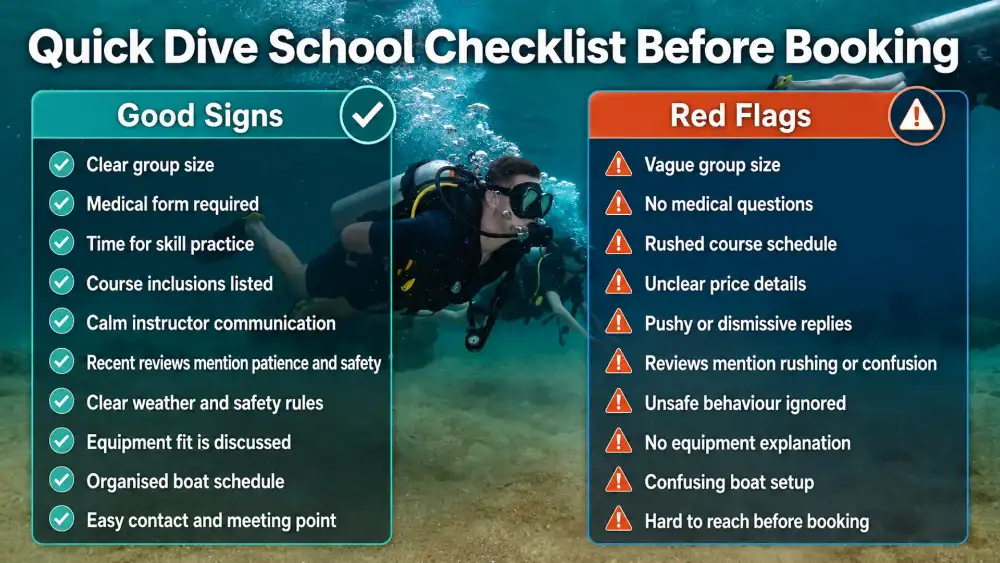
Use this table when doing a dive school comparison in Koh Tao.
| What to check | Why it matters | Good sign | Red flag |
|---|---|---|---|
| Group size | Smaller groups usually mean more attention | The school gives a clear answer | ”It depends” with no detail |
| Medical process | Diving fitness matters | You are asked to complete a medical form | No medical questions |
| Course pace | Rushed training hurts confidence | Pool/confined practice and time to ask questions | ”We just get it done fast” |
| Inclusions | Prevents hidden costs | Equipment, training materials, certification, and boat inclusions are listed | Cheap headline price, vague details |
| Instructor support | Teaching style matters | Calm, clear communication before booking | Pushy or dismissive replies |
| Reviews | Recent patterns matter more than stars | Reviews mention patience, safety, clarity, and confidence | Reviews mention rushing or confusion |
| Safety culture | Good schools say no when needed | School can explain weather changes and safe-conduct rules | Unsafe bravado |
| Equipment | Comfort and fit affect experience | Rental is included, and fit is discussed | No explanation of what you’ll use |
| Boat logistics | Boat days are part of the experience | Clear timings, snacks/water, organised plan | Confusing or crowded setup |
| Location and contact | Booking should feel easy | WhatsApp, website, and a clear meeting point | Hard to reach or unclear address |
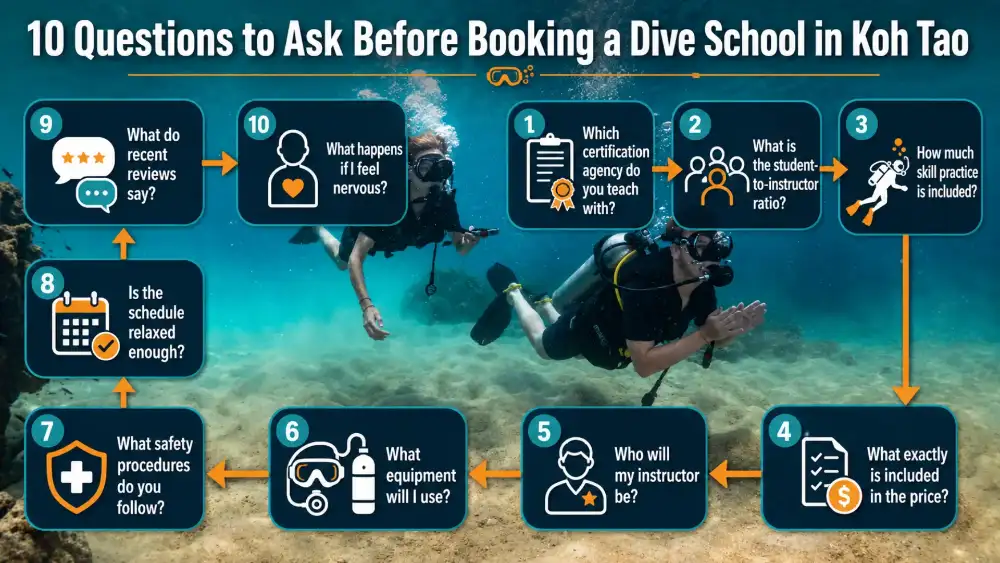
This is one of the first questions to ask before booking a dive school.
Scuba diving courses are taught through certification agencies. The most common names travellers see are PADI, SSI, and RAID. All are widely used in recreational diving, but each school may follow a different training system, course structure, and digital learning process.
The agency matters because your certification tells future dive centres what level you are trained to and what kind of dives you can join.
You want to know:
For example, if you want to continue from Open Water to Advanced, Rescue, Divemaster, or Instructor Development, it helps to choose a school that can explain the full progression clearly.
A good dive school should be able to explain:
They should not make you feel confused or silly for asking.
Be careful if a school says:
That is not a reassuring start.
How does La Bombona Diving approach this?
La Bombona Diving follows a clear training pathway as a dedicated RAID dive school, offering courses that range from introductory Try Dives and Open Water certifications to advanced and professional-level training. This structured approach allows new divers to start with a beginner-friendly experience and continue their diving education with the same team as their confidence and skills grow.
For nervous beginners and first-time divers, this continuity can be particularly valuable. Learning with familiar instructors, procedures, and teaching standards often creates a more comfortable and supportive progression throughout the certification journey.
Group size can completely change your diving experience.
A class with fewer students usually gives you more time to ask questions, practise skills, receive feedback, and feel looked after. This is especially important if you are nervous, not a strong swimmer, travelling alone, or learning to dive for the first time.
Scuba diving is not only about understanding theory. You need to practise real skills in the water, such as:
If the group is too large, some students may feel rushed or unnoticed.
A good answer should be specific.
For example:
The exact number may vary depending on the course, season, instructor availability, and student needs, but the school should be transparent about how they manage group size.
Be careful if:
How does La Bombona Diving approach this?
At La Bombona Diving, we focus on small-group training because we believe divers learn best when they receive personal attention and support throughout their course. Smaller groups allow our instructors to spend more time with each student, helping build confidence both in the classroom and underwater.
Group sizes can vary depending on the course and season, so if having a small class is important to you, feel free to contact us before booking, and we’ll be happy to confirm the current student-to-instructor ratio for your dates.
One of the most common beginner mistakes is assuming that all Open Water courses are structured the same way. They are not. A course can have the same certification outcome but feel very different depending on how much time you get to settle into the equipment, practise core skills, and build composure before the ocean dives.
The first time breathing underwater can feel strange.
Even confident swimmers can feel nervous when they first put on a mask, regulator, tank, and fins. That is normal.
Good confined-water training gives you time to:
A good dive school should explain:
You should feel that the school values comfort and safety, not just finishing the schedule.
Be cautious if:
How does La Bombona Diving approach this?
At La Bombona Diving, we believe learning to dive should be a gradual and confidence-building experience, not something that feels rushed. Our Open Water course follows a structured progression that combines theory sessions, confined-water skills practice, and open-water dives, allowing students to develop their skills step by step.
We encourage prospective divers to check with us directly for the latest course schedule, as training timelines can vary depending on factors such as student progress, course logistics, and seasonal conditions. Our priority is ensuring every diver feels comfortable, confident, and ready before moving on to the next stage of their training.
This is one of the most practical questions to ask before paying.
Two dive schools may advertise similar prices, but the real value can be very different depending on what is included.
A course price may or may not include:
If you do not ask before booking, you may be surprised later.
A good dive school should give a clear breakdown.
For example:
Clear pricing builds trust.
Be careful if:
How does La Bombona Diving approach this?
We believe divers should know exactly what is included before they book. That’s why we clearly outline course details, inclusions, and certification requirements across our website. For example:
- Our Open Water course includes learning materials, theory sessions, confined-water training, four ocean dives, equipment rental, certification, and boat refreshments.
- Our Explorer 30 (Advanced) course includes learning materials, theory, four day dives, one night dive, equipment rental, certification, and boat refreshments.
We also provide detailed information for Try Dives, Fun Dives, Night Dives, Sail Rock trips, Refresh programmes, and Divemaster training, so divers know what to expect before booking.
The instructor matters more than many beginners realise.
A certification logo does not teach you. A person does.
Your instructor’s patience, communication style, experience, and attitude can shape your entire diving experience.
A good instructor does more than demonstrate skills.
They should:
For nervous beginners, instructor personality can be the difference between “I can’t do this” and “I actually feel confident underwater.”
A good dive school may not always be able to confirm the exact instructor far in advance, especially during busy periods, but they should be able to explain:
Be careful if:
How does La Bombona Diving approach this?
At La Bombona Diving, we believe that great dive instruction goes beyond certifications and experience. The best instructors are those who can explain concepts clearly, adapt to different learning styles, and help students feel safe and confident throughout their diving journey.
Many of our guests specifically mention these qualities in their reviews, highlighting instructors for their patience, professionalism, calm guidance, and supportive teaching approach. Whether it’s helping a nervous first-time diver feel comfortable underwater or guiding a student through their Open Water certification, our goal is to create a positive and confidence-building learning experience for every diver.
What divers say about our instructors
Review by Jennifer Huynh (February 2026) about her experience with our instructor Adrian. Students frequently praise our instructors for their patience, encouragement, and ability to build confidence throughout the certification process. Read the full review of Jennifer Huynh’s experience with La Bombona Diving.
Review by Dawn Barkans (January 2026) about his experience with our instructor Sofia. For many first-time divers, calm guidance and reassurance can make all the difference. Reviews often highlight the supportive approach of our instructors during Try Dives and beginner courses. Read the full review of Dawn Barkans’ experience with La Bombona Diving.
Scuba equipment is your life-support system underwater.
You do not need to be a gear expert before your first dive, but you should feel comfortable asking about equipment quality, fit, and maintenance.
Your equipment affects:
Poorly fitting gear can make a beginner feel stressed. A leaking mask, uncomfortable fins, oversized BCD, or badly fitting wetsuit can distract you during training.
Before booking, ask about:
A good dive school should say:
Be careful if:
How does La Bombona Diving approach this?
Comfort and confidence underwater often start with having the right equipment. Standard diving equipment is included with our courses and fun dives, and equipment rental details are clearly outlined across our course and activity pages.
If equipment quality, fit, specific brands, or servicing procedures are important to you, feel free to contact our team before booking. We’re always happy to answer your questions.
Safety should never feel like an afterthought.
A trustworthy dive school should be comfortable talking about medical forms, dive briefings, equipment checks, weather decisions, emergency planning, and safe diving behaviour.
Scuba diving is generally safe when taught and supervised properly, but it is still an adventure activity. That means safety procedures matter.
Before diving, you should understand:
A good dive school should explain:
Clear safety rules are not a negative thing. They are a sign of professionalism.
Avoid schools that:
How does La Bombona Diving approach this?
At La Bombona Diving, safety starts before anyone enters the water. Before a course or dive, we ask divers to complete a standard diving medical questionnaire, and when needed, we require clearance from a licensed diving doctor in Thailand. As explained in our terms and conditions, we may also modify or cancel dives if weather, sea conditions, or local circumstances could affect safety.
We expect every diver to follow instructor guidance, respect marine life, and avoid unsafe behaviour such as alcohol or drug use before or between dives. Independent third-party sources also highlight that our beginner experiences include a detailed safety briefing before entering the water.
We also recommend asking any dive school directly about its emergency setup, including oxygen, first-aid equipment, boat procedures, and staff training. A responsible dive centre should be open and clear about how it manages safety above and below the water.
Not every beginner learns at the same pace.
Some people feel comfortable quickly. Others need more time to adjust to breathing underwater, equalising, controlling buoyancy, or trusting the equipment.
A rushed schedule can leave beginners feeling:
A relaxed schedule gives you time to understand what you are learning.
A good school should explain:
Be careful if:
How does La Bombona Diving approach this?
Learning to dive shouldn’t feel rushed. Our courses are designed to help students build skills and confidence step by step, with dedicated time for theory, skill development, and open-water practice.
Many divers tell us they appreciate the supportive pace of our training and the time our instructors take to answer questions, explain concepts clearly, and help them feel comfortable throughout the learning process.
Reviews are useful, but only if you read them properly.
Do not look only at the star rating. Read what people actually say.
Reviews reveal patterns.
Look for repeated comments about:
One random review does not prove much. But repeated themes across recent reviews can tell you what the school is really known for.
When reading reviews, ask:
A review saying “great vibes” is nice.
A review saying “I was nervous, but the instructor stayed calm, explained everything clearly, and helped me feel safe” is more useful.
Be careful if reviews repeatedly mention:
How does La Bombona Diving approach this?
When choosing a dive school, it is easy to focus only on the course name, price, certification agency, or dive sites. But for beginners, nervous divers, or anyone learning a new skill underwater, the instructor can make just as much difference as the course itself.
At La Bombona Diving, we believe good instruction starts with calm communication, patience, clear briefings, and in-water support that helps divers feel safe instead of rushed. Our team page gives divers a chance to see who they may be learning with before they book, while independent Google reviews often highlight the qualities we care about most: patience, clarity, support, and confidence-building.
This may be the most important question for first-time divers.
Many beginners worry about:
These are normal concerns.
A good dive school should be able to talk about them calmly.
Emotional safety is part of dive training.
You should never feel ashamed for being nervous. Diving is new, and the ocean is a different environment. Good instructors know how to slow things down, repeat explanations, and help you take one step at a time.
A good answer may include:
Be cautious if:
How does La Bombona Diving approach this?
At La Bombona Diving, we understand that feeling nervous, uncomfortable, seasick, or unsure is completely normal, especially if it is your first time diving. Our aim is not to rush you through the experience, but to help you feel calm, informed, and supported at each step.
If a course or dive no longer feels right for you midway through, our FAQs explain that our team can discuss suitable options with you. This is important because beginner diving should feel flexible, not forced. You should be able to ask questions, repeat skills when needed, pause if you feel uncomfortable, and speak honestly with your instructor.
Before you book any scuba diving school in Koh Tao, make sure you can say yes to these points:
If a school cannot answer most of these clearly, keep comparing.
Choosing a dive school in Koh Tao is not only about finding the lowest price or the most famous name. It is about choosing a team that teaches safely, explains things clearly, answers your questions properly, and helps you feel comfortable in the water. For many beginners, the real concern is not just “Which course should I book?” but “Will I feel safe, supported, and looked after if I feel nervous?”
Before booking, take time to compare more than the course price. Look at group size, instructor support, safety rules, medical requirements, course inclusions, equipment standards, booking flexibility, and what past students say about their experience. A good dive school should make you feel informed before you pay, supported during training, and confident enough to ask questions without feeling rushed or judged.
The best choice is usually the school that gives you clear answers, realistic expectations, and honest guidance based on your comfort level, time, budget, and diving goals. Whether you are planning a one-day Try Dive, a full Open Water course, a Refresh dive, a Night Dive, a Sail Rock trip, or future Divemaster training, the right dive school should help you choose what genuinely fits you.
Still comparing dive schools in Koh Tao? Message La Bombona Diving on WhatsApp or Instagram and ask your questions before you book. If you are unsure which diving experience is right for you, the team can help you compare your options clearly and choose the path that feels safest, most suitable, and most enjoyable for you.
A lower-priced dive school is not necessarily a bad option, and an expensive school is not automatically better. However, price alone rarely tells the full story. Some budget courses may involve larger student-to-instructor ratios, less personalised attention, fewer included services, or a more compressed training schedule. When comparing dive schools, focus on the overall value rather than just the lowest price. Check what is included in the course fee, such as scuba equipment, training materials, pool sessions, boat trips, certification fees, snacks, or guided dives. A school that costs slightly more may provide a more comfortable learning experience and better support throughout your course, making it a better investment overall.
A scuba diving course should include everything needed to learn safely and complete the training properly. This usually includes theory lessons, instructor-led training, confined-water or pool practice, open-water dives, scuba equipment, safety briefings, and certification processing after successful completion. A good course may also include learning materials, dive insurance, boat or dive-site transport, logbook guidance, and support if you need extra time with certain skills. Before booking, check whether these essentials are part of the course price or charged separately, especially equipment rental, certification fees, insurance, and transport.
Before paying for a scuba course or dive experience, ask exactly what is included in the price, how many students will be in your group, who your instructor will be, and whether equipment rental, certification fees, insurance, learning materials, and boat transportation are included. It is also worth asking about the course schedule, medical requirements, cancellation policy, safety procedures, emergency equipment, and what support is available if you feel nervous, seasick, or need extra assistance. A reputable dive school should be able to answer these questions clearly before you book, helping you understand exactly what to expect and choose with confidence.
A reputable dive school should have clear safety procedures and be transparent about them. Look for a medical questionnaire before training, detailed dive briefings, sensible weather-related decision-making, and staff who are happy to answer safety questions. It is also worth asking about instructor-to-student ratios, emergency action plans, and whether oxygen and first-aid equipment are available on the dive boat. A school that openly discusses safety is often a good sign that it takes diver welfare seriously.
Online reviews can provide valuable insight into what the actual customer experience is like beyond a dive school's marketing materials. They can help you identify patterns in areas such as instructor quality, safety standards, group sizes, equipment condition, and how staff treat beginners or nervous divers. Rather than focusing on a few individual reviews, look for consistent themes across recent feedback on platforms like Google, TripAdvisor, and social media. Reviews are most useful when they describe specific experiences, as these often provide a clearer picture of what you can realistically expect from the school.
For beginner scuba training, a smaller student-to-instructor ratio is usually better. A group of up to 4 students per instructor is a good size because it allows more personal attention, clearer communication, and better support during both skills practice and open-water dives. This is especially helpful for first-time divers, nervous beginners, or anyone who needs extra time with skills like mask clearing, buoyancy control, breathing, and equalising. Larger groups may still follow training standards, but smaller groups often feel calmer, safer, and less rushed. Before booking, ask how many students will be in your group and whether extra support is available if you need it.
The easiest way to compare dive schools before booking is to make the process smaller. Start by shortlisting only three to five schools that look relevant to your budget, location, and course type. Then send them the same questions. Ask about group size, what is included, the current course schedule, medical requirements, and what support they give nervous beginners. Finally, look not just at the answers themselves, but at how the school answers you. Clear, calm, specific replies usually signal a better customer experience than vague or pushy sales messages.
More in Diving Tips
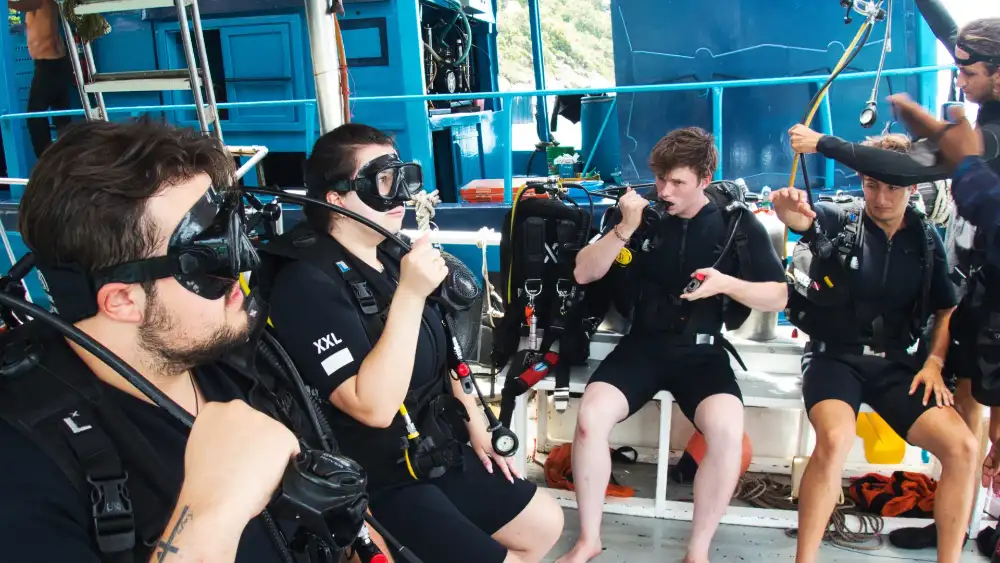 Diving Tips
Depth, breathing, training, safety, equipment and cost compared side by side, so you can decide whether a snorkel afternoon, a Try Dive or a full Open Water course is the right fit for your Koh Tao trip.
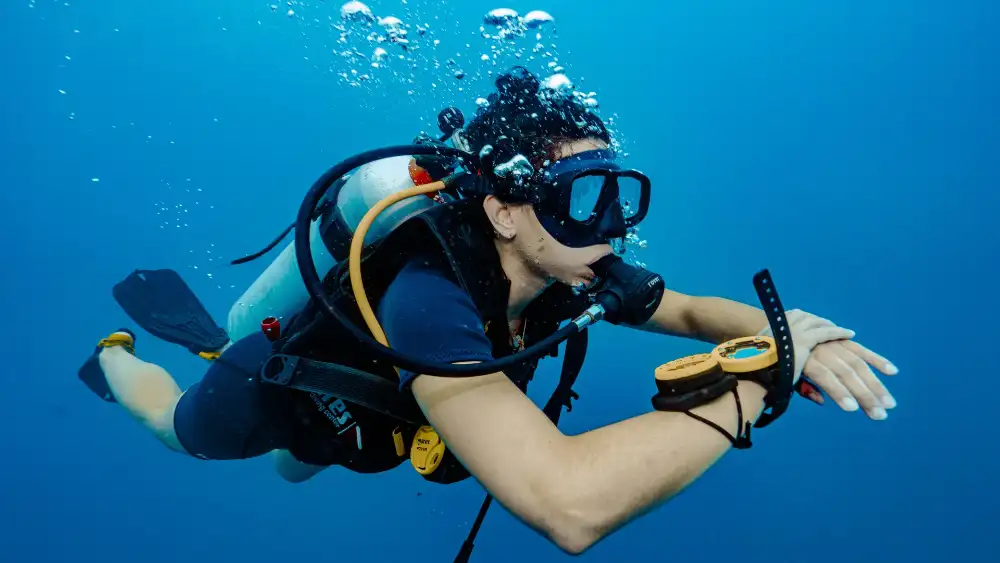 Diving Tips
An Open Water course in Koh Tao usually takes three to four days — but the advertised number of days tells only part of the story. Here is what actually fills those days, why schedules differ between dive schools, and how to plan your stay around the course.
 Diving Tips
PADI, RAID and SSI compared across the whole training pathway — Open Water, advanced, rescue, specialities, Divemaster, instructor and technical — plus what actually decides the quality of your course in Koh Tao.
Message us on WhatsApp — courses, fun dives and honest advice about Koh Tao.
Chat on WhatsApp